

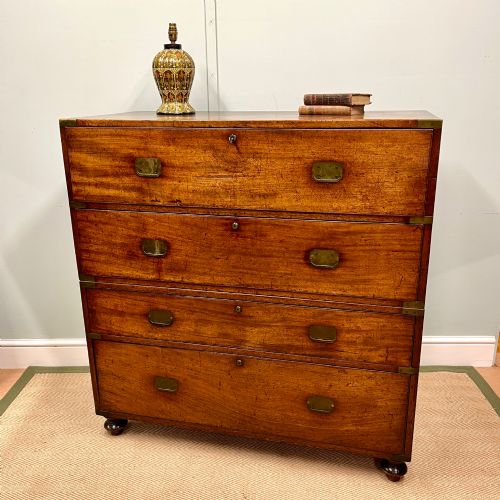
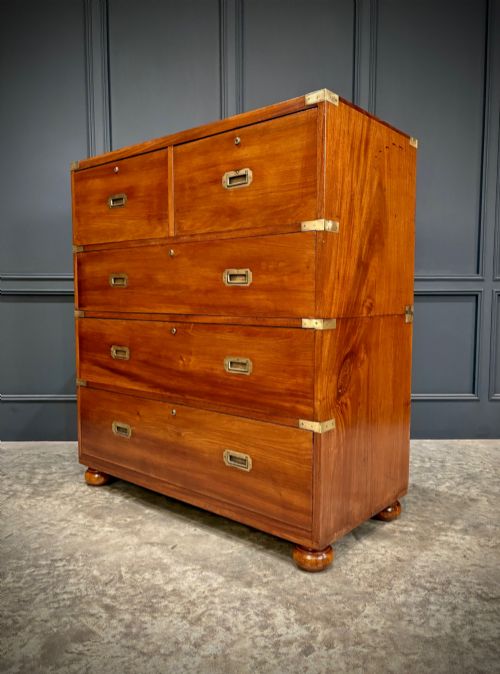



Victorian Secretaire Chest Drawers
These Victorian secretaire chest drawers combine bedroom storage with a fitted writing surface, offering a clever dual-purpose cabinet for the home.
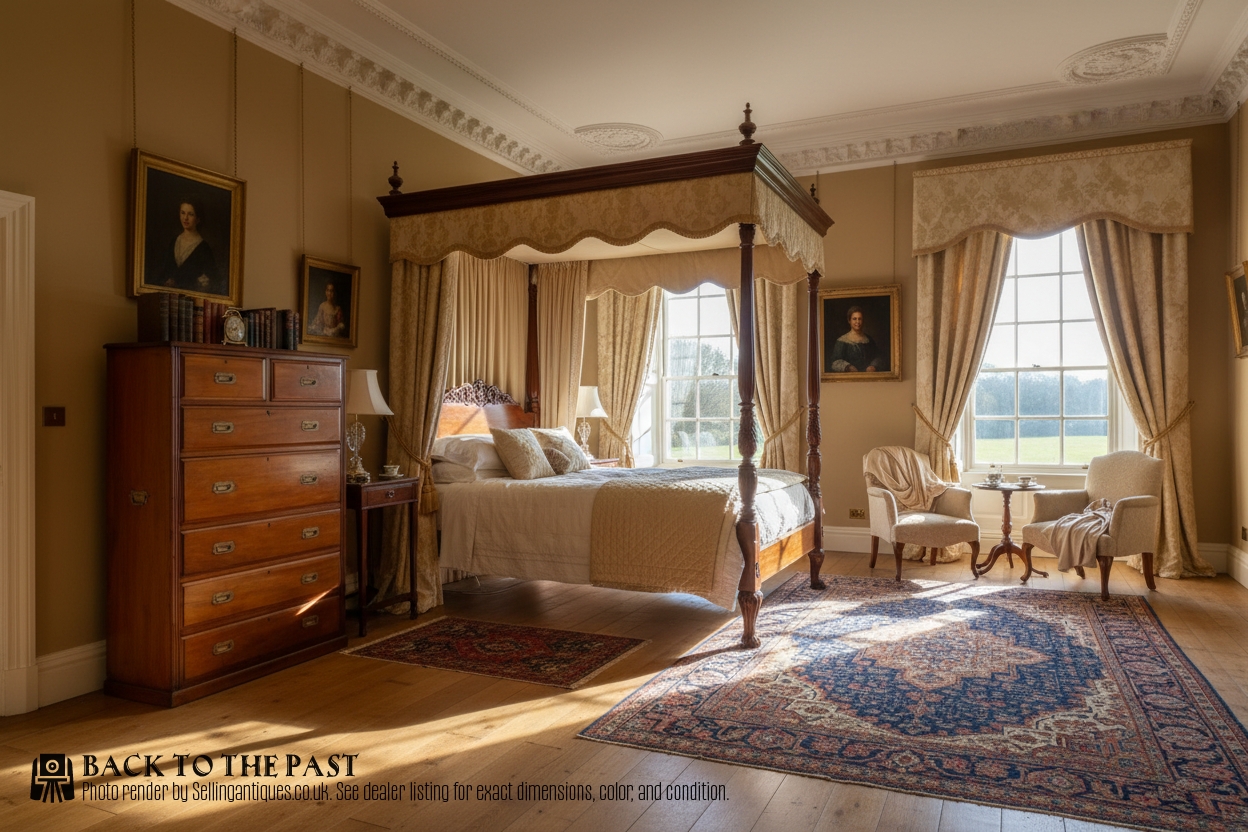
Victorian Secretaire Chest Drawers
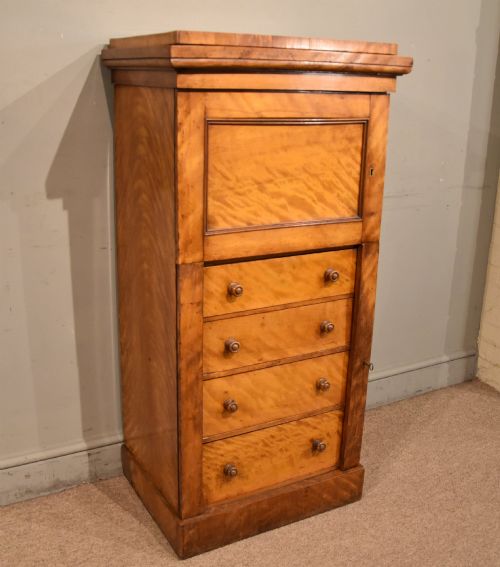
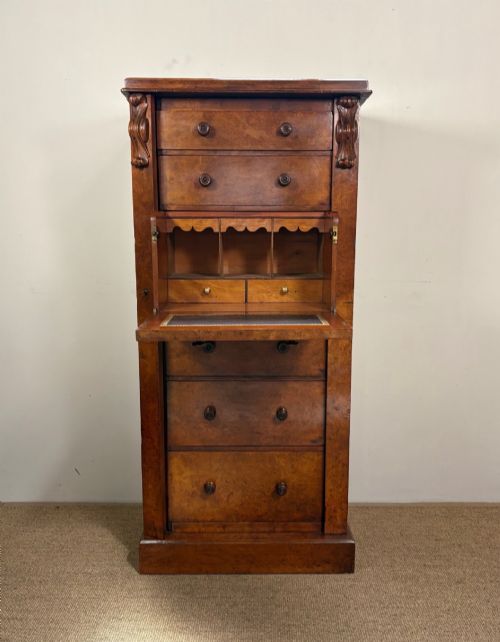
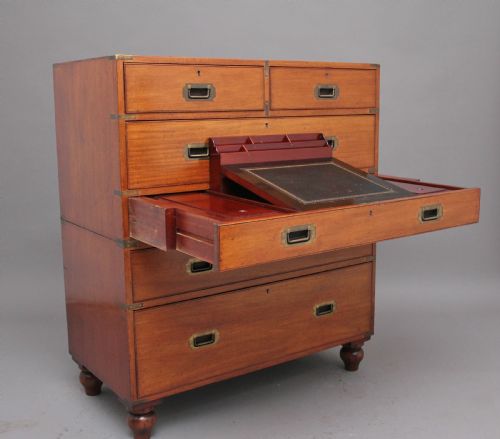
A Victorian secretaire chest drawers bridges the gap between a conventional chest of drawers and a compact writing desk by housing a dedicated fall-front writing drawer near the top. When closed, the piece maintains the orderly façade of a standard drawer unit, concealing internal pigeonholes and small compartments.
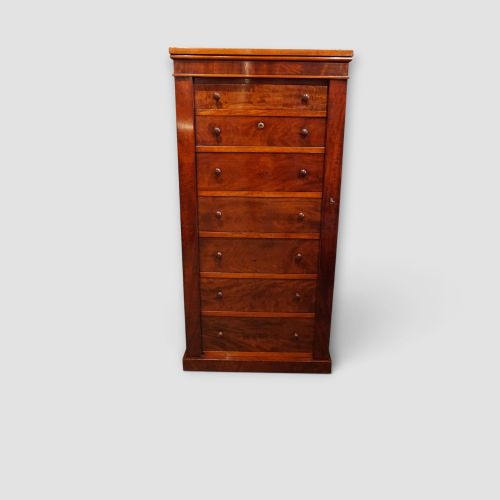
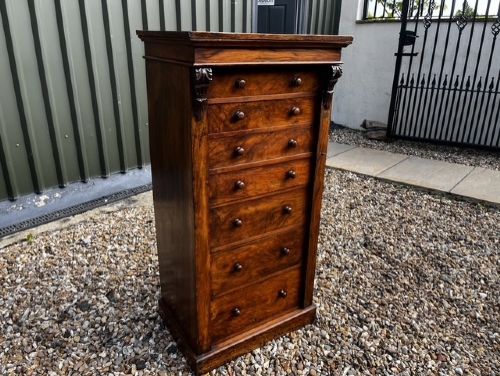
Buyers browsing this selection will frequently encounter two distinct sub-types: robust military campaign models built in two modular sections for travel, and upright Wellington chests featuring a side-locking flap.
Originating predominantly from the nineteenth century, these cabinets appear in heavy hardwoods suited to both domestic studies and colonial service.
How they were made
Cabinet makers built these pieces using durable timbers such as mahogany, teak, camphor wood, walnut and pine, often selecting figured veneers for the drawer fronts. Campaign iterations relied on flush brass handles and corner brackets to withstand transit without snagging.
Internal writing surfaces typically feature inset leather panels, while secretaire drawers themselves utilise complex secondary drawers and secret compartments within the pigeonhole framework.
Listings feature woods spanning mahogany, camphor wood, walnut, teak, rosewood, satin birch, elm and pine across the nineteenth century.
What varies in quality
The standard of a secretaire chest rests upon the precision of its internal carpentry and the integrity of the fall-front mechanism. Superior examples display tight dovetail joints, smooth drawer actions and well-balanced supporting arms that bear the weight of the writing flap.
The choice of primary timber and secondary wood thickness dictates the structural heft, whilst the quality of brass mounts and original leather inserts distinguishes utilitarian campaign pieces from finer domestic cabinet work.
Gregory And Co·Druce And Co
The Victorian Secretaire Chest Drawers Glossary
- Secretaire
- A cabinet or chest incorporating a disguised writing drawer with a drop-down front. It provides a concealed workspace complete with internal stationery compartments.
- Campaign chest
- A modular piece of furniture made in sections with recessed hardware for ease of transport. These items were designed for military officers on the move.
- Wellington chest
- A tall, narrow chest of drawers secured by a vertical locking flap hinged on one side. This wooden bar fastens with a key to lock all drawers simultaneously.
- Escritoire
- A writing cabinet or desk, often tall and narrow, used for correspondence and document storage. The term frequently overlaps with the secretaire family.
- Pigeonhole
- A small, open compartment within the interior desk section used for sorting letters and papers. These compartments are typically framed by miniature drawers.
Victorian Secretaire Chest Drawers: Frequently Asked Questions
How do I open the secretaire drawer?
Most secretaire drawers require the primary top drawer lock to be unlocked before the drop-front can be released. Internal catches or brass buttons on the sides often need pressing to lower the writing surface.
Once the mechanism disengages, the front folds down horizontally, supported by internal brass quadrants or side arms designed to bear writing pressure.
Were these chests made for military use?
Many examples found today were indeed built as campaign furniture for British officers travelling abroad. They split into two separate stacking sections for easier carriage on ships and pack animals.
Domestic versions share the clever fold-down desk feature but lack the structural split-carcass design and heavy brass corner strapping found on active service pieces.
What is a Wellington chest?
A Wellington chest is a tall, narrow drawer unit characterised by a hinged locking stile on the right edge. Swinging this vertical wooden flap outward allows access to the stacked drawers.
Securing the flap with a key locks every drawer shut at once, making it a secure cabinet for valuables and documents in a nineteenth-century home.
How do I care for the leather writing surface?
Original leather writing panels require gentle cleaning with a dry or barely damp cloth, avoiding modern chemical solvents that strip historical dyes. Conditioning balm helps maintain the suppleness of older hide without staining the surrounding wood.
Keep these cabinets away from direct radiator heat and strong sunlight to prevent the leather from cracking and the solid timber from warping.