



Victorian Secretaire Abattant
These pieces of victorian secretaire abattant offer a clever drop-front writing surface concealing fitted compartments and drawers.
Victorian Secretaire Abattant
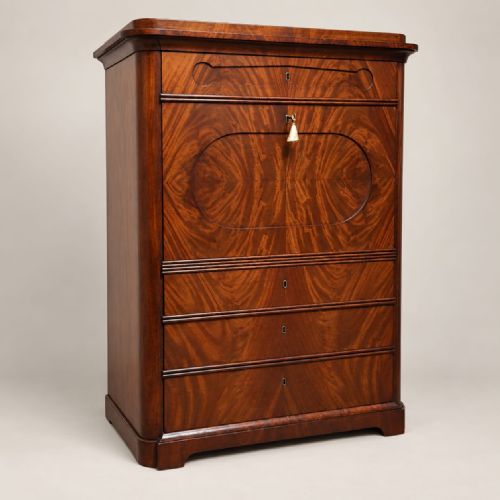
A victorian secretaire abattant is a tall upright cabinet designed with a hinged writing flap that pulls down to reveal an interior fitted with small drawers and pigeonholes. Most examples on this page date from the nineteenth century, including pieces assigned to the Victorian period, eighteen-eighty, and eighteen-ninety.
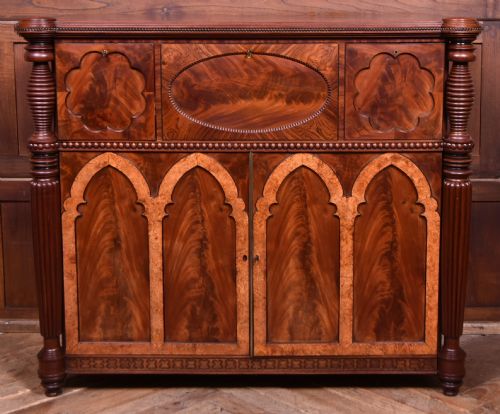
The form combines the storage capacity of a chest of drawers with the utility of a desk. Formats range from formal mahogany and burr walnut cabinets to more rustic pine versions, alongside variants described as writing bureaus, escritoires, and make-up chests.
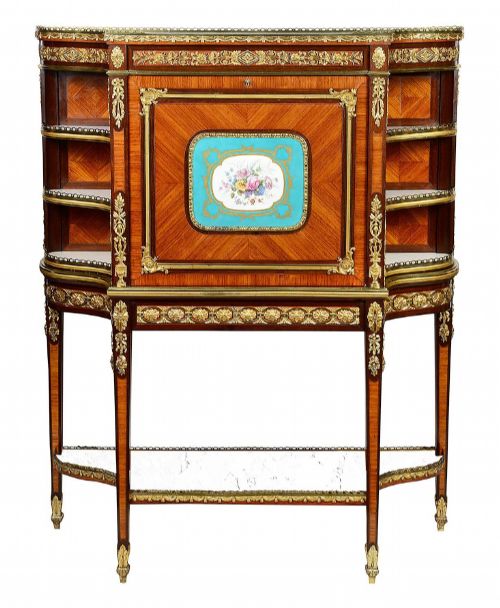
Origins and styling span straightforward British and continental cabinetmaking, taking in Biedermeier, Louis XVI Revival, and Victorian Gothic Revival influences. Buyers typically select these upright cabinets to maximise workspace in compact rooms without sacrificing floor area.
How They Were Made
Cabinetmakers constructed these pieces primarily from solid pine carcasing overlaid with decorative timber veneers such as mahogany, flame mahogany, burr walnut, amboyna, rosewood, and kingwood. These fine surface woods were selected for their pronounced grain patterns and polished to a deep lustre.
Structural hardware relied on brass locks, hinges, and occasional ormolu mounts to secure and accent the fall-front flaps and internal secret drawers. Interior writing surfaces were frequently lined with baize to provide a smooth, practical texture for correspondence.
Victorian Secretaire Abattant Retail Price Guide 2026
Typical asking prices for victorian secretaire abattant among the pieces listed under this phrase on Sellingantiques today, from the lower quarter to the upper quarter. They describe what is for sale here now, not the wider market.
Listings feature nineteenth-century forms utilising mahogany, pine, baize, flame mahogany, burr walnut, kingwood, and ormolu.
What Varies in Quality
The choice of surface veneer heavily influences the visual impact of each cabinet, with figured timbers like burr walnut and flame mahogany marking the upper tiers of production. Finer examples display meticulous book-matching of veneers across the fall front and drawer fronts.
Internal complexity also separates standard utility pieces from masterwork cabinetry, notably the clever integration of secret drawers concealed within the pigeonhole structures. The crispness of inlaid details and the precision of the joinery around the hinged writing flap demonstrate the maker's underlying skill.
Gillows·Blake London
The Victorian Secretaire Abattant Glossary
- Secretaire abattant
- An upright fall-front cabinet containing a writing desk surface. The drop-down flap conceals a fitted interior of small drawers.
- Escritoire
- A traditional term for a writing desk or cabinet with drawers. These tall case pieces serve both as storage and compact writing furniture.
- Ormolu
- Gilt bronze mounts applied for decorative effect on furniture. These metallic details frame panels and accentuate revival styles.
- Baize
- A coarse woollen fabric used to line writing slopes and desk surfaces. This traditional material protects fine timber from ink and scratches.
Victorian Secretaire Abattant: Frequently Asked Questions
How do you open the secret drawers?
Secret drawers are typically concealed behind sliding partitions, dummy book spines, or false panels within the pigeonhole section of the interior. Discovering them requires a gentle touch to locate hidden spring catches or sliding wooden stops.
These clever compartments were designed to keep private papers and valuables secure from casual observation. Operating them correctly preserves the original nineteenth-century mechanisms.
Where were these cabinets placed?
These upright writing cabinets were typically positioned in home studies, bedrooms, or private drawing rooms where floor space was at a premium. Their vertical design delivered a full writing desk and storage without dominating the room.
Today, they suit similar domestic settings, functioning as practical desks in living areas or guest bedrooms.
How do you care for veneer finishes?
Maintaining nineteenth-century wood veneers involves keeping cabinets away from direct sunlight and steady heat sources to prevent timber shrinkage. Regular dusting with a dry, soft cloth preserves the polished surface.
Applying occasional appropriate wax feeds the timber and protects the historic polish without building up heavy residues.
What woods were commonly used?
Cabinetmakers relied on sturdy secondary timbers like pine for internal carcases, while applying decorative hardwoods to visible exterior surfaces. Mahogany, rosewood, and walnut provided the primary foundations for fine nineteenth-century cabinetwork.
Exotic veneers such as amboyna and burr walnut were reserved for high-status pieces to create striking visual patterns.