




Victorian Seascape Landscape
These nineteenth-century works capture coastal views and maritime horizons through traditional oil and watercolour mediums.
Victorian Seascape Landscape
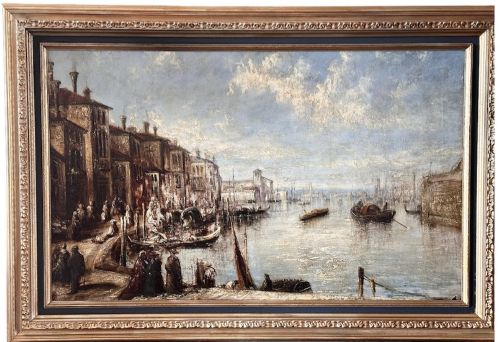
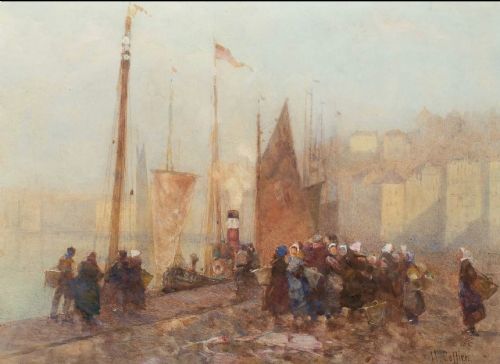
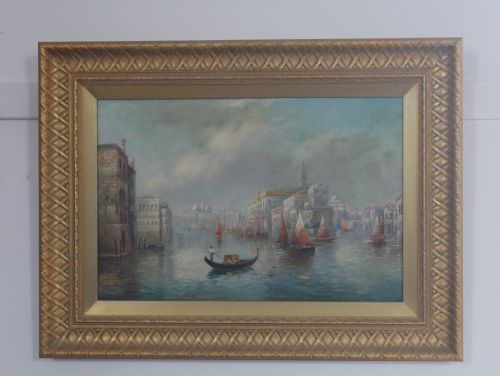
A victorian seascape landscape brings together coastal environments, harbours, and maritime activity across the nineteenth century. These paintings depict recognizable locations ranging from Cornish fishing ports to Venetian canals and Scottish shores. The most common examples met on this page are framed oil paintings and watercolours created during the Victorian period.
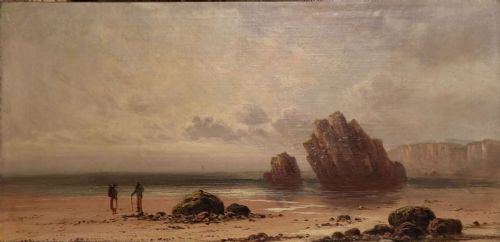
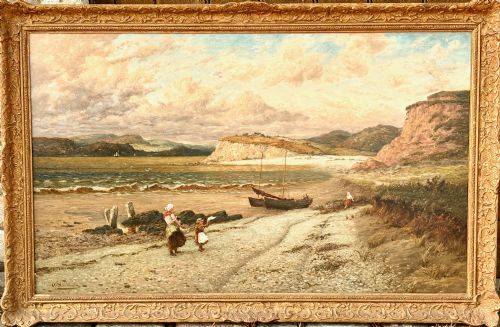
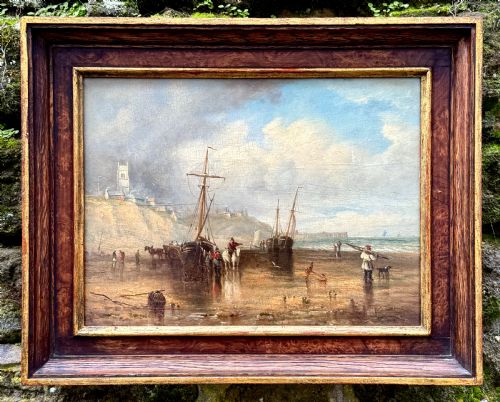
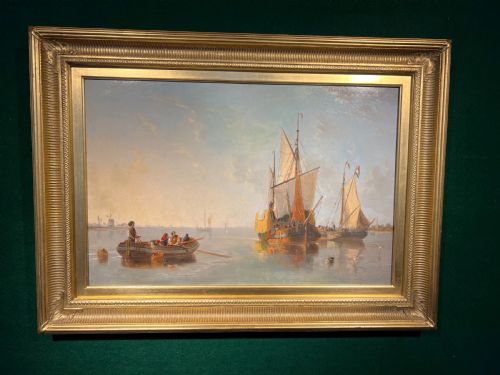
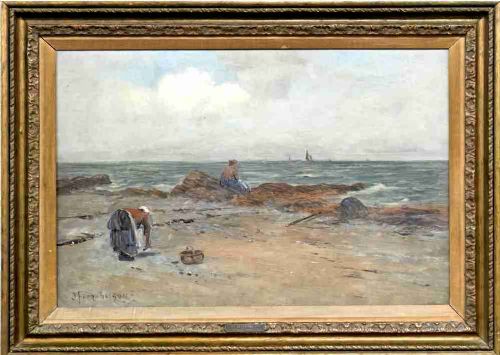
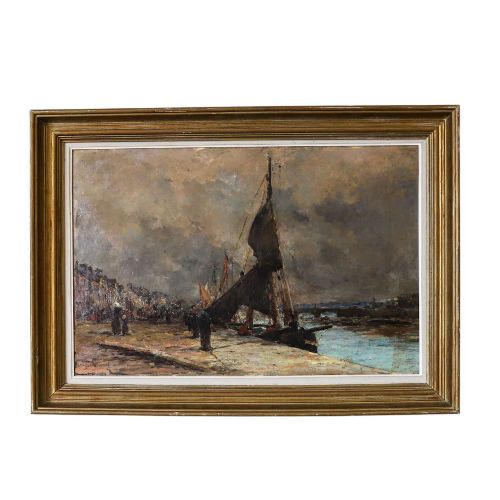
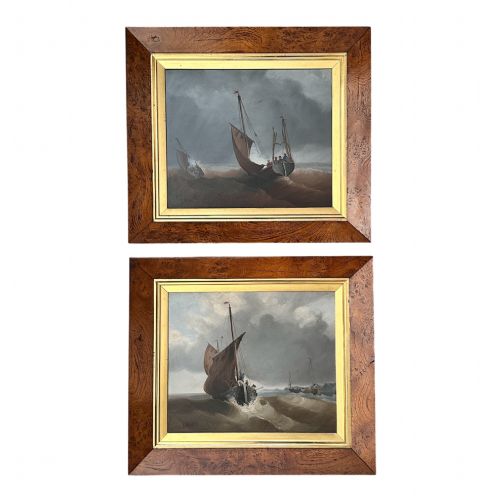
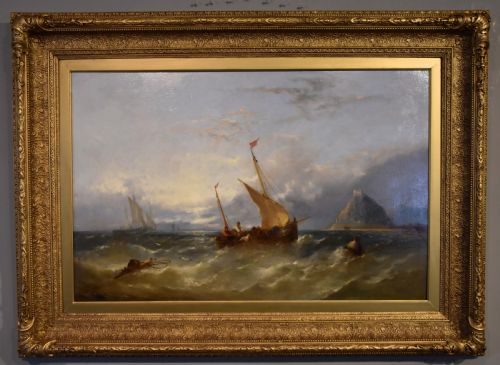
The subjects span from tranquil beach scenes with figures to dramatic views of shipping vessels, sea stacks, and coastal castles. Many pieces record specific British and international coastal topography through the eyes of period artists. Collectors find works varying from intimate watercolours to large canvas paintings.
The selection reflects both British Impressionism and nineteenth-century realism applied to marine and coastal subjects. Artists recorded working harbours, incoming tides, and sailing ships against changing skies. These works serve as historical records of coastal life and maritime trade.
Materials and methods
Artists painted primarily using oil on canvas or board, alongside delicate applications of watercolour on paper. Canvases received layers of oil paint mixed to capture the translucency of water and the atmosphere of coastal air. Watercolours utilised thin washes of pigment on paper to render soft skies and gentle sea movements.
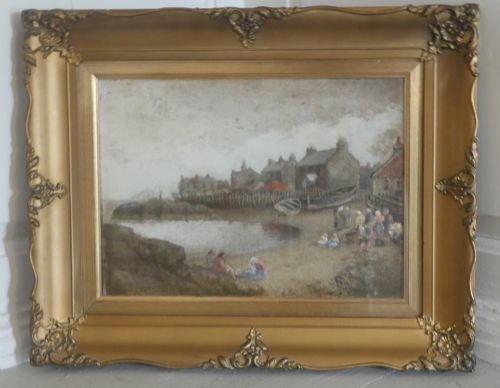
Finished works were typically housed in wood frames featuring decorative gesso moulding, often finished in gilt. The framing process protected the paper or canvas while complementing the visual tone of the maritime subject matter. Original frames provide context for the period presentation of these paintings.
Commonly depicted locations include Cornish fishing ports, Venetian canals, and coastal views from Scarborough to the Isle of Man.
Assessing quality
Quality rests upon the artist's ability to render light, atmospheric perspective, and the movement of water. Stronger works demonstrate confident brushwork and precise handling of maritime architecture, shipping vessels, and coastal topography. Lesser examples rely on repetitive formulae and stiff compositions lacking spatial depth.
The preservation of the original paint layer and paper support dictates the overall condition and visual impact of the piece. Works retaining their original gesso and gilt wood frames maintain a more complete historical integrity.
James Orrock·William Banks Fortescue·Francis Moltino·Hector Caffieri·Bernard Benedict Hemy·Thomas Creswick·John Wilson Carmichael·Joseph Farquharson·John Moore of Ipswich·William Henry Williamson·John Holland·George Stanfield Walters·Henry Barlow Carter·John Moxon·William Frederick Settle·Charles William Wyllie·Charles William Adderton·William Edward Webb·Gustave De Bréanski·Sir Thomas Newenham Dean·Stanley Leader·William Greaves·John McDougal·Charles Sim Mottram·George Gregory
The Victorian Seascape Landscape Glossary
- Watercolour
- A painting method where natural pigments are suspended in a water-based solution and applied to paper. This technique allows for transparent washes that capture light and atmosphere.
- Gesso
- A plaster-like mixture applied to wooden frames as a smooth base before gilding. It creates the raised decorative relief seen on period frames.
- Canvas
- A heavy woven fabric stretched across a wooden stretcher bar to serve as a sturdy support for oil paintings. It is primed before painting to prevent the oil from degrading the fibres.
- Impressionism
- An art movement focused on capturing the visual impression of the moment, particularly shifting light and weather. In marine art, this translated to loose brushwork and vibrant colour palettes.
- Sea stack
- A geological landform consisting of a steep and often vertical column or columns of rock in the sea. Artists frequently included them to add drama to coastal compositions.
Victorian Seascape Landscape: Frequently Asked Questions
What subjects appear in these paintings?
These works feature coastal views, fishing harbours, merchant shipping, and seaside cliffs. Artists recorded specific locations across Britain and Europe, documenting working vessels and daily maritime life.
Scenes range from calm coastal inlets with stranded fishing boats to turbulent waters surrounding rocky sea stacks and historic castles.
How do I care for antique watercolours?
Watercolour paintings require protection from direct sunlight to prevent the pigments and paper from fading. Keep them away from damp environments to avoid foxing and paper degradation.
Displaying them under UV-filtering glass helps preserve the delicate water-based pigments for years to come.
Are these paintings signed by the artists?
Many examples feature signatures, monograms, or inscriptions left by the painter, often placed in a lower corner. Some works include contemporary framing notes or archival details on the reverse.
Unsigned pieces still offer stylistic clues that connect them to specific nineteenth-century schools of marine painting.
How were these frames constructed?
Period frames were built from sturdy wood and ornamented with moulded gesso to create sculptural decorative patterns. They were finished with a layer of gold leaf applied over the gesso base.
These elaborate frames were designed to complement the maritime scenes and protect the edges of the canvas or paper.