


Antique Storm Painting
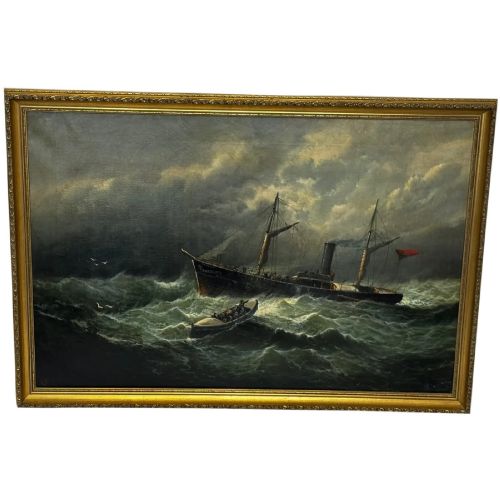
An antique storm painting captures the drama of heavy seas and turbulent skies, bringing fierce coastal energy straight into a room.
Antique Storm Painting
When you search for an antique storm painting, you encounter dramatic coastal scenes, distressed vessels, and heavy skies captured across the nineteenth and early twentieth centuries. These works focus heavily on marine art, depicting shipwrecks, high tides, and impending weather across British and European shores.
The most common examples on this page are nineteenth-century and Victorian oil paintings on canvas or panel, alongside occasional Edwardian watercolours and charcoal sketches. The subjects range from Brixham fishing trawlers and Scottish coastal views to specific locations like Bamburgh Castle and the Firth of Forth.
How they were made
Artists usually worked in oil paint on stretched canvas or wooden panels, building up thick layers of pigment to render churning water and dark clouds. Canvas supports often received a gesso preparation before painting, while watercolours were executed on paper.
Many of these works are housed in period wooden frames, sometimes accented with gesso mouldings that match the heavy atmosphere of the marine subjects.
Listings feature works spanning the nineteenth century, the Victorian period, Edwardian eras, and the mid-twentieth century up to 1960.
What varies in quality
The strength of an antique storm painting lies in the artist's handling of light and atmospheric pressure, where bolder brushwork and precise control of dark palettes separate master marine works from simpler decorative pieces. Finer paintings convey the kinetic energy of crashing waves and the specific weight of thunderclouds rather than relying on standard formulas.
Condition also plays a part, as oil paintings on canvas can show historic relining, craquelure, or surface dirt, while watercolours on paper remain vulnerable to fading and damp if not properly glazed.
William Broome·Charles Sim Mottram·Claude Thomas Stanfield Moore·John Callow·Fred Dade·Thomas Rose Miles·E K Redmore·Kershaw Schofield·David Horatio Winder·William Daniel Penny
The Antique Storm Painting Glossary
- Canvas
- A heavy woven fabric stretched across a wooden frame to serve as a support for oil paint. It provides a slightly textured surface that holds thick layers of pigment well.
- Gesso
- A plaster mixture applied to wood or canvas to prepare the surface for painting. It creates a smooth, durable base for oil colours.
- Marine art
- Depictions of the sea, ships, and coastal views. This genre forms the vast majority of stormy weather artworks.
- Craquelure
- The fine network of cracking that develops across old oil paint layers as the medium ages. It serves as a natural indicator of age in traditional paintings.
Antique Storm Painting: Frequently Asked Questions
What subjects do these storm paintings show?
These works primarily depict maritime subjects such as shipwrecks, vessels in distress off rocky coasts, and fishing boats navigating heavy seas. Other examples feature inland or coastal landscapes caught under dark, threatening skies.
Scenes often reference specific locations around Britain, including Scarborough, Sunderland, and the Firth of Forth, grounding the dramatic weather in recognizable geography.
How do I date an antique storm painting?
Dating relies heavily on stylistic clues, framing materials, and artist signatures recorded in nineteenth and early twentieth-century records. Victorian pieces often display darker, highly dramatic romanticism, while later works shift towards post-impressionist or early twentieth-century brush techniques.
Examinating the stretcher frames, canvas type, and backing materials also helps determine whether a piece originates from the Victorian era or later decades.
Are these paintings executed in oil or watercolour?
The majority of these works are painted in oil on canvas or wooden panel, utilising thick pigments to build up turbulent seas and heavy clouds. These oil paintings offer rich texture and deep colour depth.
A smaller selection consists of Edwardian watercolours and charcoal drawings on paper, which present a different, more translucent approach to stormy atmospheric conditions.
How should I display an antique storm painting at home?
These dramatic works suit rooms with traditional or eclectic decor where their dark palettes and intense energy can command a wall. Ensure they are hung away from direct sunlight and excessive moisture to protect the canvas, paper, or original gesso frames.
Pairing an oil painting with adequate directional lighting helps bring out the subtle dark tones in the stormy skies and crashing waves.