
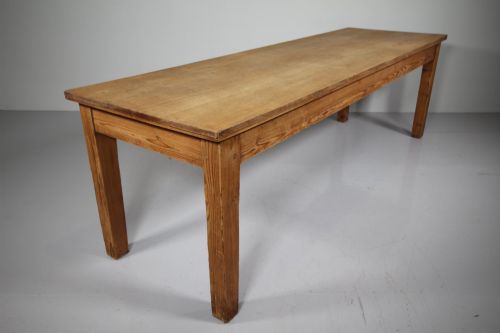
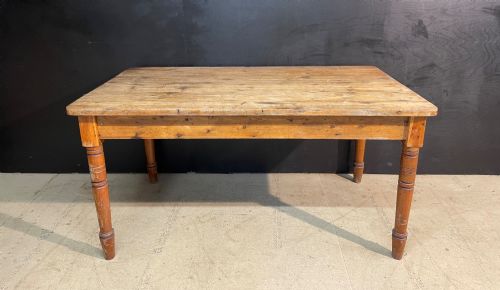
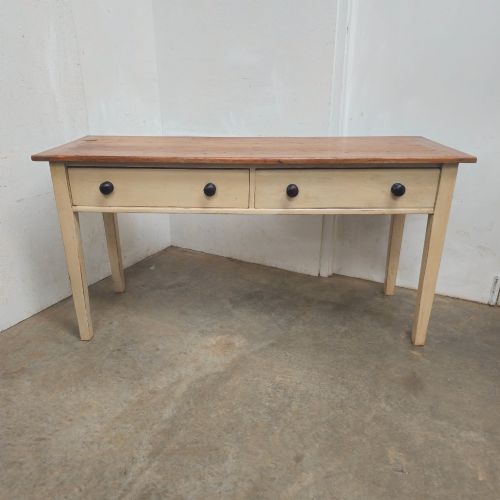
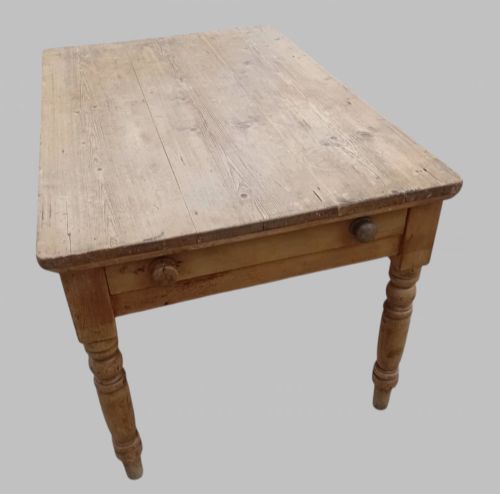
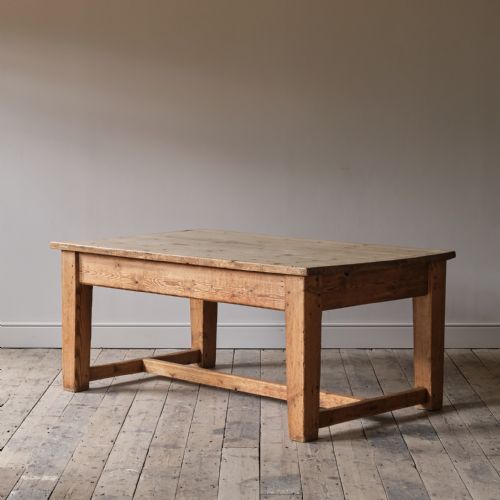
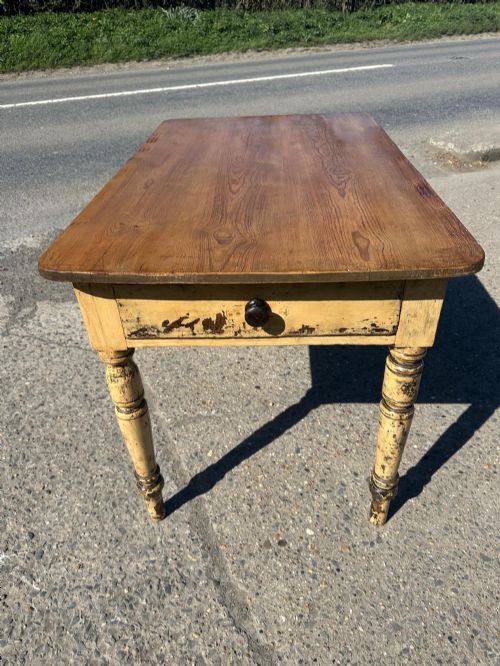


Victorian Scrubbed Pine Table
A victorian scrubbed pine table brings genuine vernacular utility into a modern room, offering honest construction and centuries of hard-won character.
Victorian Scrubbed Pine Table
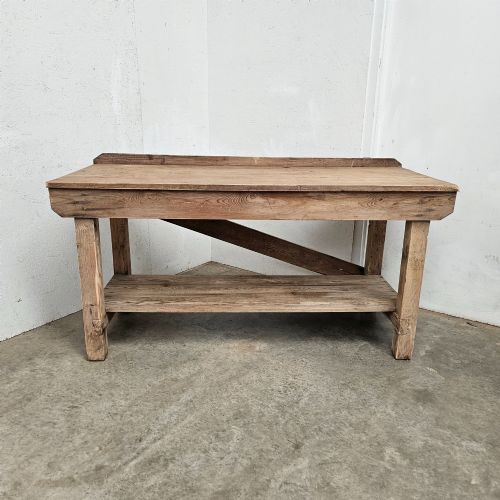
A victorian scrubbed pine table represents the hardworking utility of nineteenth-century domestic life, designed for daily preparation rather than formal display. These pieces generally appear as farmhouse dining tables, kitchen work benches, or dairy tables originating across English, Scottish, and Welsh regions.
Most examples found here combine a thick timber top, repeatedly scrubbed clean with soap and water over generations, with sturdy structural frames. Formats range from modest cricket tables and side tables to large refectory and tavern tables capable of seating numerous guests.
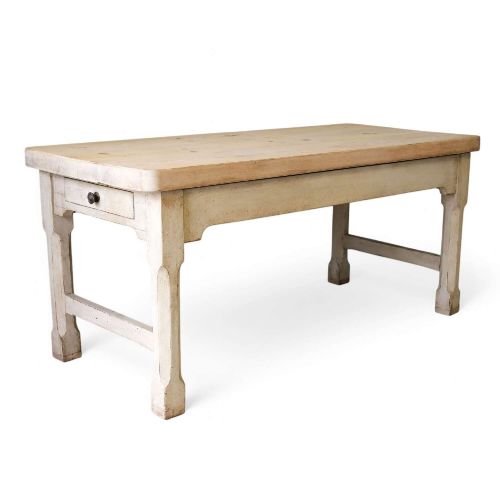
The aesthetic sits firmly within rustic country and vernacular traditions, often showing honest wear from decades of domestic service. Buyers encounter variations featuring single drawers, lower shelves, or original painted bases contrasting against bare wood tops.
Materials and construction
Makers relied primarily on solid pine and timber, selected for availability and resilience rather than preciousness, occasionally incorporating sycamore for specific working surfaces. These softwoods were joined using traditional methods to withstand heavy daily demands in kitchens, dairies, and workrooms.
Surfaces frequently reveal the history of their upkeep, with heavy scrubbing leaving the grain raised and pale on the top boards. Bases often retain traces of early paint finishes, including red paint, or layers of old pigments applied during subsequent decades of use.
Some tables carry layers of old paint on their bases, preserving accidental splashes from past centuries of enthusiastic kitchen work.
Assessing quality and character
Quality rests in the integrity of the timber and the balance of proportions, distinguishing robust workshop benches from domestic tables of lesser scale. The depth and colour of the scrubbed top indicate how carefully the wood has aged through years of maintenance.
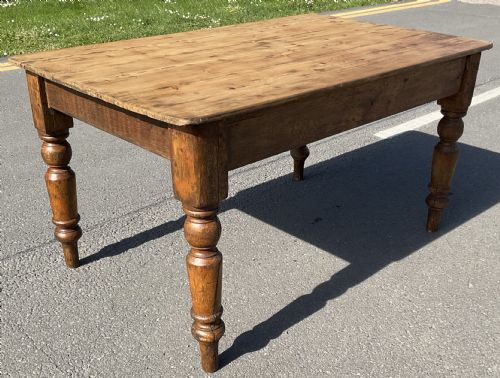
Structural elements such as square section supports, bobbin turned legs, or X frames define the distinction between standard utilitarian designs and more regional or specialised forms. Original paint on the base, where preserved, adds another layer of authenticity to the piece.
The Victorian Scrubbed Pine Table Glossary
- Scrubbed top
- A wooden surface cleaned repeatedly with water and an abrasive to maintain hygiene, leaving the grain prominent and smooth. This process creates the characteristic pale, washed appearance prized by collectors.
- Vernacular
- Objects designed by local craftsmen for practical use rather than following strict classical architectural rules. These pieces reflect regional materials and traditional methods.
- Cricket table
- A small, lightweight three-legged table originating from domestic or tavern use. The three-legged design ensured stability on uneven stone floors.
- Refectory table
- A long dining table traditionally used in communal halls. Nineteenth-century interpretations adapt this generous length for farmhouse kitchens.
- Dairy table
- A specialised low-porosity wooden table used for cheese making and milk processing. These surfaces often feature specific drainage designs or sheltered lower shelves.
Victorian Scrubbed Pine Table: Frequently Asked Questions
How do I clean a scrubbed pine table?
Maintain the pale finish using warm water and mild soap, scrubbing gently along the grain. Avoid harsh chemical sealants that alter the historic texture of the wood.
Dry the surface thoroughly after washing to prevent moisture retention in the softwood grain.
Were these tables used for dining or working?
Nineteenth-century pine tables served multiple domestic purposes, transitioning seamlessly from food preparation to family dining. Kitchen and work tables bore the brunt of daily labour before sharing meals.
Many examples feature drawers for utensils or lower shelves for storage, confirming their role as functional workstations.
How can I tell the age of a pine table?
Examine the timber boards for hand-sawn tool marks, peg construction, and the distinctive wear patterns of nineteenth-century use. Scrubbed surfaces often show decades of historical cleaning.
Hardware such as brass pulls or handmade nails can offer further clues to the manufacturing period between eighteen-fifty and nineteen-thirty.
Do these tables fit modern dining spaces?
The warm tones of aged pine and simple rustic forms complement contemporary and traditional interiors alike. Their robust construction suits active family dining rooms and kitchens.
Pairing a large work table with mismatched chairs creates an authentic country house aesthetic.