

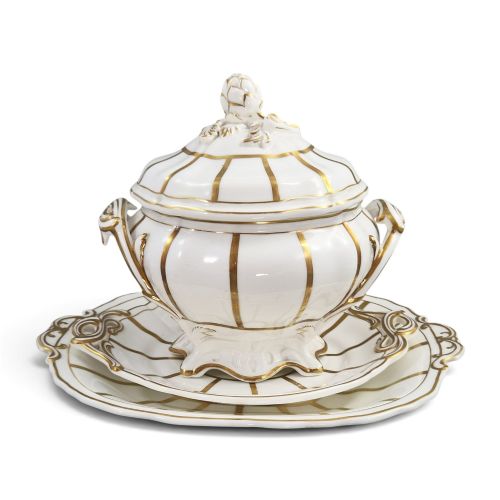

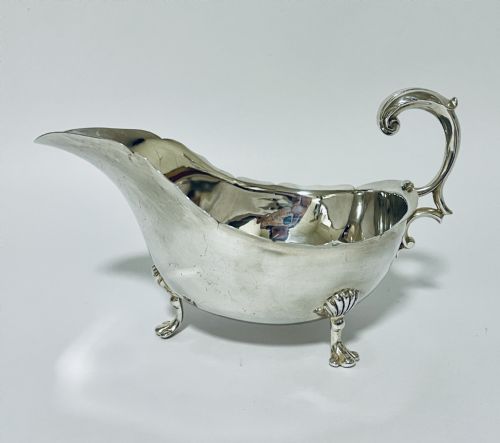


Victorian Sauce Boat
These Victorian sauce boat examples range from heavy silver vessels to ironstone tureens, built to serve gravy at formal dining tables.
Victorian Sauce Boat
A victorian sauce boat serves as a table vessel for gravies and sauces, appearing frequently in sterling silver, silver plate, and ironstone. These pieces range from simple domestic forms to elaborate naturalistic designs featuring chased acorn motifs or swan necked handles.
The most common formats on this page include sterling silver vessels from London and Chester makers, alongside ceramic tureens with matching ladles and stands. Buyers will also encounter unusual silver-plated warmer variants and fitted walnut holders.
These items originate across the nineteenth century, spanning standard domestic wares to matched pairs created by prominent silversmiths.
Materials and construction
Silversmiths constructed solid silver sauce boats using techniques of casting, hammering, and chasing, often adding cast feet and applied decorative borders. Silver-plated pieces rely on a base metal foundation coated with a durable layer of silver.
Ceramic examples utilise ironstone, earthenware, or bone china bodies, shaped in moulds and finished with hand-painted glazes or transfer printing. Specialised vessels incorporate wood, wirework, and hinged metal lids into their assembly.
Victorian Sauce Boat Retail Price Guide 2026
Typical asking prices for victorian sauce boat among the pieces listed under this phrase on Sellingantiques today, from the lower quarter to the upper quarter. They describe what is for sale here now, not the wider market.
The archive records silver sauce boats originating from regional assay offices including London and Chester.
Distinctions in quality
The standard of a silver sauce boat depends on the crispness of chased details, such as naturalistic acorn or scrollwork motifs, and the solidity of the metal gauge. Heavy-gauge silver pairs display superior balance and retain their intended shape far better through generations of use.
For ceramic tureens, quality rests in the clarity of the glaze, the precise alignment of transfers or hand-painted patterns, and the inclusion of original matching ladles and stands. Maker marks from established silversmiths or potteries elevate the standing of individual items.
Tiffany and Co·William Comyns·Francis Higgins·Charles Stuart Harris·Horace Woodward and Co Ltd
The Victorian Sauce Boat Glossary
- Sterling silver
- A silver alloy containing 92.5 percent pure silver by weight, used for the finest Victorian tablewares.
- Ironstone
- A dense, durable type of earthenware developed in the nineteenth century for hard-wearing domestic ceramics.
- Chasing
- A metalworking technique where a silversmith punches and pushes the front surface of metal to form raised ornamental designs without removing material.
- Tureen
- A deep, covered ceramic or metal vessel designed for serving sauces, gravies, or soups at the table.
- Assay office mark
- A stamp applied to precious metals indicating the testing office responsible for verifying the metal standard.
Victorian Sauce Boat: Frequently Asked Questions
How do I know if a sauce boat is solid silver or plated?
Solid silver pieces carry official hallmarking stamps that include a purity standard mark, such as a lion passant for sterling, alongside a town mark and a date letter. Silver plated items lack these specific assay marks and may reveal the base metal underneath where the plating has worn thin.
Examining the underside and handle joints under magnification often reveals the small stamps or alternative manufacturer marks unique to plated wares.
Were these vessels used individually or in pairs?
Dinner tables of the period frequently utilised matched pairs of sauce boats or tureens placed at opposite ends of long dining tables to serve large gatherings efficiently. Single pieces were equally common for smaller households or everyday family meals.
Matching pairs command distinct interest from collectors today because keeping two identical serving vessels intact through centuries is uncommon.
How can I care for antique silver and ceramic sauce boats?
Sterling silver vessels require occasional gentle cleaning with specialised silver polish to maintain their finish without removing fine chased details. Ceramic ironstone and bone china should be washed by hand in warm soapy water rather than placed in modern dishwashers.
Avoiding harsh abrasives ensures that delicate gold leaf accents, hand-painted glazes, and soft metal surfaces survive intact for future use.