

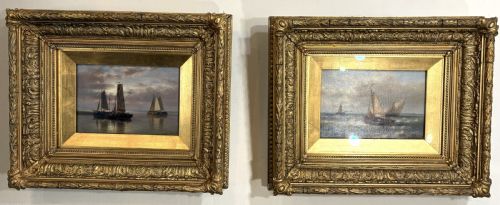


Victorian Sailing Ship Artwork
Victorian sailing ship artwork captures maritime history through period oils, watercolours and dioramas depicting vessels on open waters.
Victorian Sailing Ship Artwork
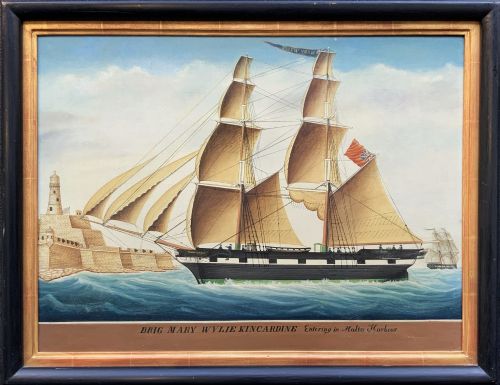
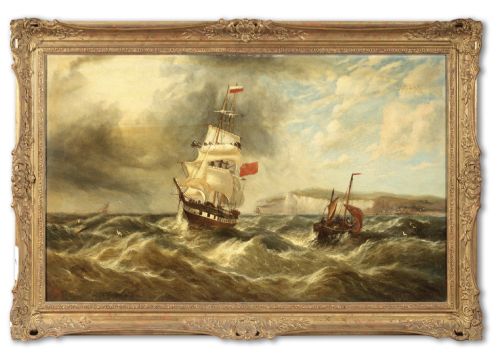
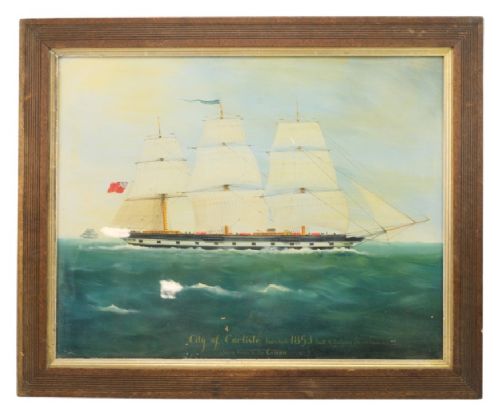
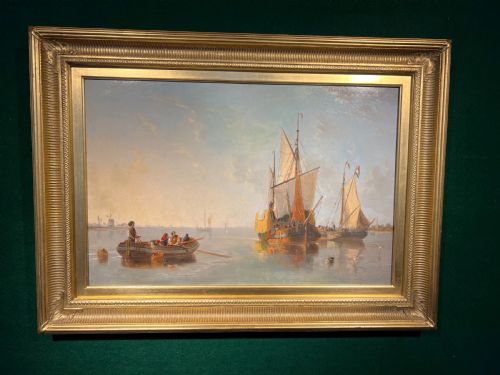
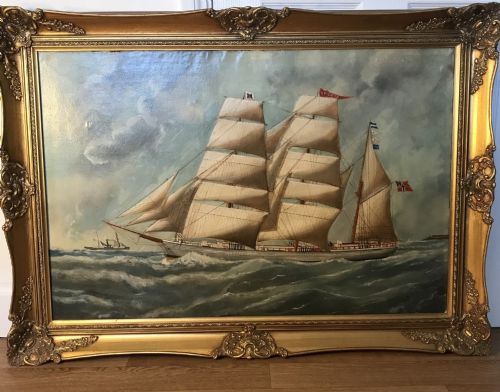
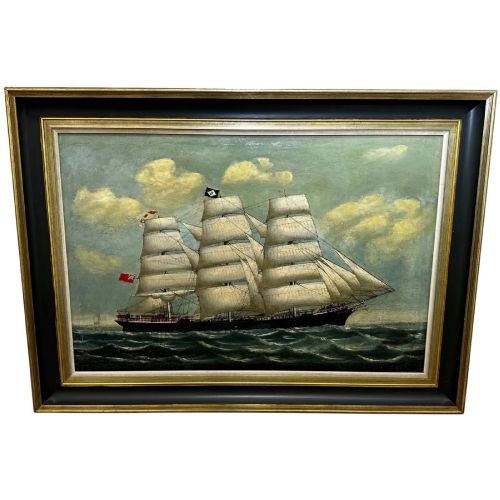
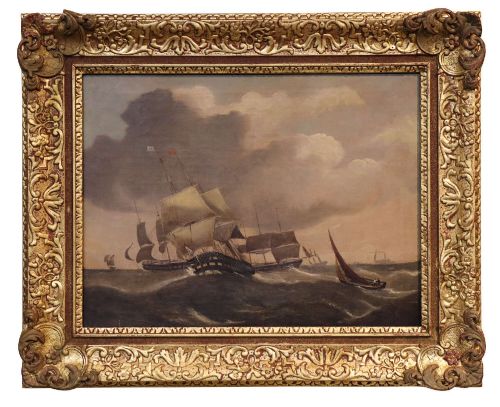
When you search for Victorian sailing ship artwork, you encounter maritime scenes recorded across the nineteenth century by named artists and regional schools. These pieces document specific vessels, merchant ships, barques and coastal shipping engaged in daily trade or weathering rough seas.
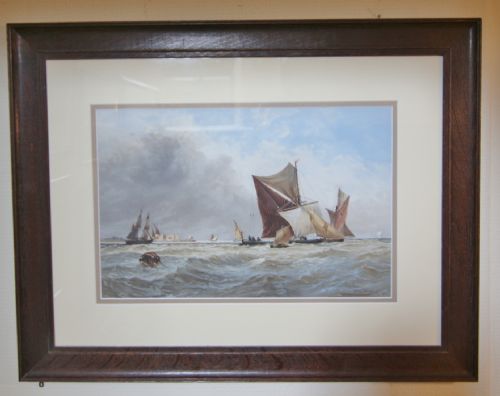
The works take several distinct forms, primarily comprising oil paintings on canvas, panel or card, alongside delicate watercolours and three-dimensional dioramas. Many capture recognisable locations such as the Medway, Portsmouth harbour or distant Arctic expeditions, framed within period wood and gold leaf mouldings.
Materials and technique
Artists of the period utilised oil paint on canvas or board to build up depth in heavy seas and dramatic skies, frequently applying washes of watercolour on paper for lighter coastal views. Pigments were bound to support structures that varied from traditional wood panels to stretched canvas and heavy card.
Framing played an integral role in presentation, incorporating carved wood finished with gold leaf or hand-enamelled polychrome details. These protective surrounds often reflect the specific decade of creation, matching the maritime focus of the interior artwork.
Several artists captured vessels battling notoriously choppy waters, ensuring viewers can experience stormy seas without getting their boots wet.
Distinctions in quality
The standard of execution rests upon the artist's command of maritime rigging, hull perspective and atmospheric water movement. Pieces by documented professionals demonstrate precise anatomical knowledge of three-masted schooners and clippers compared to simpler works by anonymous regional schools.
Preservation of the original surface further separates examples, particularly where oil paintings retain their rich varnishes and watercolours avoid excessive fading from light exposure. The integration of original period frames also contributes to the integrity of the piece.
John Rose Miles·John Wilson Carmichael·Abraham Hulk I·William Frederick Settle·Thomas Bush Hardy·Daniel Sherrin·George Stanfield Walters·Joseph Heard
The Victorian Sailing Ship Artwork Glossary
- Barque
- A sailing vessel with three or more masts having the fore and mainmasts square-rigged and the mizzenmast fore-and-aft rigged. This rig was common for long-distance merchant voyages during the nineteenth century.
- Diorama
- A three-dimensional display showing models of ships set against a painted background inside a glazed case. These constructed scenes often incorporate carved wooden elements and modelled waves.
- Seascape
- A work of art depicting the sea, coastal views or ships in marine environments. These compositions focus heavily on the interaction between water, weather and vessel.
- Watercolour
- A painting method where fine pigment powders are suspended in a water-based solution and applied to paper. It yields translucent washes well-suited to capturing atmospheric coastal light.
Victorian Sailing Ship Artwork: Frequently Asked Questions
What subjects appear in these paintings?
The artworks primarily show British merchant ships, clippers, barques and fishing boats navigating coastal waters or open seas. Many depict named vessels engaged in historical voyages or routine trade.
Scenes frequently capture specific locations, harbours and lighthouses around the British coastline and international waters, recorded during the nineteenth century.
How do I identify a watercolour from an oil painting?
Watercolours utilise paper supports and display translucent pigment washes where the texture of the paper remains visible beneath the colour. They are typically presented behind protective glass.
Oil paintings feature heavier paint layers applied to canvas, wood panel or card, possessing a textured surface that often exhibits visible brushstrokes and a semi-gloss or matte finish.
What is a maritime diorama?
A maritime diorama is a constructed three-dimensional scene featuring a model ship positioned against a painted backdrop. These pieces are typically housed within wooden display cases behind glass.
They combine sculpture and painting to recreate coastal environments and sailing vessels with realistic depth.
Where should I hang maritime artwork?
These pieces suit spaces with consistent ambient light levels, away from direct sunlight to protect delicate watercolours and paper supports from fading. Rooms with traditional wood furniture or neutral walls complement the gold leaf frames and maritime palettes.
Ensuring secure wall fixings is essential due to the weight of period wooden frames and larger oil canvases.