




Victorian Saddle Chair
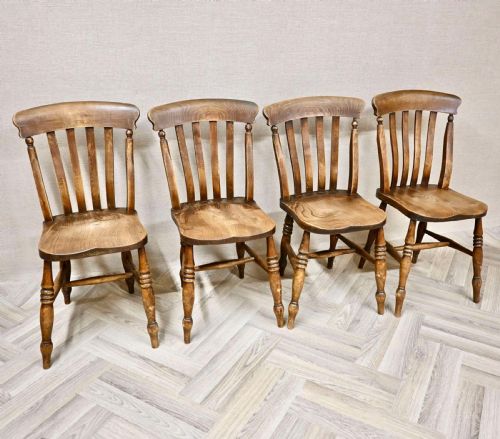
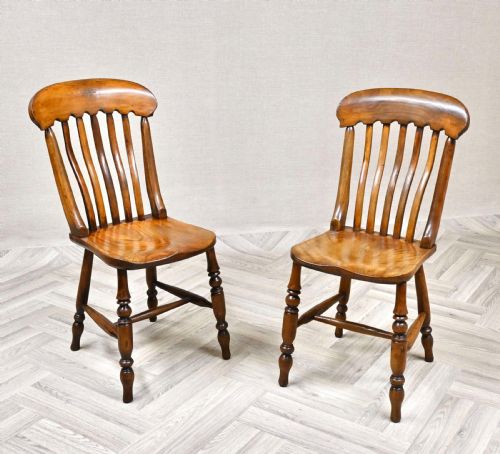
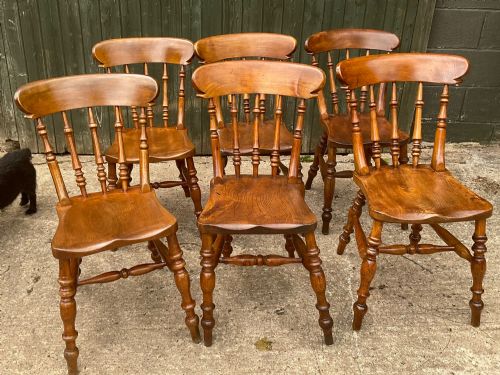
These Victorian saddle chair examples are robust nineteenth-century timber seating pieces designed for comfort and sturdy utility in domestic and office spaces.
Victorian Saddle Chair
A Victorian saddle chair most commonly manifests in the evidence as a Windsor armchair, featuring carved wooden seats shaped for the sitter alongside specific regional variants like smoker's bows and low back designs. These items emerge predominantly from nineteenth-century English country and provincial workshops, spanning the Victorian and Regency eras.
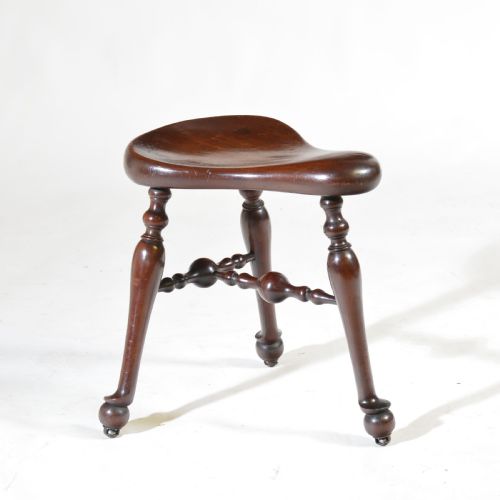
Buyers encounter variations ranging from single library and desk chairs to matched sets of farmhouse kitchen chairs. The selection also includes related forms such as armchairs, dining chairs, and stools fashioned from various domestic hardwoods.
How they were made
Maker construction relies heavily on traditional timber combinations, pairing elm seats with turned components of ash, beech, fruitwood, or yew wood. Cabinetmakers and bodgers shaped solid elm into saddle-style seats while utilising steam-bending techniques for the characteristic curved back rails and bows.
The construction of these chairs involves Windsor framing methods where spindles and legs are wedged directly into the thick wooden seat slab. Workshop production spanned multiple timbers, sometimes incorporating walnut or mahogany for specific provincial seating forms.
Object types span armchairs, dining chairs, desk chairs, and stools originating across the Victorian and Regency periods.
What varies in quality
Quality differences stem from the selection of timber grains and the depth of the saddle shaping in the seat. Examples featuring figured yew wood or generous proportions generally sit at the higher end of the range compared to standard utility models.
The precision of the spindle turning and the integrity of the structural joints dictate the refinement of each piece. Superior items display well-matched timber components and retained original surfaces that reflect skilled nineteenth-century provincial joinery.
James Shoolbred
The Victorian Saddle Chair Glossary
- Windsor chair
- A wooden chair built with a thick timber seat hole into which the legs and back spindles are raked. This construction method defines the majority of the provincial seating seen in the listings.
- Smoker's bow
- A low-backed wooden armchair with a continuous curved armrail popular in nineteenth-century offices and smoking rooms. These pieces frequently combine ash frames with elm seats.
- Broad arm
- A chair featuring an expanded, flat wooden armrest designed for writing or reading convenience. This form appears frequently on nineteenth-century Windsor armchairs.
- Cock-fighting stool
- A low stool traditionally associated with spectator seating at blood sports, adapted during the nineteenth century for general domestic utility. The listings include walnut examples of this form.
- Bodger
- A nineteenth-century woodland wood-turner who produced chair legs and spindles on pole lathes near the timber source. Their output formed the raw components for provincial chairmakers.
Victorian Saddle Chair: Frequently Asked Questions
What is a Victorian saddle chair?
A Victorian saddle chair refers to nineteenth-century wooden seating, predominantly Windsor armchairs, featuring a carved, contoured seat resembling a saddle for enhanced comfort.
These pieces originate from English provincial workshops and utilise native hardwoods like elm, ash, and yew.
How were these chairs used?
They served multiple functions across nineteenth-century homes, functioning as kitchen dining seats, farmhouse armchairs, and office or desk chairs.
Sturdy construction made them practical for daily domestic labour and writing tasks.
Which woods are most common?
Elm appears consistently as the primary wood used for the solid saddle seats due to its resistance to splitting.
Turned spindles and legs typically employ ash, beech, or fruitwood, while superior examples incorporate yew wood.
How do I date a nineteenth-century chair?
Dating relies on stylistic markers, construction methods, and recorded workshop periods spanning the Regency and Victorian eras.
Examination of the timber patination and assembly techniques helps determine whether a piece dates to the mid or late nineteenth century.