
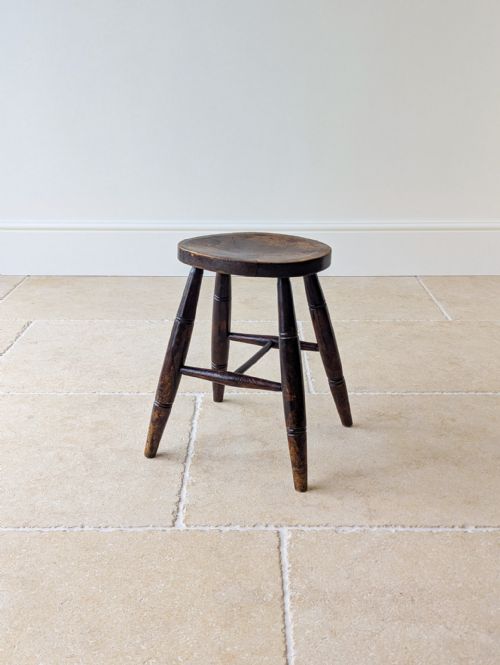
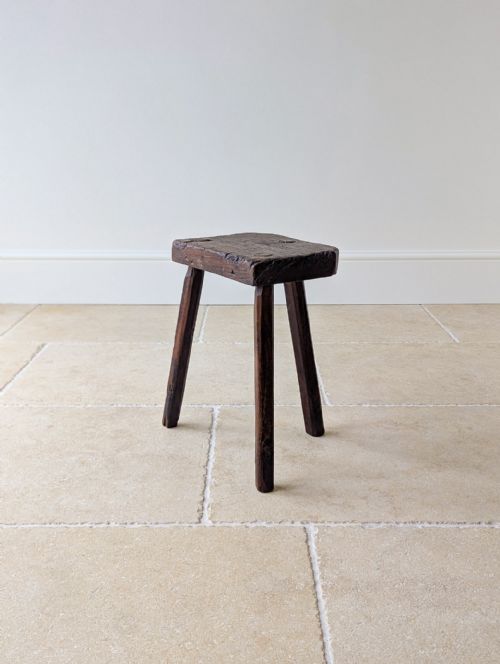
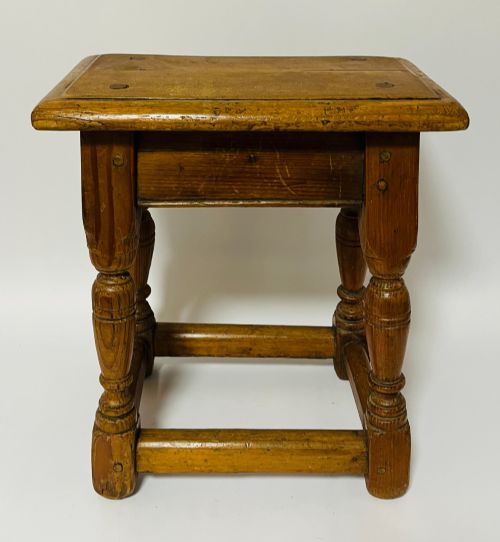

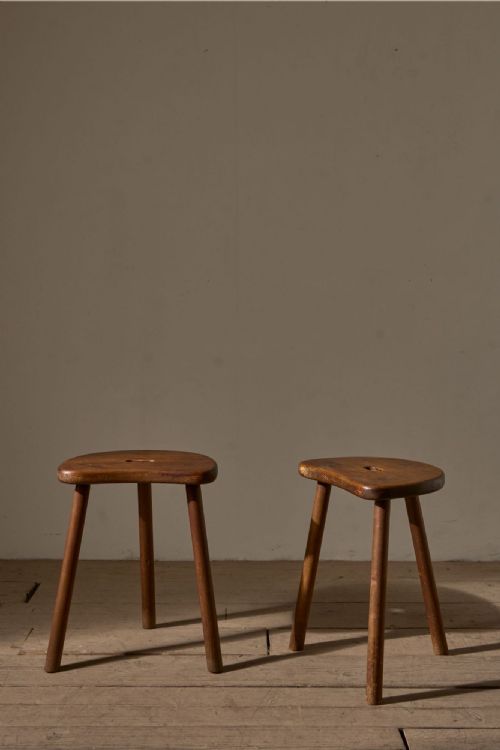





Victorian Rustic Low Stool
These victorian rustic low stool pieces are honest, hard-wearing seating built from solid timber for everyday domestic and trade use.
Victorian Rustic Low Stool
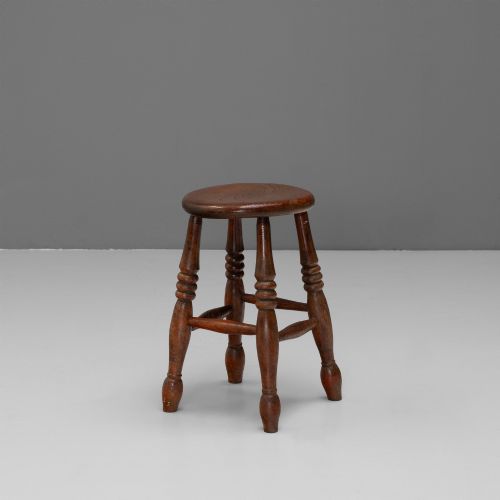
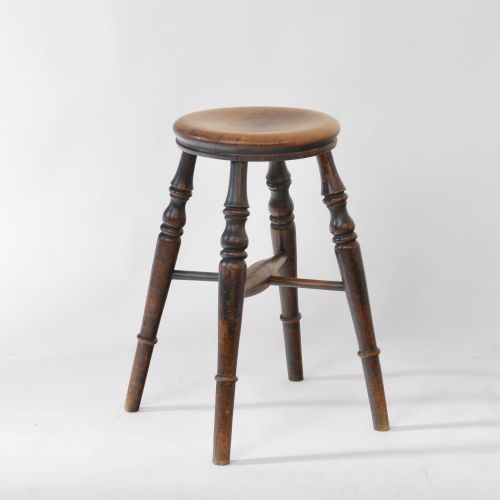
A victorian rustic low stool represents the utilitarian seating of the nineteenth century, shaped by country carpenters, tavern keepers and urban tradesmen. These items serve as low seats, footrests and compact stands, emerging from periods including the mid-nineteenth century and the year nineteen twenty.
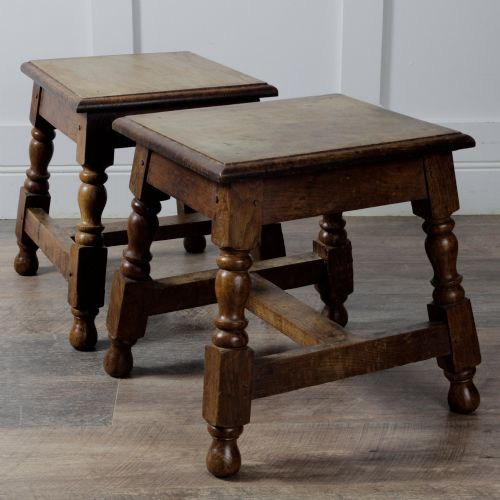
The versions most commonly met on this page belong to the Victorian Country, Rustic Farmhouse and English Country House styles. They appear as joint stools, tavern seats, hearth stools and vernacular work stools rather than formal drawing-room furniture.
Makers shaped these low forms for specific environments, from public houses and alehouses to jewellers' benches and nurseries. Their straightforward utility dictates their proportions, keeping them low to the ground and sturdy in construction.
How they were made
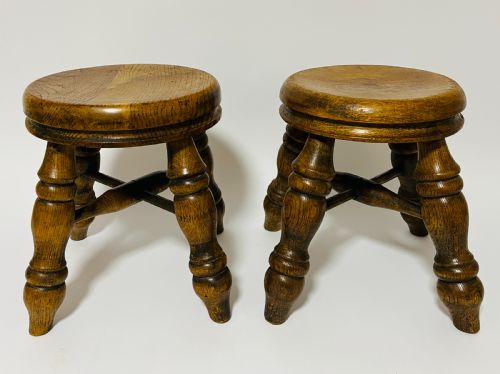
Makers constructed these pieces from native British timbers such as oak, elm, ash, beech, pine, sycamore and general hardwood. These woods were chosen for strength and availability, often combining different timbers for the seat and the underframe.
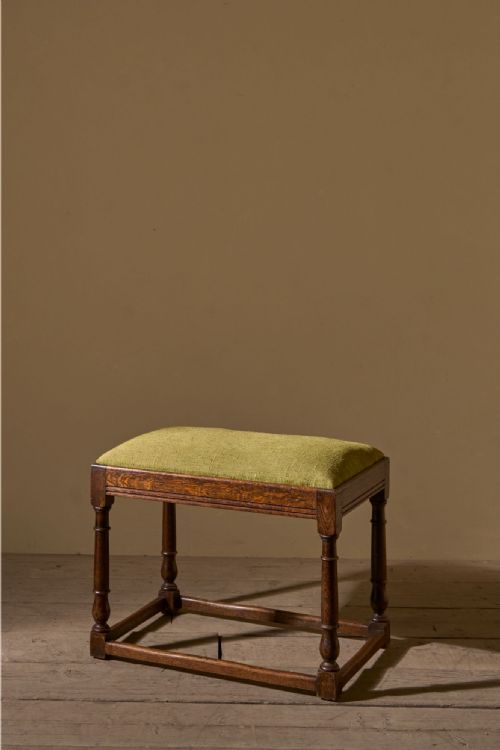
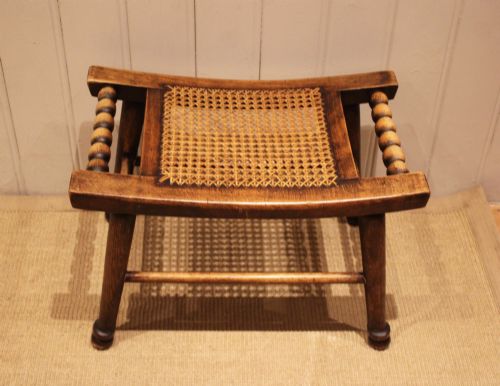
Construction techniques rely on traditional jointing methods, including jointed frames and turned components like ball feet. Some examples incorporate woven cane or heavy green linen upholstery fixed to the wooden structure.
Several low stools spent their working lives in smoky nineteenth-century alehouses, jewellers' benches and noisy Victorian pubs before reaching the quiet of a modern living room.
What varies in quality
Quality rests in the integrity of the timber and the honesty of the construction, where substantial oak or figured elm commands greater respect than softer pine. Original surfaces and patination earned through decades of genuine use distinguish superior examples from plain replacements.
The sophistication of the turning on legs and stretchers elevates certain pieces, separating simple workshop output from more considered vernacular design. Structural tightness and minimal replacement parts determine the enduring worth of each stool.
The Victorian Rustic Low Stool Glossary
- Joint stool
- An early form of wooden stool constructed with mortise and tenon joints pegged together rather than glued. This method provided exceptional rigidity for daily domestic tasks.
- Vernacular
- Everyday objects designed by local craftspeople for practical function rather than academic architectural styles. These pieces reflect regional materials and traditional working methods.
- Draught top
- A seat design associated with tavern and pub seating, often shaped or dished for comfort during long periods of sitting. This form relates directly to communal drinking establishments.
- Jeweller's stool
- A specialised work seat tailored for trade use, combining low proportions with sturdy timber construction to support detailed bench work. These survive from nineteenth-century urban workshops.
- Hearth stool
- A low seating form placed beside an open fireplace for warmth. Their modest height kept occupants below the level of rising smoke.
Victorian Rustic Low Stool: Frequently Asked Questions
What were low stools used for?
These low wooden pieces served multiple domestic and trade functions near the ground, from resting feet beside the hearth to sitting close to low tables. Tradesmen also utilised them for specific workshop tasks.
In public houses and alehouses, similar sturdy stools provided durable seating for customers. Their modest height made them easy to tuck beneath larger furniture when not in use.
How do I identify a Victorian piece?
Identifying nineteenth-century work relies on observing tool marks, timber shrinkage, and traditional jointing methods like pegged mortise and tenon frames. Native woods such as elm, oak and ash display period-specific handling.
Style indicators like Gothic Revival touches, vernacular turning patterns, and heavy green linen upholstery help anchor pieces to the era. The absence of modern fixings further confirms their age.
Are these stools comfortable to sit on?
Most of these low seats were built for utility rather than cushioned ease, featuring solid timber tops or simple cane inserts. Dished wooden seats offer some ergonomic shaping.
Adding a loose cushion or placing them as footstools softens their firm surfaces. Their primary appeal lies in their stability and compact scale.
Where should I place a low stool?
These compact items fit easily into hallways, beside low armchairs as impromptu side tables, or positioned near fireplaces as traditional hearth seating. Their modest footprint makes them useful in tight spaces.
They also function effectively as plant stands or display surfaces for small decorative objects. Their rustic presence complements both period interiors and modern minimalist rooms.