





Victorian Rush Armchair
A victorian rush armchair brings tactile warmth and vernacular simplicity to a room through woven seating and turned wood.
Victorian Rush Armchair
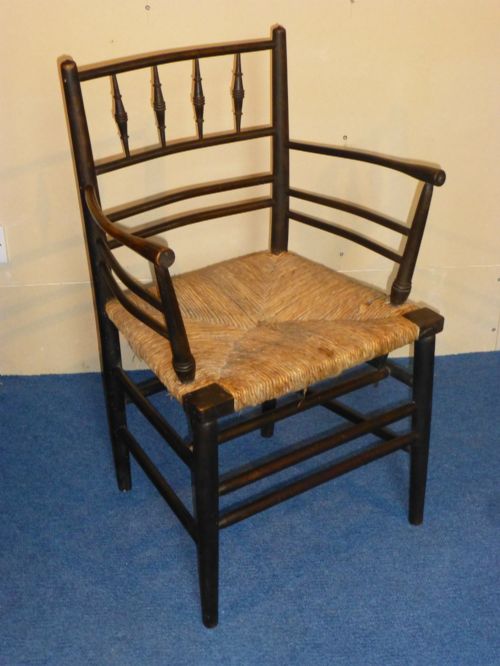
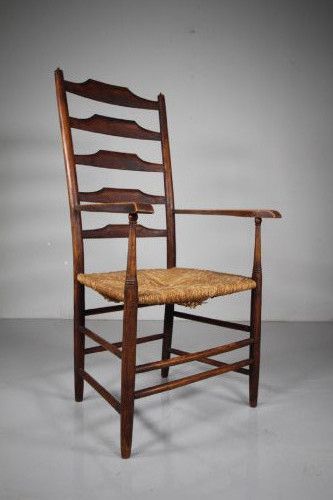
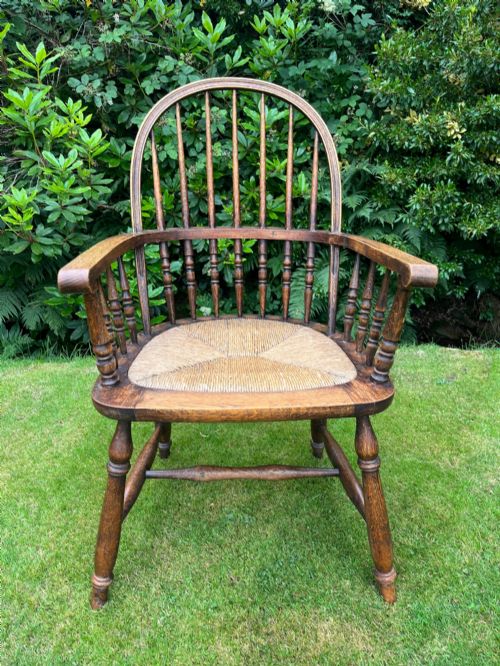
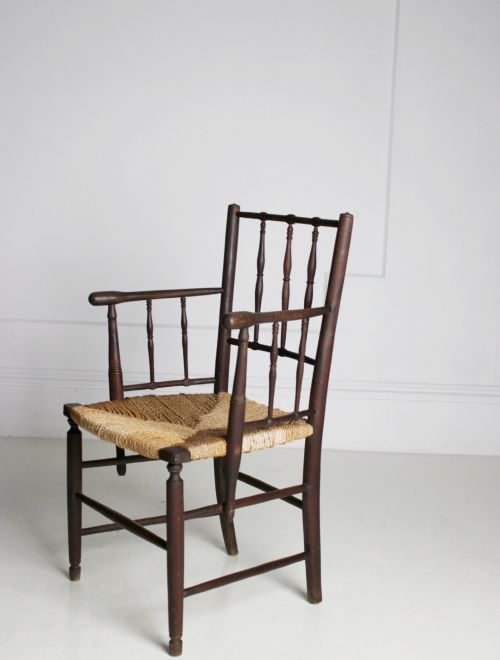
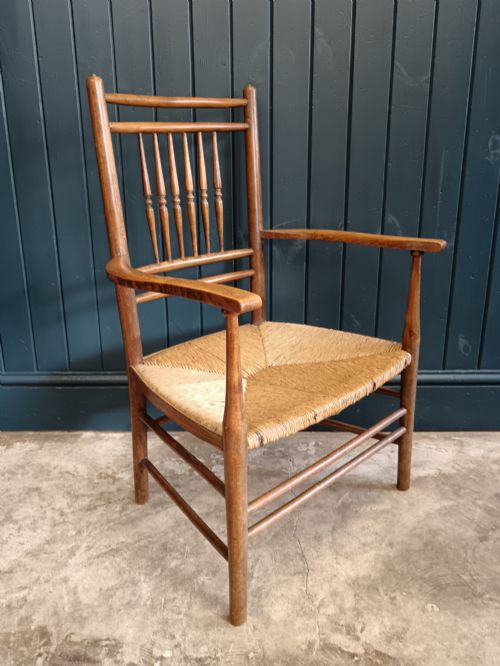
A victorian rush armchair is typically a sturdy country seat constructed during the nineteenth century, featuring a woven rush base paired with a timber frame. These pieces span simple ladderback farmhouse forms and sophisticated Arts and Crafts designs.
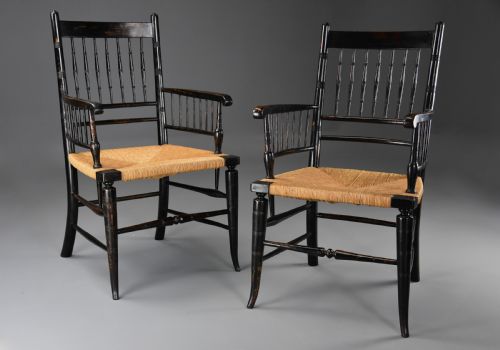
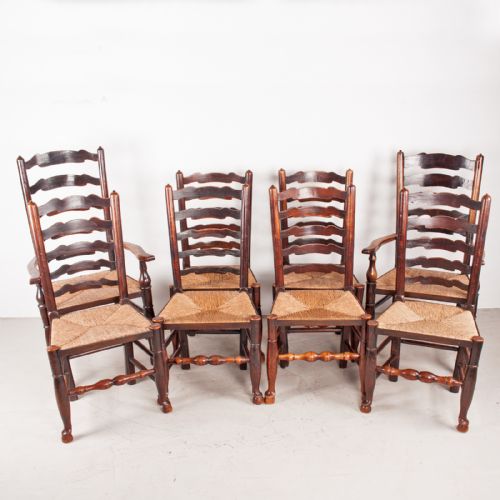
The version you are most likely to encounter on this page is the nineteenth century ash, elm, or beech chair, often shaped with spindle backs or multiple horizontal slats. They range from robust Lancashire kitchen carvers to lighter ebonised Sussex models.
Materials and construction
Frames rely on indigenous English hardwoods such as ash, elm, oak, and beech, chosen for their strength in steam bending and spindle turning. Ebonised finishes and painted surfaces also appear, offering an alternative to natural timber.
Seats are woven by hand using dried rush or seagrass, wound tightly around timber rails to create a resilient, textured platform. Joinery typically involves traditional mortise and tenon joints secured with wooden pins.
Makers occasionally offered matching 'his' and 'hers' armchairs, ensuring domestic harmony by the Victorian hearth.
Qualities of distinction
Quality rests in the crispness of the turning on the uprights and the tightness of the original rush weave. Superior examples balance architectural proportion with comfortable ergonomics.
Attribution to notable workshops or designers elevates certain pieces, whilst patination on the timber frame indicates age and honest handling over generations.
Morris & Co·Philip Webb·Philip Clissett·E W Godwin
The Victorian Rush Armchair Glossary
- Rush seat
- A seating surface woven from dried marshland plants. It provides a springy, durable pad that develops a smooth golden tone with age.
- Ladderback
- A chair back constructed with horizontal arched slats resembling the rungs of a ladder. This vernacular form is common in nineteenth century country seating.
- Spindle back
- A chair back filled with numerous thin, turned wooden rods. It distributes weight evenly and creates an open, light profile.
- Ebonised
- Timber treated with chemical stains or dark paint to imitate expensive ebony. This finish was favoured by nineteenth century aesthetic designers.
Victorian Rush Armchair: Frequently Asked Questions
How do I clean a rush seat?
Dust the woven surface gently with a soft brush or vacuum attachment on a low setting. Avoid wetting natural rush, as moisture can cause the dried plant material to rot or snap.
Treat the surrounding wooden frame with a dry cloth and occasional beeswax to nourish the grain without touching the seat weave.
Can broken rush seats be repaired?
Historic rush seats can be entirely re-woven by a skilled craftsperson using traditional materials and techniques. Original rushes that remain intact should be preserved where possible.
Replacement involves stripping the old strands and wrapping fresh marsh grass around the original wooden rails.
Are these chairs comfortable for daily use?
Country armchairs provide supportive upright seating, though cushions are often added for extended lounging. The woven rush yields slightly to the body, offering natural give.
Their sturdy timber frames make them well suited for regular placement around a dining table or beside a fireside.
How do I date a nineteenth century chair?
Examine the tooling marks on the wood, the wear patterns on the feet, and the construction methods used in the joints. Hand-turned spindles and pegged joinery indicate traditional workshop production.
Comparing the specific ladder profile or turning style against documented nineteenth century examples helps narrow the decade of origin.