

Victorian Rural Scene
A victorian rural scene brings the quiet of the 19th-century countryside into a room through oil and watercolour.
Victorian Rural Scene
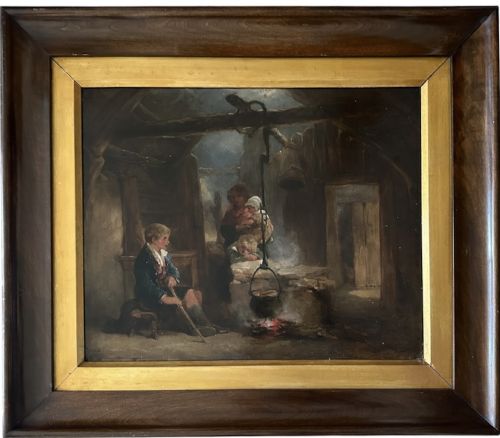
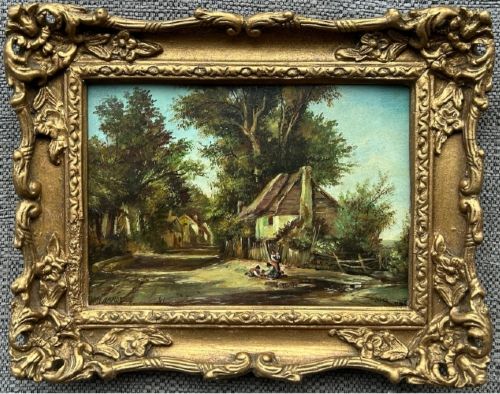
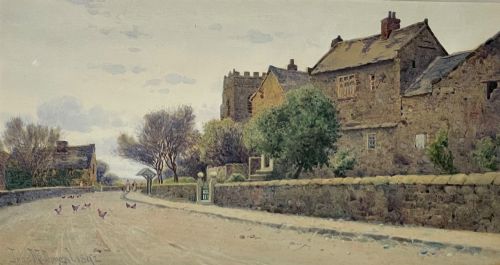
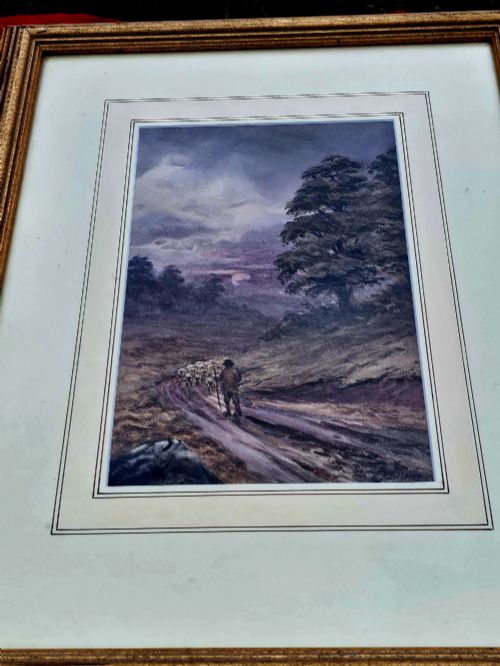
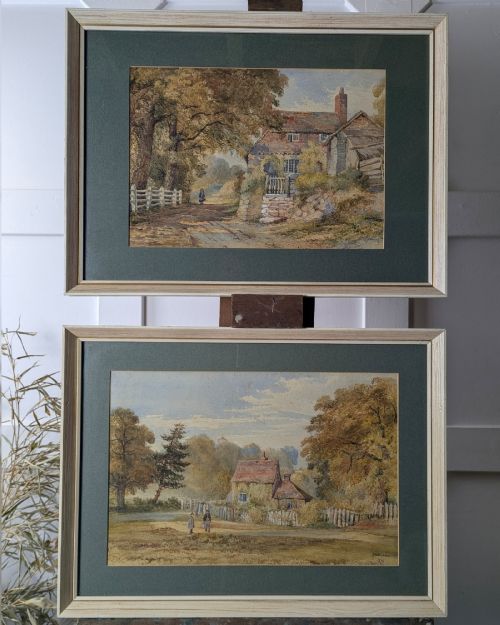
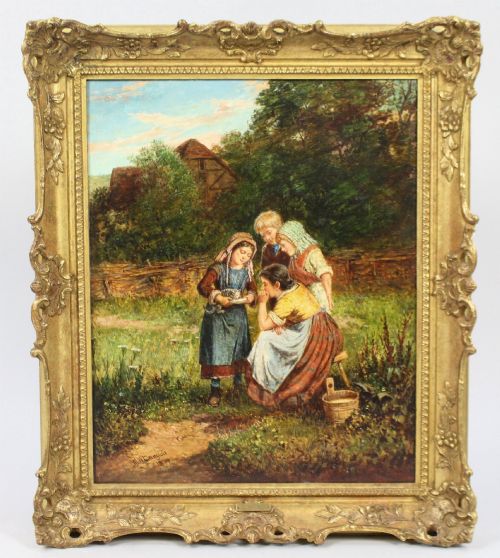
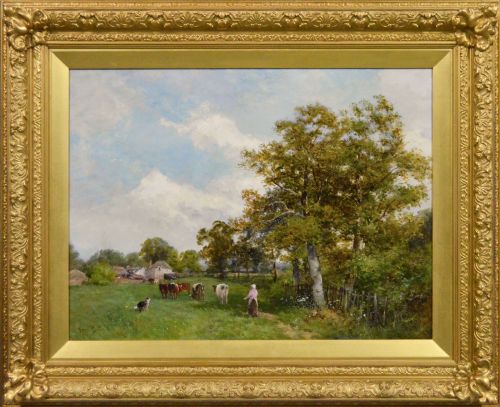
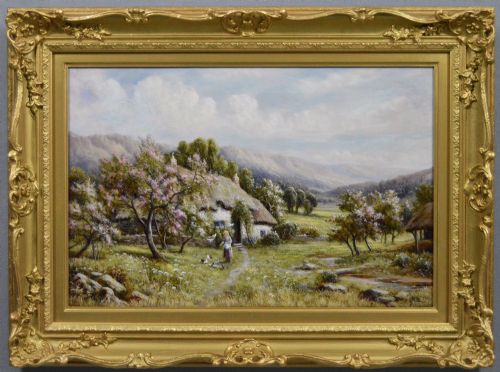
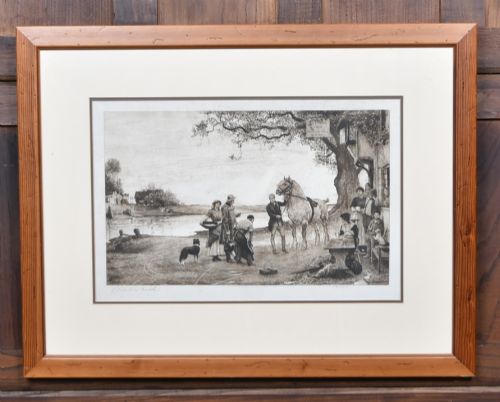
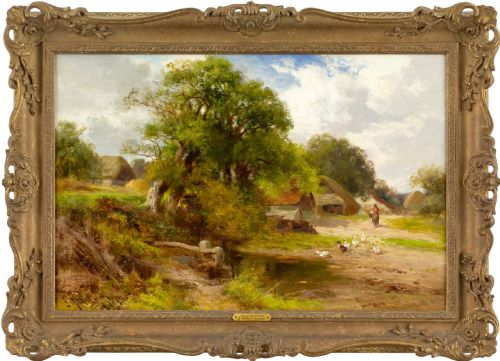
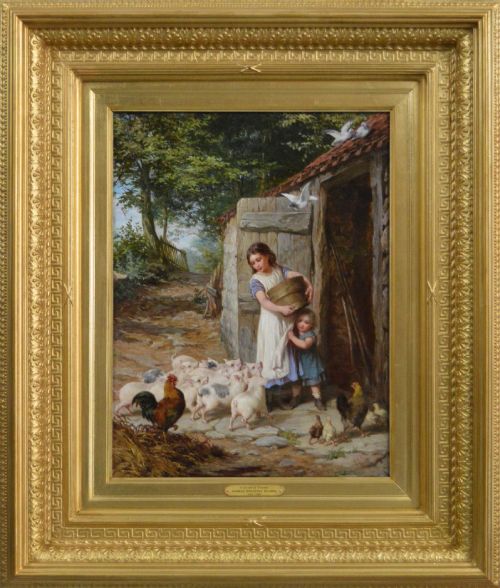
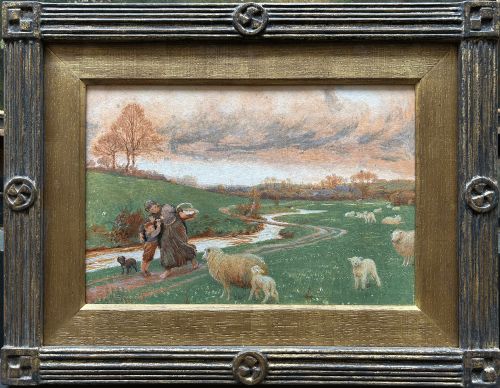
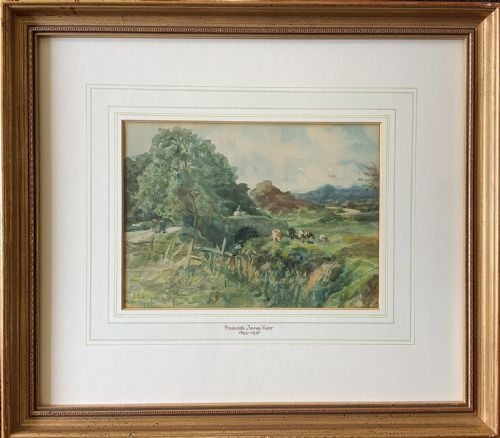
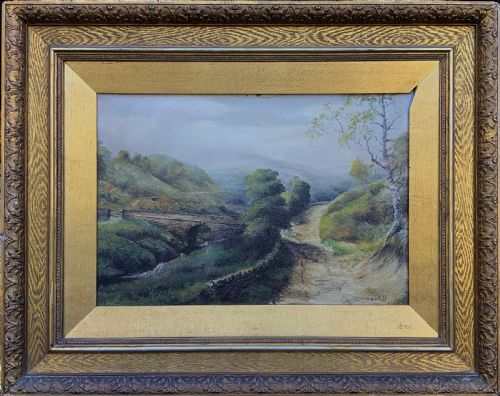
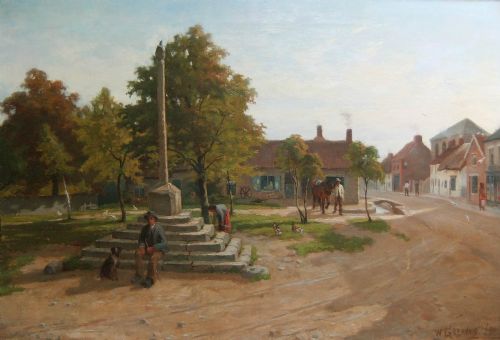
A victorian rural scene represents the 19th-century British countryside, depicting farm life, cottage exteriors, and agricultural labour across various forms. Buyers encounter these subjects primarily in oil paintings and watercolours, often framed as wall art from periods spanning the Victorian era into the early 20th century. The works range from expansive landscape paintings to intimate genre scenes of figures herding livestock or gathering harvests.
The compositions capture everyday country life, featuring figures outside cottages, carthorses working in farmyards, and cattle near streams. Artists recorded specific locations in Sussex, Yorkshire, and Essex, alongside broader pastoral views. These pieces reflect the artistic movements of British realism, Victorian pastoral, and the idyllic school.
How They Were Made
Artists created these works predominantly using oil on canvas, oil on panel, and watercolour on paper. Canvas and panel provided sturdy grounds for rich oil pigments, while watercolour allowed for fluid handling in landscapes and pastoral views.
Framing played an integral role in presentation, utilising gilt frames, wood, gesso, and gold leaf to complement the painted surface. Etchings and lithographs also appear, translating original compositions into printed works on paper.
A bronze jewellery casket hides tiny 18th-century rural scenes within its metalwork, bringing the countryside to the dressing table.
What Varies in Quality
Quality rests on the precision of brushwork and the artist's ability to render light and atmosphere within the landscape. The handling of figures and animals, such as horses, cattle, and sheep, distinguishes accomplished compositions from standard works.
The integrity of the original medium, the depth of the palette, and the suitability of the period frame contribute to the overall execution. Stronger pieces display careful attention to architectural details of cottages and natural textures of fields and streams.
William Howard Hardy·John McDougal·Mark William Langlois·David Bates·Robert John Hammond·George Augustus Holmes·Frederick James Kerr·William Greaves·Miles Birkett Foster·Charles Edward Wilson·Frederick Hines·Sydney Yates Johnson·Thomas Sidney Cooper·James Kyd·James William Booth·Henry John Yeend King·Samuel Joseph Clark·Henry John Boddington·James Hardy Junior·Robert Winchester Fraser·Charles Vickers·Colin H Greenwood·Henry Bailey·John Linnell·Robert Finley McIntyre
The Victorian Rural Scene Glossary
- Genre painting
- A depiction of everyday subjects and ordinary people engaged in common activities. These works often focus on domestic or agricultural scenes rather than grand historical narratives.
- Oil on canvas
- A painting technique using pigments suspended in drying oils applied to a stretched cloth support. This method allows for rich blending of colour and varied surface textures.
- Watercolour
- A medium consisting of water-soluble pigments applied to paper. It produces translucent washes of colour well suited to atmospheric landscape and village views.
- Gesso
- A plaster-like mixture applied to wood or canvas as a base for painting or gilding. It frequently forms the ornamented surface of antique picture frames.
- Etch
- A printmaking process where acid cuts into metal to create lines that hold ink. Artists use this technique to produce detailed works on paper.
Victorian Rural Scene: Frequently Asked Questions
What subjects appear in these paintings?
The works depict agricultural activities, farm animals, country cottages, and figures working the land. Common subjects include herding sheep, harvesting crops, and river landscapes.
These compositions capture a romanticised view of 19th-century British rural life, focusing on traditional trades and quiet country settings.
How should I hang framed art?
Hang paintings at eye level on walls away from direct sunlight and excessive moisture. Proper placement protects the delicate watercolours, oils, and gilt frames from environmental damage.
Ensure the wall fixings match the weight of the heavier oil canvases and their traditional wooden frames.
What is the difference between oil and watercolour?
Oil paintings utilise pigment mixed with drying oil on canvas or panel, yielding thick textures and rich, opaque colour. Watercolours use water-soluble pigments on paper, creating translucent and luminous effects.
Oils generally require sturdy frames without glass protection, whereas watercolours need glazing to shield the paper from dust and humidity.
How do I identify the period?
Dating relies on stylistic clues, framing materials, artist signatures, and inscriptions recorded on the reverse of the canvas or panel. Victorian and Edwardian works often display specific techniques and subject matter typical of 19th-century British realism.
Consulting recorded dates for known painters helps narrow the window of creation for unsigned pieces.