


Victorian Ruby Glass Vase
These victorian ruby glass vase examples bring rich colour and striking form to any mantel or table, offering the warmth and character collectors seek.
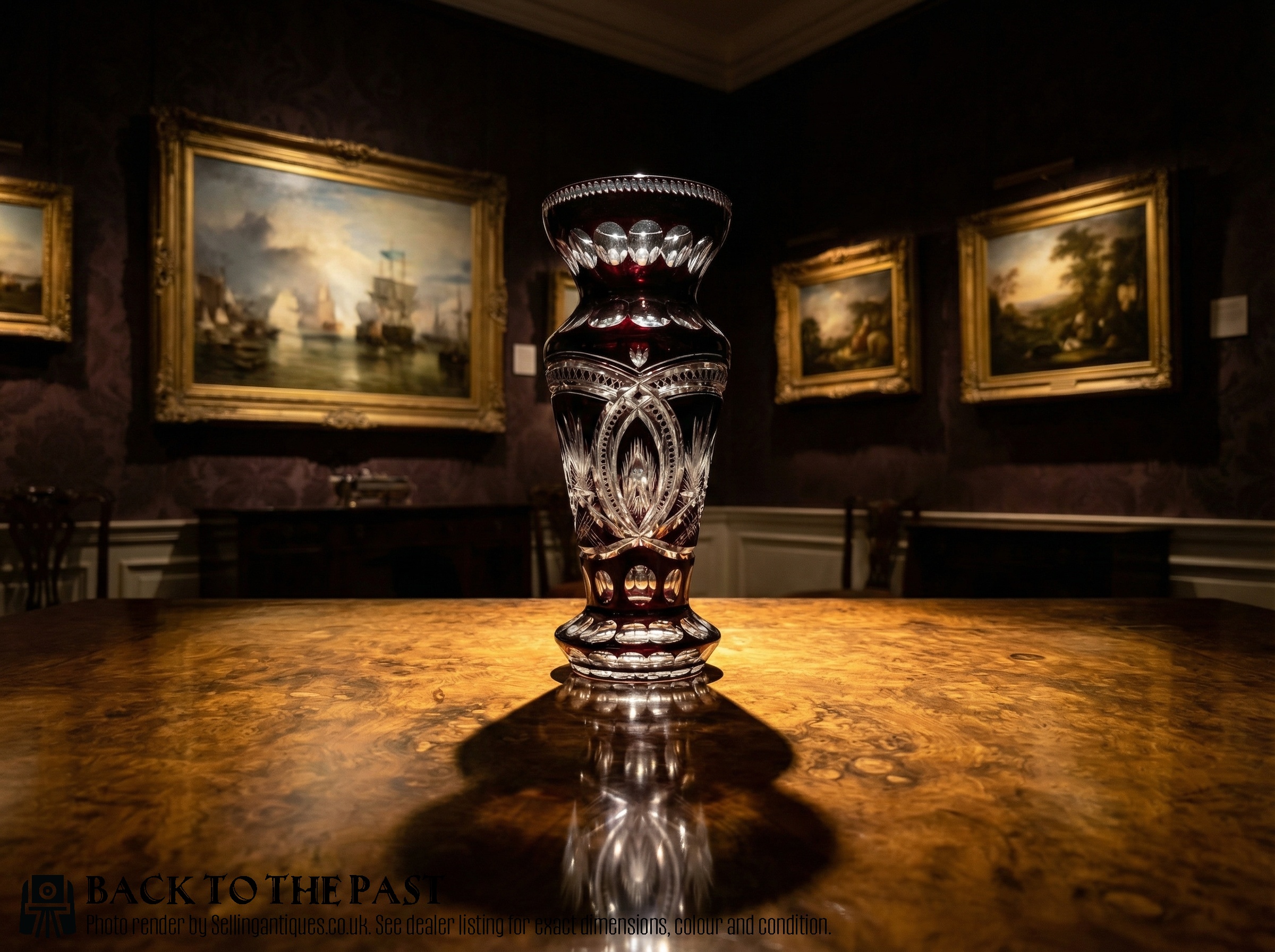
Victorian Ruby Glass Vase
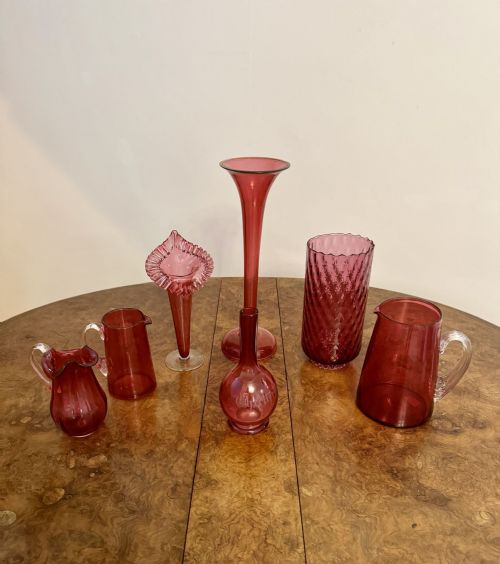
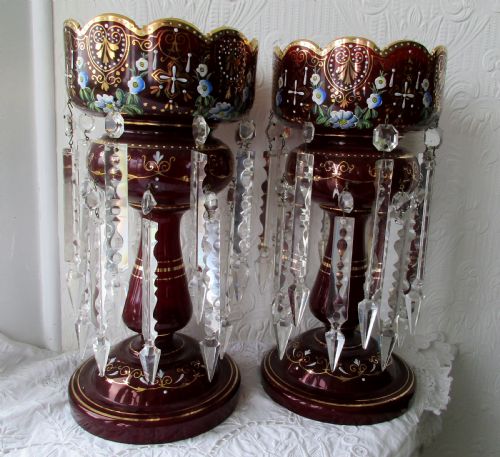
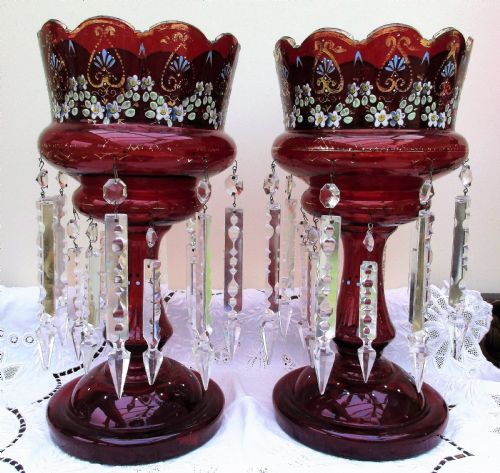
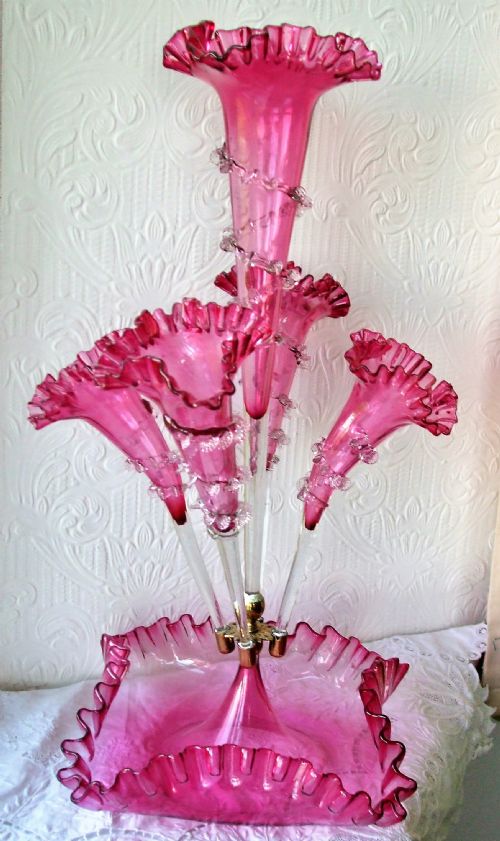
When you search for a victorian ruby glass vase, you encounter a range of forms spanning the nineteenth century, from simple trumpets to grand mantel lustres and epergnes. The selection on this page leans heavily toward English and Bohemian pieces created during the Victorian era, particularly the middle and later decades of the nineteenth century. These objects include pairs of lustres with hanging crystal prisms, trumpet vases, and multi-stemmed epergnes designed for display.
The aesthetic bridges traditional Victorian ornamentation and later Art Nouveau curves, reflecting the changing tastes of the period. Alongside straightforward ruby and cranberry glass vessels, you find flash glass, overlaid crystal panels, and hand-enamelled decoration. Many items incorporate clear glass elements or brass fittings, particularly in the larger centrepieces and lustres recorded in the evidence.
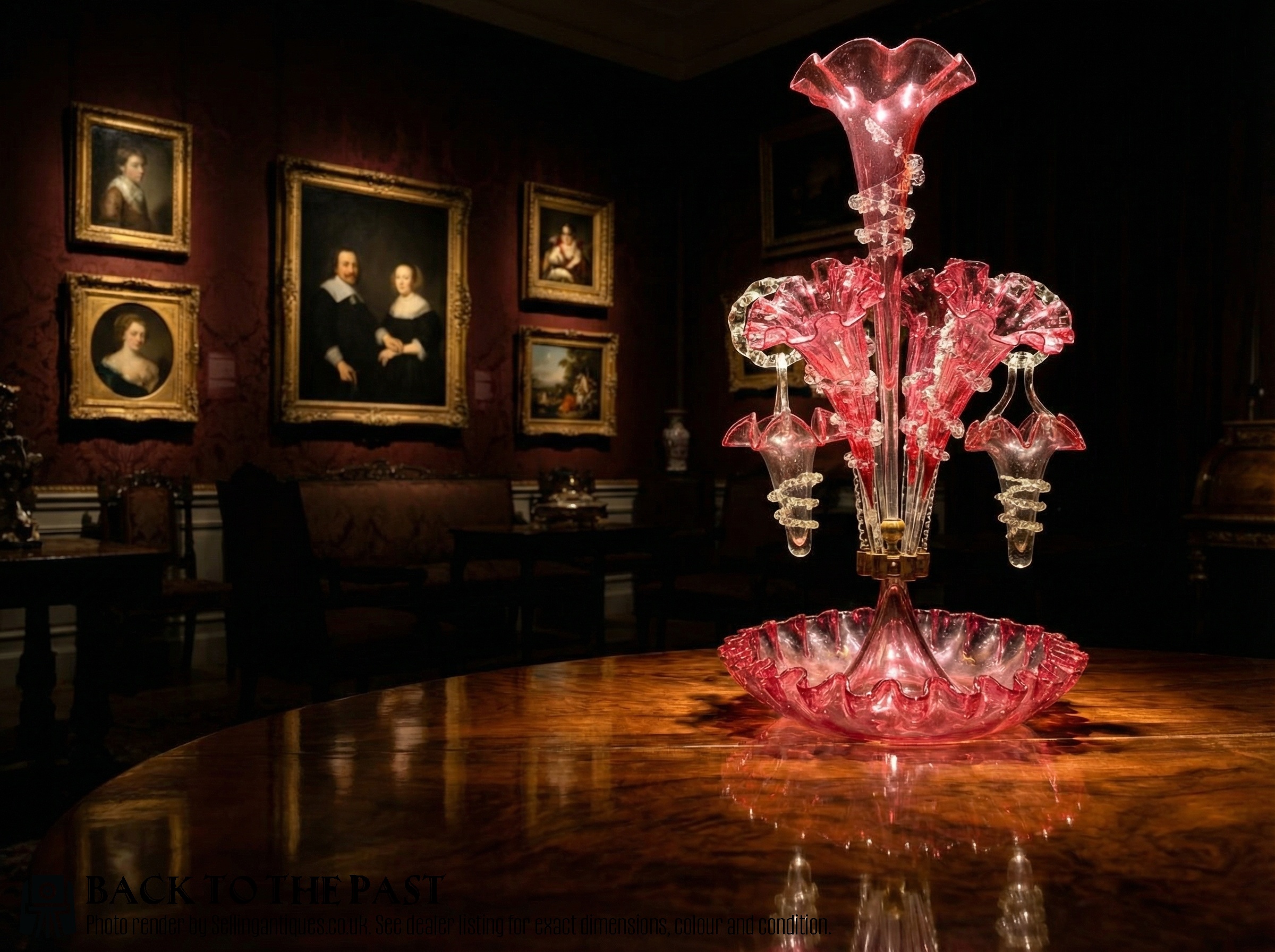
Materials and Techniques
The foundational material across these listings is glass, manipulated into ruby glass, cranberry glass, and crystal overlay. Makers often utilised flash glass techniques, cutting through a thin layer of ruby glass to reveal clear crystal underneath and create sharp panelled designs. Gold leaf and enamel work frequently adorn the surface, adding intricate detail to the deep red body.
Enamelling techniques, such as the white figures associated with Mary Gregory styles, appear on several cranberry glass vessels from the nineteenth century. Brass components support complex forms like epergnes and lustres, while cut crystal prisms dangle from rims to catch the light. The combination of coloured glass batches with overlay cutting and surface gilding defines the manufacturing standard of the era.
Victorian Ruby Glass Vase Retail Price Guide 2026
Typical asking prices for victorian ruby glass vase among the pieces listed under this phrase on Sellingantiques today, from the lower quarter to the upper quarter. They describe what is for sale here now, not the wider market.
Victorian mantel lustres doubled as early mood lighting when the prisms caught the flicker of evening tallow candles.
Assessing Quality
Quality in these glass pieces rests on the depth of colour, the precision of the cut overlays, and the crispness of any enamel or gold leaf application. Finer examples display rich, even ruby or cranberry tones throughout the body rather than muddy or thin coloration. The execution of panel cutting and the clarity of the underlying crystal reveal the skill of the glasshouse.
For lustres and epergnes, the presence and originality of matching crystal prisms and secondary components elevate the piece significantly. Heavier, more substantial vessels with balanced proportions and intact hand-painted details sit firmly at the upper end of the range. Simpler trumpet vases and unmarked items rely entirely on the purity of the glass and the elegance of their silhouette.
Mary Gregory
The Victorian Ruby Glass Vase Glossary
- Ruby glass
- A deep red glass coloured typically with gold chloride during the melting process. This rich hue characterises many nineteenth-century mantel ornaments and vases.
- Cranberry glass
- A transparent pinkish-red glass variant often utilised in Victorian tableware and epergnes. It shares chemical origins with ruby glass but tends to show a lighter, brighter tone.
- Mantel lustre
- A decorative vase fitted with a ring of hanging glass prisms designed to reflect candlelight. These items usually stand in pairs on fireplace mantels.
- Epergne
- A large table centrepiece featuring multiple central trumpets or baskets for holding flowers or fruit. Victorian versions frequently combine cranberry glass with brass or silver-plated mounts.
- Flash glass
- A technique where a thin layer of coloured glass is fused over a thicker body of clear or contrasting glass. Artisans then cut through the top layer to create patterned windows.
Victorian Ruby Glass Vase: Frequently Asked Questions
What is a ruby glass lustre?
A ruby glass lustre is a decorative vessel featuring a wide bowl fitted with hanging glass prisms around the rim. Victorians placed these items on mantelpieces to catch and refract the flickering light of candles.
They often came in matched pairs and served as ornamental centrepieces rather than functional flower holders.
How do I clean antique cranberry glass?
Clean antique cranberry glass gently using warm water and a mild, non-abrasive washing liquid. Avoid scrubbing gilded areas or enamel details, as nineteenth-century surface decoration can wear away easily.
Dry the pieces promptly with a soft lint-free cloth to prevent water spots on the glass surface.
What distinguishes flash glass from solid ruby glass?
Flash glass consists of a clear or contrasting glass body coated with a very thin outer layer of ruby glass. Craftsmen cut away portions of this outer layer to expose the clear glass beneath, creating sharp geometric patterns.
Solid ruby glass maintains its deep red coloration all the way through the material without an underlying clear layer.
Were epergnes used for dining tables?
Victorian epergnes served as elaborate table centrepieces designed to hold flowers, fruit, or sweetmeats during formal meals. Their multi-tiered trumpet construction allowed guests to converse across the table beneath the floral arrangement.
Many examples combine ruby or cranberry glass with delicate hanging baskets and trumpet vases.