


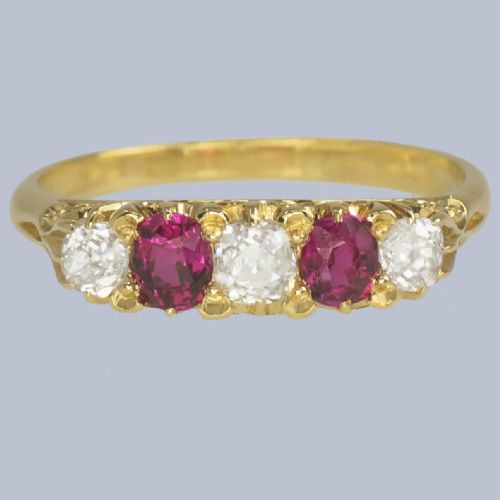
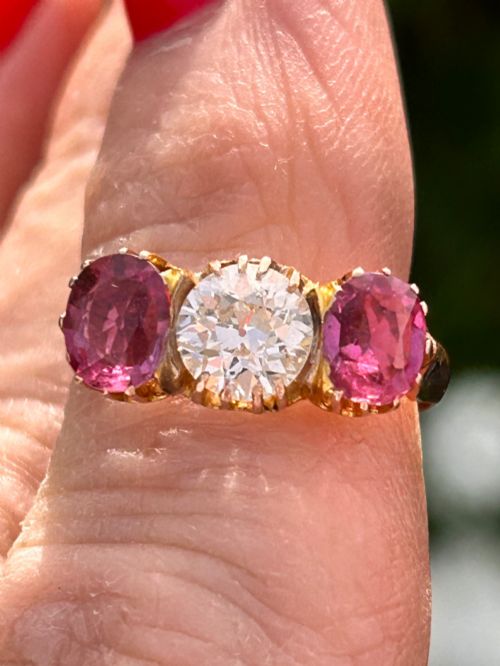
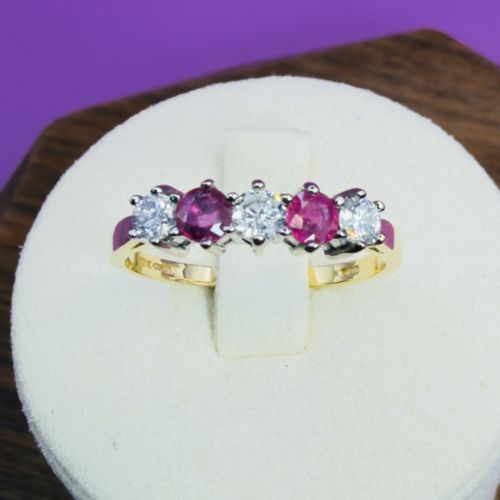
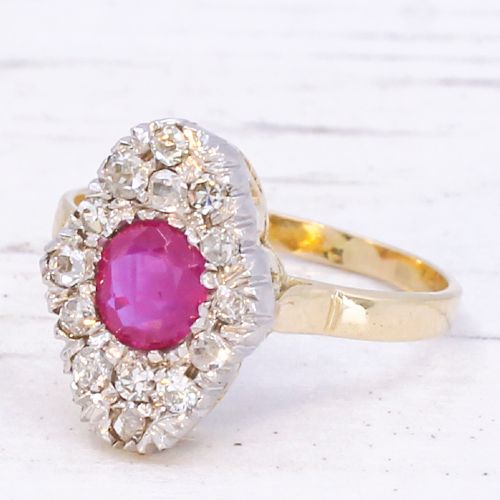
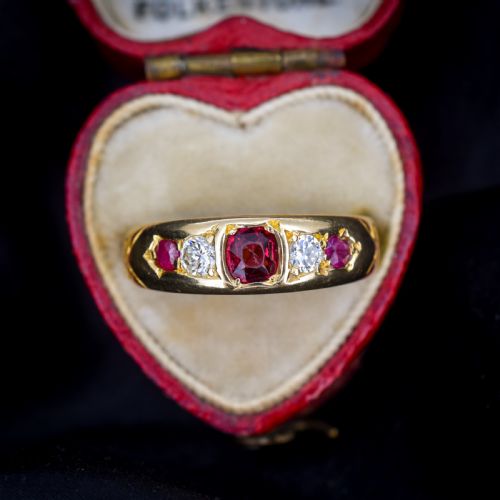


Victorian Ruby Band Ring
A victorian ruby band ring carries the rich red warmth of fine gems set in enduring gold, catching the eye with timeless appeal.
Victorian Ruby Band Ring
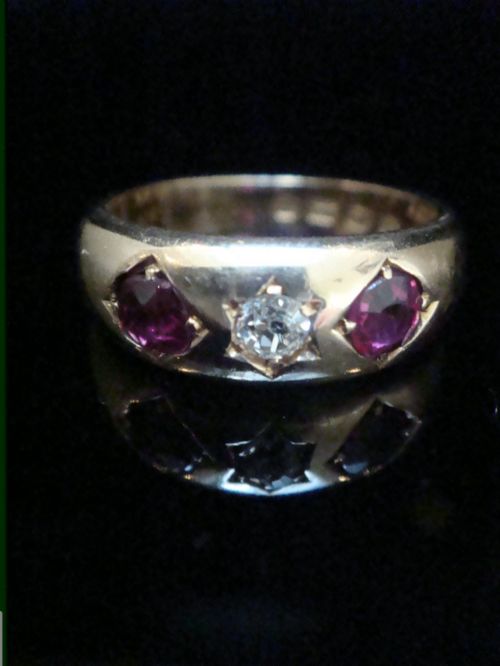
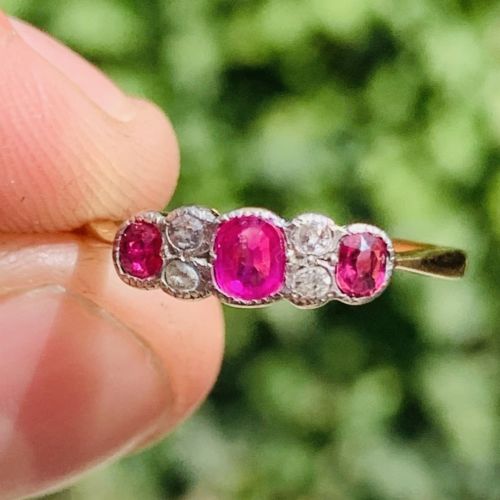
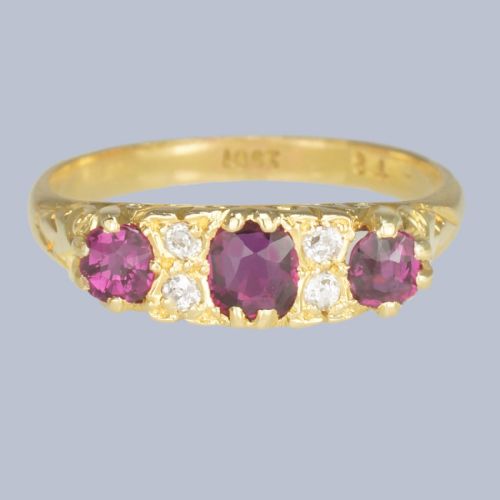
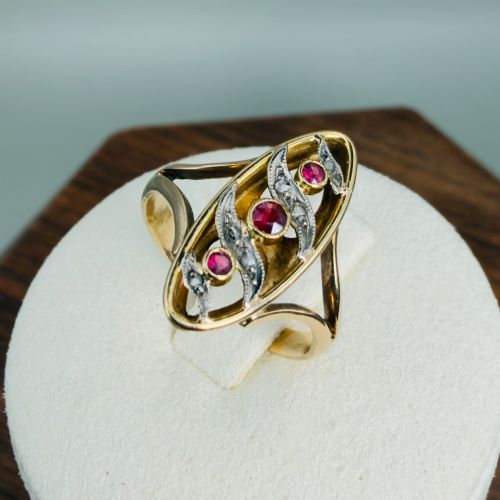
A victorian ruby band ring embodies the traditional craftsmanship of the nineteenth and early twentieth centuries, featuring deep red rubies set into durable precious metals. Buyers exploring this selection will encounter varied expressions of the form, from simple multi-stone bands to elaborate starburst and gypsy settings created across the Victorian, Edwardian and later eras.
Most pieces seen here adhere closely to classic band and multi-stone formats, frequently combining vivid rubies with sparkling diamonds or lustrous pearls. The origins span the Victorian period into the Edwardian decades, reflecting a rich heritage of goldsmithing traditions found in regional British assay offices.
These rings serve both as historic artefacts and wearable ornaments, prized for the striking contrast between rich red rubies and polished gold. The enduring popularity of these designs lies in their robust construction and the distinct character imparted by hand-cut stones.
Materials and technique
Goldsmiths constructed these rings primarily using 18ct yellow gold and 15ct gold, occasionally incorporating platinum or rose gold details for contrast. Metals were cast and hand-finished to securely house natural rubies alongside old-cut diamonds and pearls.
Gemstones were secured using traditional techniques such as gypsy settings, starburst engravings and claw mounts, which anchored the stones firmly within the gold band. Hallmarks stamped into the metal often reveal the specific assay town and date of creation, pointing to skilled British craftsmanship.
Listings feature 18ct gold, 15ct gold and 9ct gold alongside natural rubies, old-cut diamonds and pearls.
Judgements of quality
The distinction between ordinary and exceptional pieces rests upon the saturation and clarity of the rubies, alongside the precision of the hand-cut diamonds. Natural stones possessing vibrant colour and minimal inclusions elevate a piece far above those set with paler gems or replacement stones.
Structural integrity and the crispness of decorative engraving also define the upper tier of these rings. Well-preserved hallmarks and minimal wear to the gold band indicate careful preservation and superior original manufacture.
The Victorian Ruby Band Ring Glossary
- Gypsy ring
- A style of ring where the gemstones are flush-set into a thick gold band that tapers towards the back. This setting style became exceptionally popular during the late Victorian period for its snag-free profile.
- Old cut diamond
- A precursor to the modern brilliant cut, featuring a smaller table, higher crown and larger culet. These hand-faceted stones display a softer, candlelit sparkle distinct from modern machine-cut diamonds.
- Trilogy ring
- A ring set with three stones, traditionally symbolising the past, present and future. In these listings, they frequently pair a central ruby flanked by diamonds.
- Navette style
- A boat-shaped ring design that sits lengthwise along the finger, creating an elongated silhouette. This style offers an expansive surface for arranging clusters of rubies and diamonds.
- Assay mark
- An official stamp applied to precious metals indicating the purity of the gold and the office that tested it. These marks provide reliable evidence of a ring's geographic origin and date of creation.
Victorian Ruby Band Ring: Frequently Asked Questions
How do I care for a victorian ruby band ring?
Clean these delicate historic rings gently using warm soapy water and a soft brush, avoiding harsh ultrasonic cleaners that might dislodge older stones or pearls. Store them individually in lined boxes to prevent the harder diamonds from scratching the softer gold and rubies.
Regularly check the security of the settings with a professional jeweller to ensure the claws or flush mounts remain tight. Removing the ring during heavy manual tasks preserves the structural integrity of the antique gold.
Can I wear a victorian ruby band ring daily?
Gold and rubies possess good durability for regular wear, making many of these rings suitable for daily enjoyment with mindful care. Gypsy-set bands offer particular resilience because the stones sit flush within the protective metal.
However, pieces featuring pearls or intricate openwork require greater caution to avoid impact damage. Assessing the specific setting style helps determine whether a ring suits everyday use or special occasions.
How do I identify the date of my ring?
Examine the inner band for hallmarks stamped by British assay offices, which often include maker marks, standard purity symbols and date letters. Comparing these stamped ciphers against historical hallmarking charts reveals the exact year of manufacture.
Stylistic elements like starburst engravings, navette silhouettes and specific gemstone combinations further corroborate the Victorian or Edwardian period of origin.