


Victorian Rosewood Writing Desk
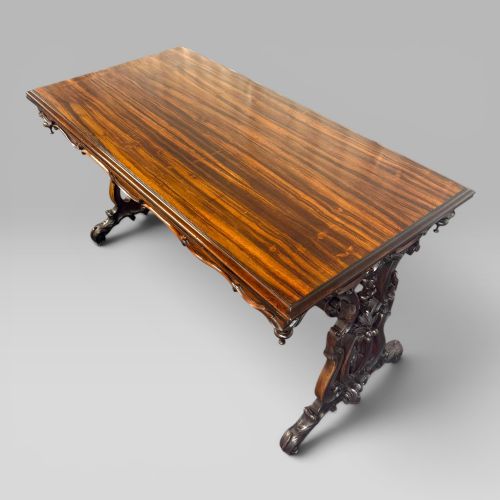
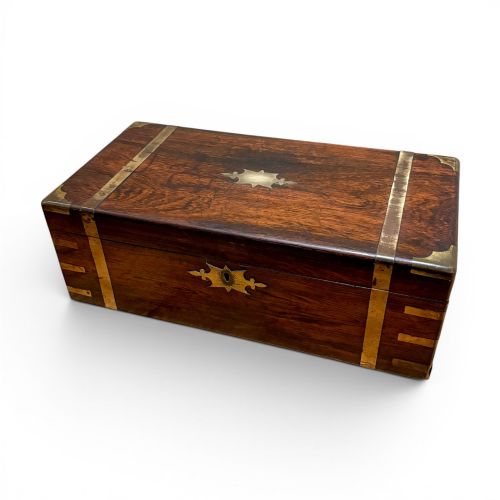
A victorian rosewood writing desk brings rich timber grain and fitted compartments into a room, offering a dedicated surface for correspondence.

Victorian Rosewood Writing Desk
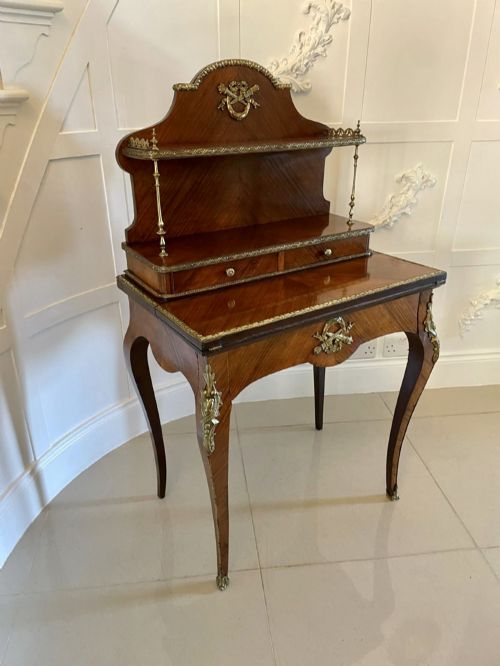
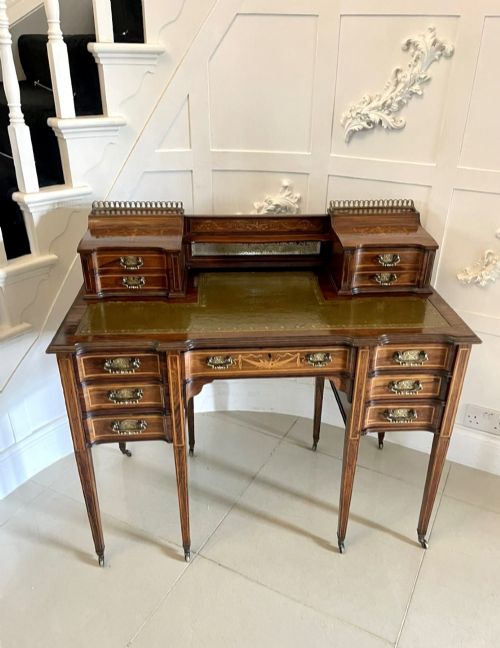
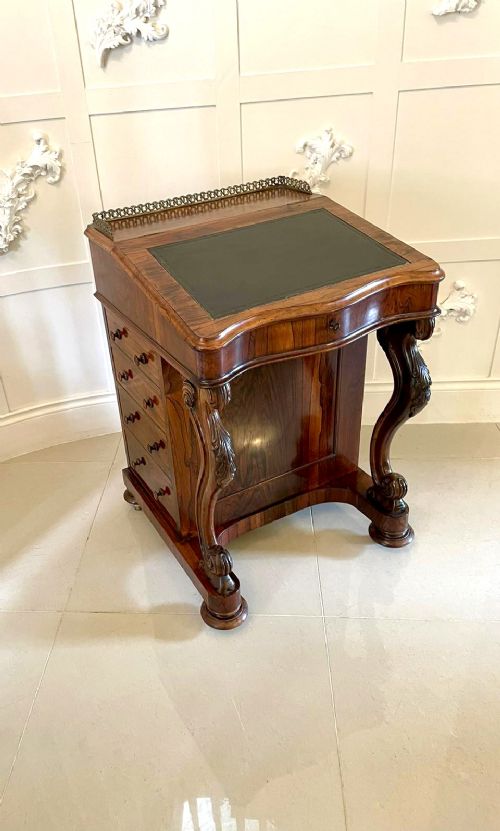
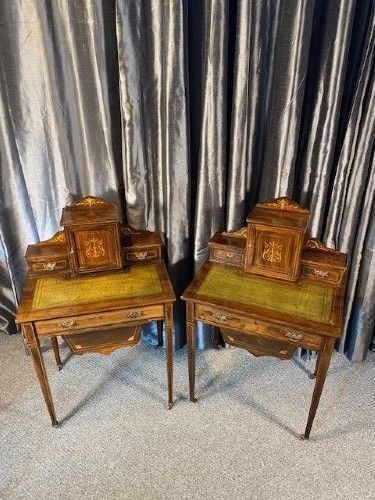
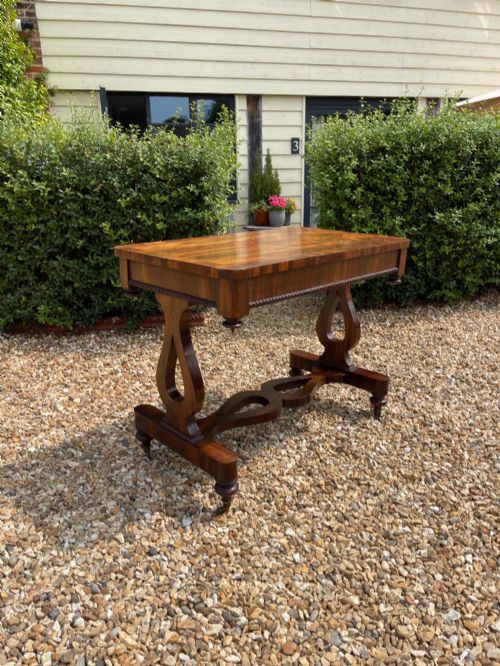
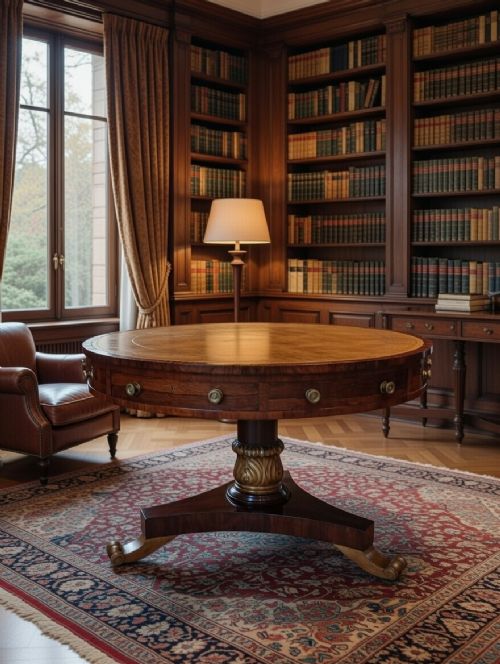
A victorian rosewood writing desk encompasses freestanding library tables, compact davenports, and inlaid ladies' writing desks produced across the nineteenth century. These pieces reflect the period's demand for specialised furniture, ranging from simple writing tables to elaborate desks fitted with stationery compartments.
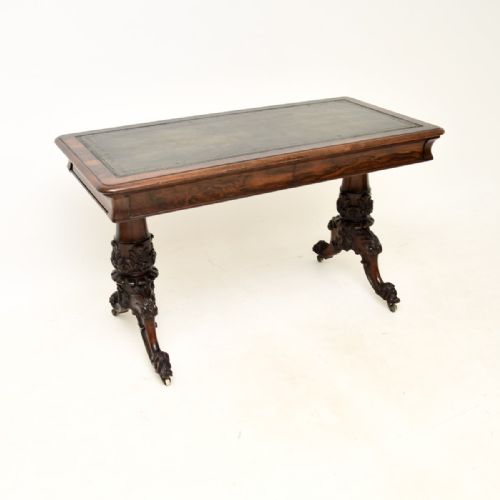
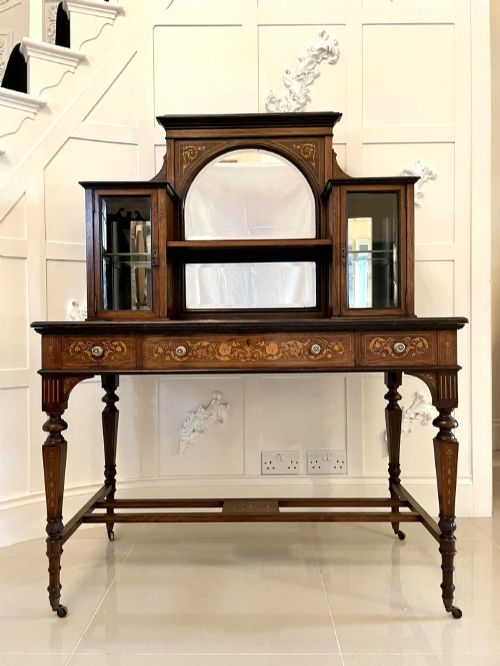
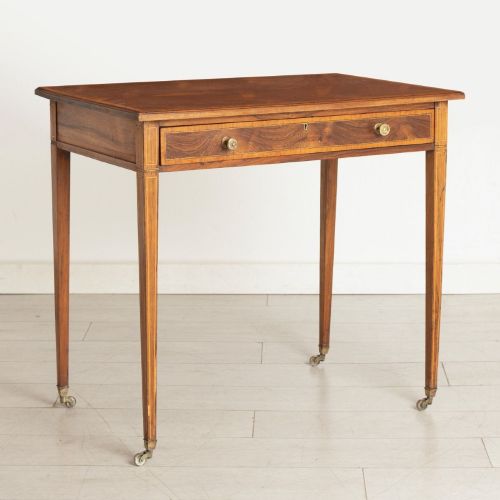
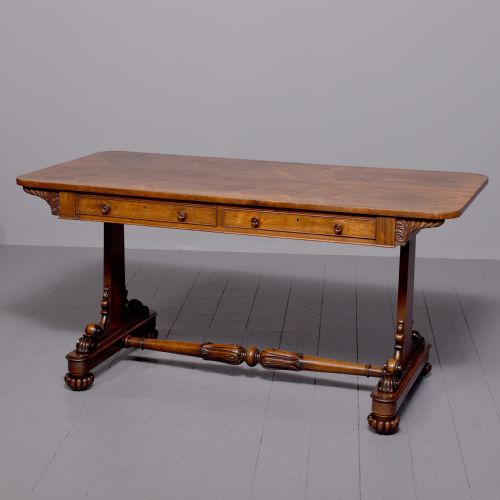
The version most commonly met on this page is the Victorian writing table or davenport executed in solid rosewood or rosewood veneer. Examples span early Victorian forms through late Victorian Sheraton Revival interpretations, often featuring inset leather writing surfaces and turned legs.
How they were made
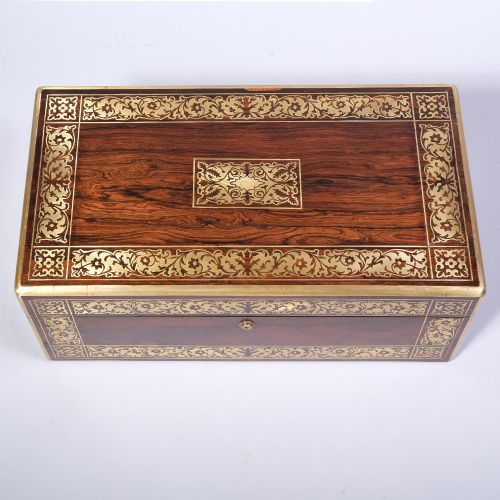
Cabinet makers utilised dense tropical rosewood, frequently laid as veneers over secondary timbers such as mahogany or pine to construct stable carcases. Brass stringing, boxwood, and satinwood marquetry were frequently inlaid into the timber surfaces to create decorative motifs.
Writing surfaces were typically inset with tooled leather, whilst interior compartments utilised lighter secondary woods for small drawers and pigeonholes. Structural joints relied on traditional craftsmanship, incorporating dovetailed drawer construction and brass hardware.
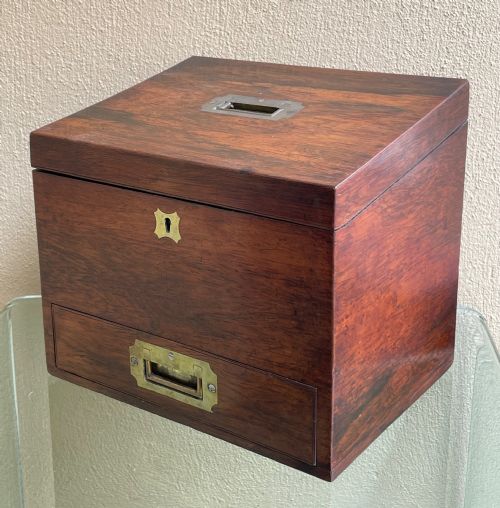
The inventory records kidney-shaped tables, cylinder desks, and campaign boxes alongside traditional writing slopes.
What varies in quality
The distinction between tiers rests upon the crispness of the marquetry inlay, the selection of figured rosewood grain, and the integrity of the secondary timbers. Desks retaining original tooled leather surfaces, functioning locks with working keys, and finely chased brass mounts represent the higher order.
Proportion and execution dictate value, where master workshops demonstrated superior restraint in decoration and flawless structural joinery. Simpler vernacular pieces contrast with documented productions bearing refined cabinetwork and intricate internal arrangements.
Maple and Co·Collinson and Lock·Donald Ross·Mein of Kelso
The Victorian Rosewood Writing Desk Glossary
- Davenport
- A compact pedestal desk featuring a sloping desktop and side drawers. This form became particularly popular during the nineteenth century for ladies' correspondence.
- Marquetry
- Decorative veneer patterns formed by fitting together small pieces of wood, shell, or ivory. Craftsmen used contrasting timbers like boxwood and satinwood to create floral or geometric designs on the desk surface.
- Bonheur du jour
- A light lady's writing desk featuring a small cabinet or set of drawers superstructure above the main writing surface. These dainty pieces emerged in the French taste during the Victorian era.
- Writing slope
- A portable or stationary box with a hinged sloping lid that opens to reveal a velvet or leather writing pad and inkwell compartments. Many incorporate secret drawers beneath the stationery fittings.
- Library table
- A large freestanding table designed to be placed in the centre of a room rather than against a wall. These pieces typically feature frieze drawers and finished backs.
Victorian Rosewood Writing Desk: Frequently Asked Questions
What is a davenport desk?
A davenport is a compact writing desk featuring a sloping lid on top and a pedestal of drawers to one side. It provides a small footprint while offering enclosed storage for writing materials.
First appearing in the late Georgian period, the form remained popular throughout the Victorian era as a lady's writing desk. The drawers typically pull out to the side rather than the front.
How do I care for rosewood?
Rosewood benefits from regular dusting with a soft, dry cloth and protection from direct sunlight and sudden temperature changes. Excessive heat can dry out the timber and cause veneers to lift.
Applying a traditional beeswax polish occasionally helps maintain the lustre of the grain. Avoid using modern silicone-based sprays which can damage the antique finish.
What distinguishes a partners desk?
A partners desk is constructed to allow two people to sit opposite each other, featuring banks of drawers on both sides. These larger library tables were built for professional use in studies and offices.
They offer extended workspace and symmetry, with matching drawer configurations on front and back. The evidence shows these grander pieces executed in rosewood and mahogany.
How can I date my desk?
Dating involves examining construction methods, timber choices, and stylistic details such as brass inlays or leg turning. Early Victorian pieces often display heavier proportions, while late Victorian Sheraton Revival examples incorporate lighter satinwood details.
Maker stamps, handwritten signatures inside drawers, or registration marks can provide more precise chronological clues. Comparing the secondary woods and drawer linings also helps establish the period.