

Victorian Rosewood Tilt Table
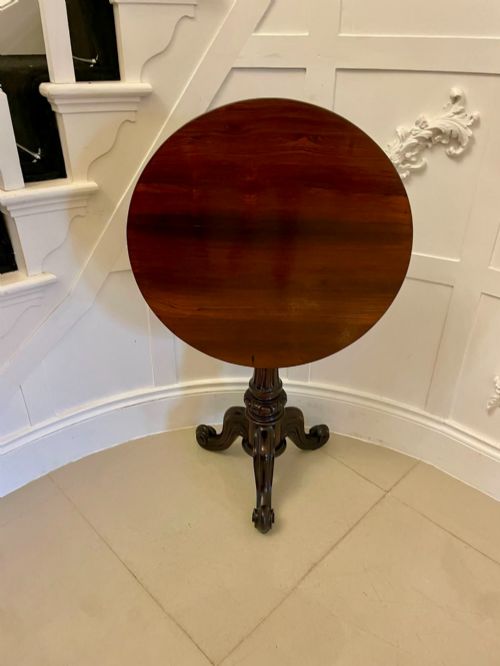
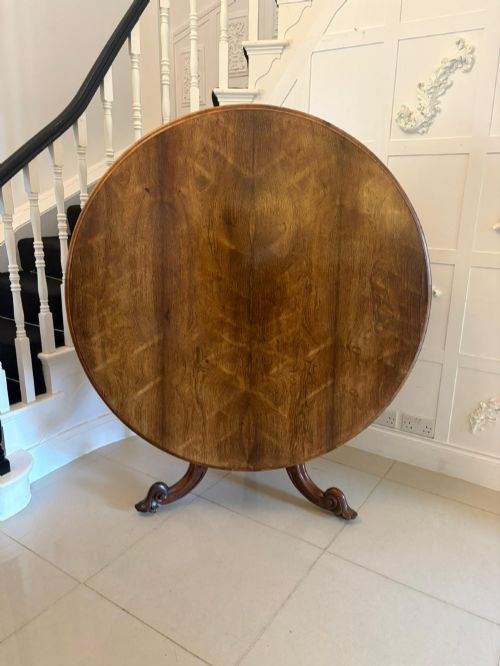
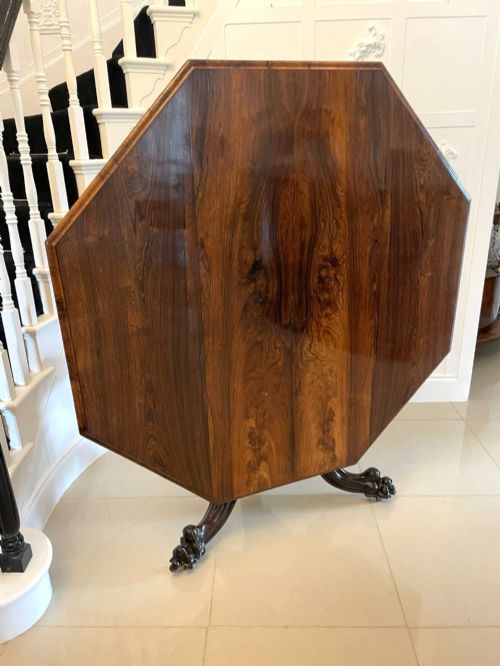
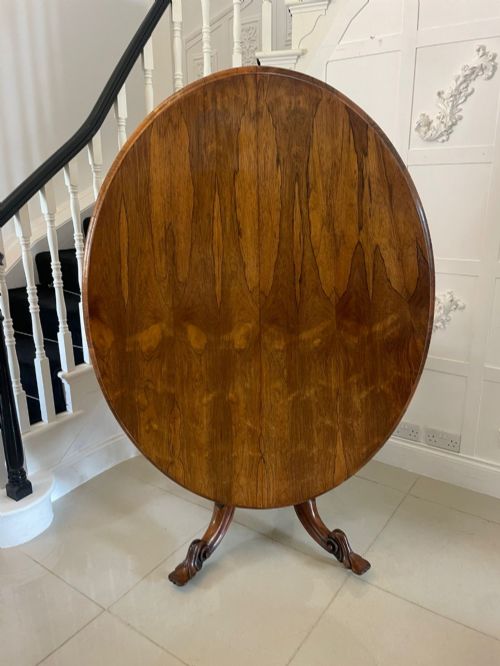
A victorian rosewood tilt table combines a rich timber top with a pivoting mechanism designed to save space when not in use.
Victorian Rosewood Tilt Table
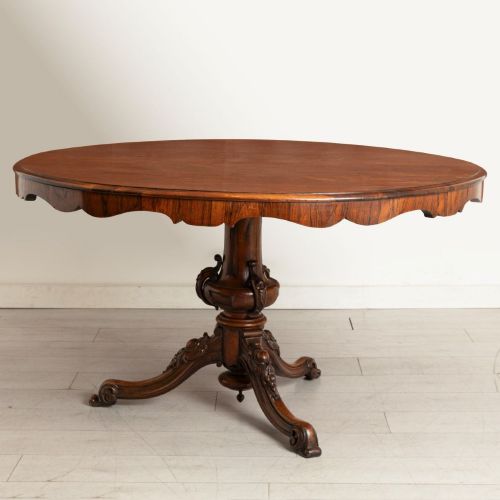
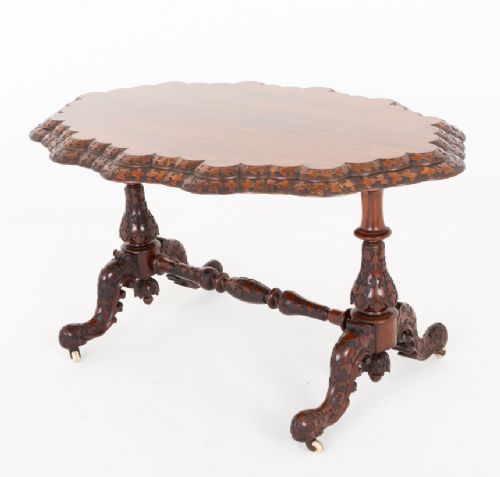
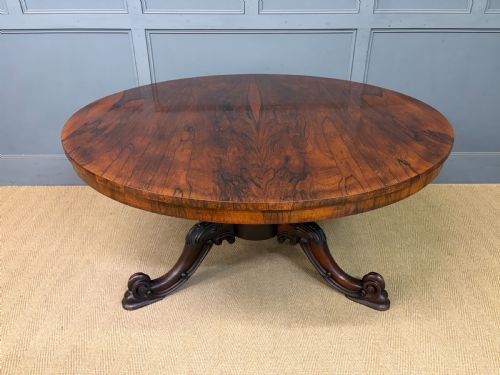
When searching for a victorian rosewood tilt table, buyers encounter round, oval and serpentine forms designed for dining, breakfast or general use in the principal rooms of nineteenth-century houses.
The pieces appearing on this page span the Victorian and William IV periods, alongside earlier Georgian influences, taking the specific form of loo tables, breakfast tables and occasional tables with hinged tops.
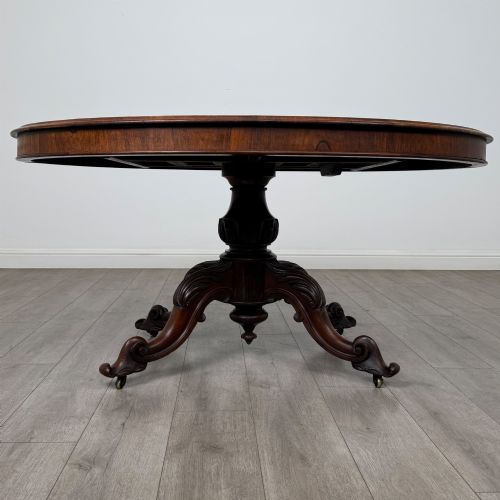
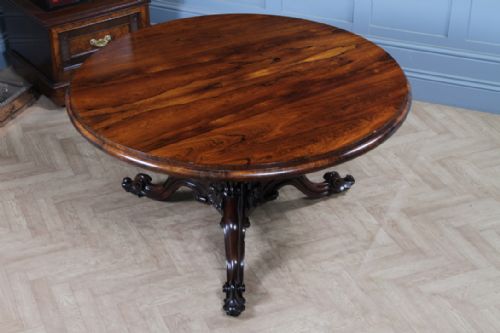
Makers utilised dense tropical hardwoods to create pedestal bases supported by solid carved pillars and platform feet, often incorporating mechanisms that allow the top to snap or tilt vertically.
How They Were Made
Cabinet makers built these tables using solid rosewood and rosewood veneer laid over secondary timbers, occasionally selecting burr-elm, mahogany or walnut for contrasting borders and specimen tops.
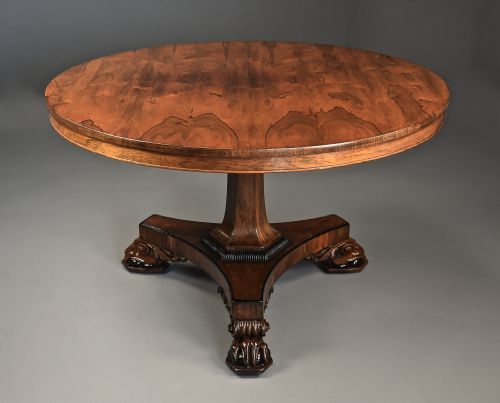
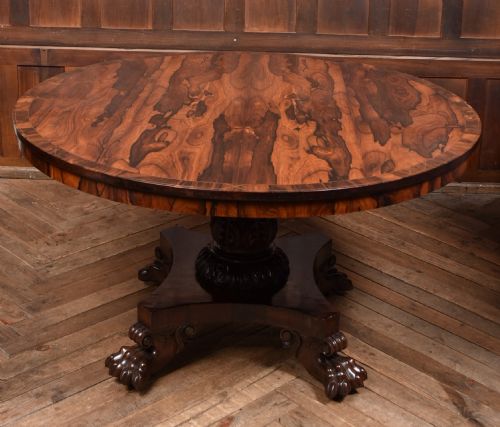
Pedestal bases frequently feature turned and carved solid rosewood columns resting on triangular or circular platforms, sometimes decorated with brass castors concealed beneath the feet.
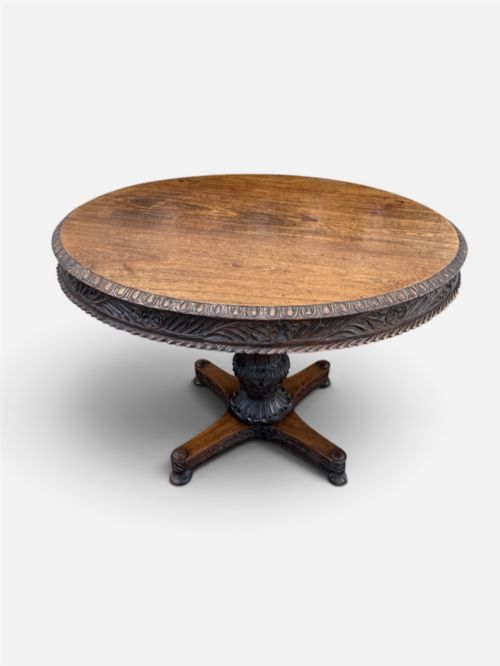
Some examples incorporate intricate mother of pearl inlay, marquetry, or detailed carving around the frieze and pedestal, reflecting regional British or Anglo-Indian workmanship.
Listings feature pieces from the Victorian, William IV and Georgian periods, constructed in rosewood, mahogany, walnut and burr-elm.
What Varies in Quality
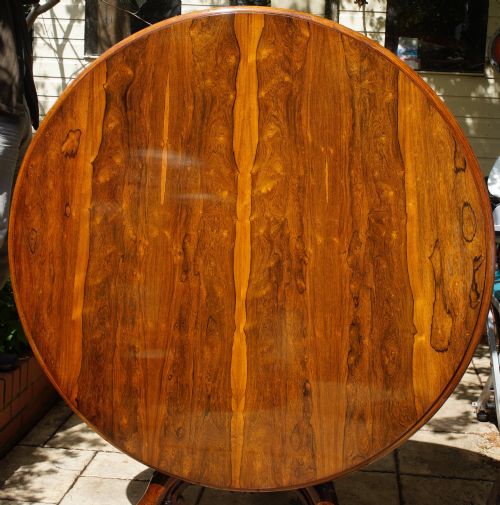
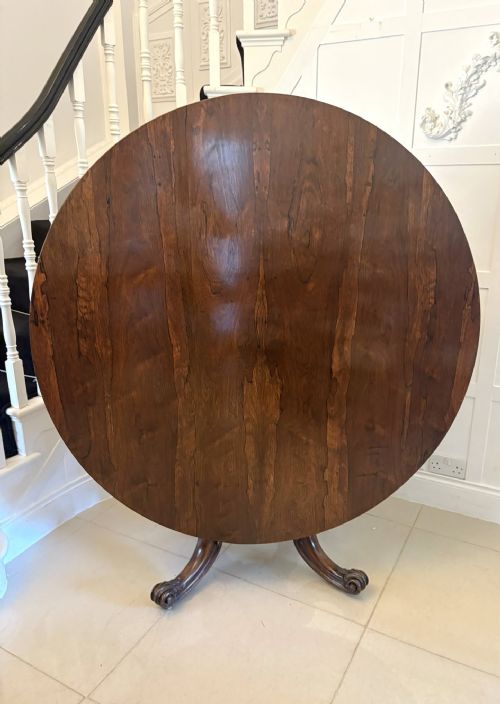
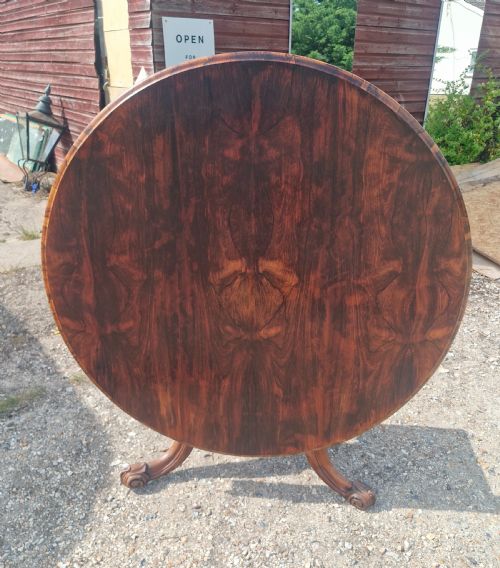
Quality rests primarily on the choice of timber and the depth of figure in the rosewood veneer, where highly figured grain and symmetrical layouts distinguish better examples from plain surfaces.
The execution of the carving on the pedestal and base separates standard production items from pieces marked by crisp hand-carved detail and substantial proportions.
The stability and precision of the pivoting tilt mechanism also indicate standard; superior tables lock firmly into the horizontal position without wobble or excessive play.
Gillows·James Winter of Wardour Street
The Victorian Rosewood Tilt Table Glossary
- Tilt-top table
- A table with a hinged top that pivots to a vertical position for storage against a wall when not in use.
- Breakfast table
- A pedestal dining table dating from the Regency, William IV or Victorian eras, typically designed to seat several people.
- Rosewood
- A heavy, dense tropical timber prized for its dark grain and purplish-brown colour, widely utilised across the nineteenth century.
- Veneer
- A thin layer of superior timber applied to a stable secondary wood base to provide a decorative surface figure.
- Snap-top
- A specific tilting mechanism secured by a brass catch or spring bolt to hold the table top rigid in the horizontal position.
Victorian Rosewood Tilt Table: Frequently Asked Questions
What is a tilt table used for?
These tables served primarily for breakfast, dining or evening card games in nineteenth-century reception rooms.
The pivoting mechanism allowed the heavy top to be folded upright so the piece could stand flat against a wall when floor space was needed.
How do I spot a William IV table?
William IV examples generally display heavy scrolled pedestal bases, bold carved lotus motifs and substantial circular platforms dating between roughly eighteen-thirty and eighteen-thirty-seven.
They share the rosewood timber of later Victorian pieces but often exhibit bolder proportions and architectural weight.
Are all these tables circular?
While circular tops are the most common form found on this page, many examples feature oval, serpentine or shaped outlines.
Larger breakfast and loo tables often provide generous seating capacities depending on the diameter of the top.
What is an Anglo-Indian rosewood table?
Anglo-Indian pieces reflect nineteenth-century design produced in the Indian subcontinent for British residents or export markets, using native timbers.
They frequently incorporate distinctive carved decoration, fretwork or contrasting mother of pearl inlay on the top.