



Victorian Rosewood Sewing Box
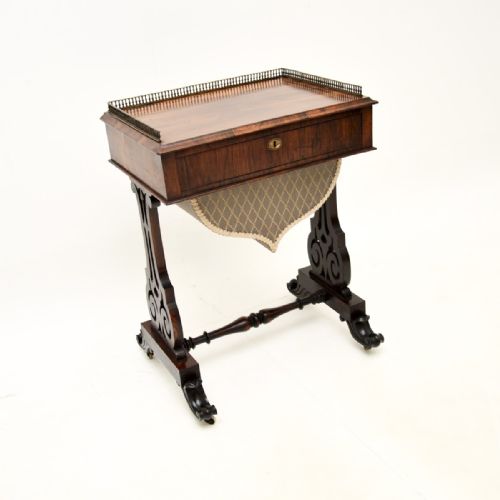
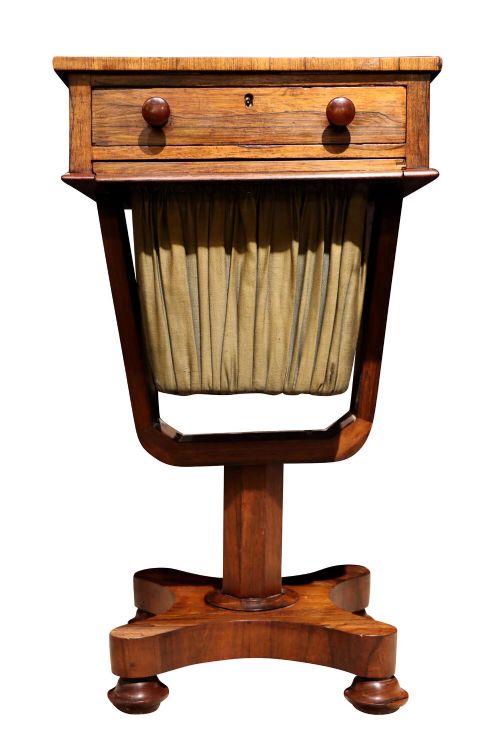
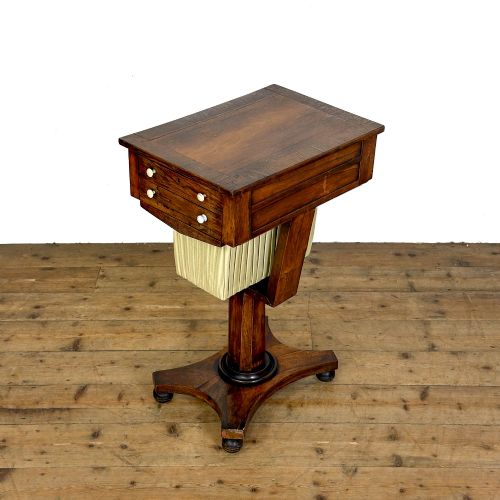
A victorian rosewood sewing box is a timber casket made for needlework tools, most often found here as a freestanding work table or tabletop box.
Victorian Rosewood Sewing Box
When you search for a victorian rosewood sewing box, you encounter a mix of freestanding work tables, drop-leaf sewing tables, and tabletop caskets designed for needlework. These pieces date principally from the nineteenth century, spanning the Regency, William IV, and Victorian eras.
The version you are most likely to meet on this page is the mid-nineteenth-century work table, often fitted with a sliding bag or internal compartments for cottons and pins. Tabletop boxes in the sarcophagus or rectangular shape also appear frequently among the listings.
Materials and Construction
Cabinet makers utilised dense rosewood veneers over solid timber carcases, frequently applying brass stringing or marquetry to the exterior surfaces. Mother-of-pearl inlay appears regularly to accent lids and escutcheons on tabletop boxes.
Interiors rely on fitted trays lined with silk, velvet, and fabric to organise needles, thread winders, and scissors. Bone and cut steel components often complete the internal fitments of the finer examples.
Victorian Rosewood Sewing Box Retail Price Guide 2026
Typical asking prices for victorian rosewood sewing box among the pieces listed under this phrase on Sellingantiques today, from the lower quarter to the upper quarter. They describe what is for sale here now, not the wider market.
The listings span the 19th century, featuring walnut and rosewood alongside brass, mother-of-pearl, and silk.
Distinctions in Execution
The division between standard production and superior execution rests upon the precision of the inlay and the complexity of the internal fittings. Elaborate Tunbridge Ware mosaic detailing or intricate mother-of-pearl cartouches elevate a piece above plain veneered boxes.
The integrity of the structural joinery and the survival of the original silk or velvet lining compartments determine the overall standing of the piece. Tables with well-preserved drop-leaves and functioning pedestal bases command stronger interest.
The Victorian Rosewood Sewing Box Glossary
- Tunbridge Ware
- Wood mosaic woodwork originating from Kent, forming microscopic geometric patterns or pictorial scenes on box lids.
- Sarcophagus
- A box shape featuring a domed or sloping hinged lid resting on a rectangular base, popular during the nineteenth century.
- Work Table
- A freestanding table equipped with a drawer or hanging fabric bag designed to hold sewing implements and textiles.
- Escutcheon
- A flat plate of brass surrounding a keyhole, intended to protect the surrounding rosewood veneer from damage.
Victorian Rosewood Sewing Box: Frequently Asked Questions
What fits inside a sewing box?
These boxes contain fitted trays and compartments designed to hold needles, thread winders, scissors, and small pins. Many retain their original velvet or silk linings for delicate tools.
Larger freestanding work tables provide deeper storage beneath the surface, alongside hanging fabric bags intended for unfinished needlework projects.
How do I date a rosewood box?
Dating relies upon stylistic markers such as Regency curves, William IV pedestal bases, or mid-nineteenth-century mother-of-pearl inlay. Tunbridge Ware decoration and sarcophagus shapes also point towards specific decades within the Victorian era.
Construction details, including the type of secondary timbers and hinge styles, help confirm the period of manufacture.
Where were these boxes used?
Owners kept these pieces in drawing rooms, parlours, or private dressing rooms where ladies gathered for needlework and domestic crafts. Tabletop boxes rested easily on side tables or desks.
Freestanding work tables stood beside chairs or sofas, doubling as occasional or lamp tables when not in active use.
How do I care for rosewood?
Keep the timber away from direct sunlight and sudden temperature changes to prevent the rosewood veneer from drying out or cracking. Dust the polished surfaces gently with a dry, soft cloth.
Avoid using modern liquid polishes or silicone sprays, which can damage the historic finish and penetrate vulnerable fabric linings.