




Victorian Rosewood Clock
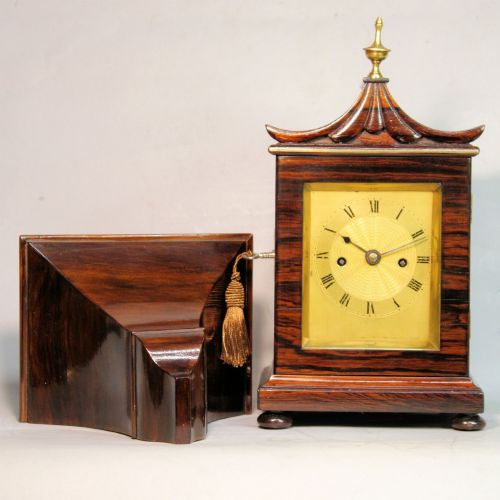
A victorian rosewood clock brings together deep, dense timber and precise mechanical engineering to anchor a room.
Victorian Rosewood Clock
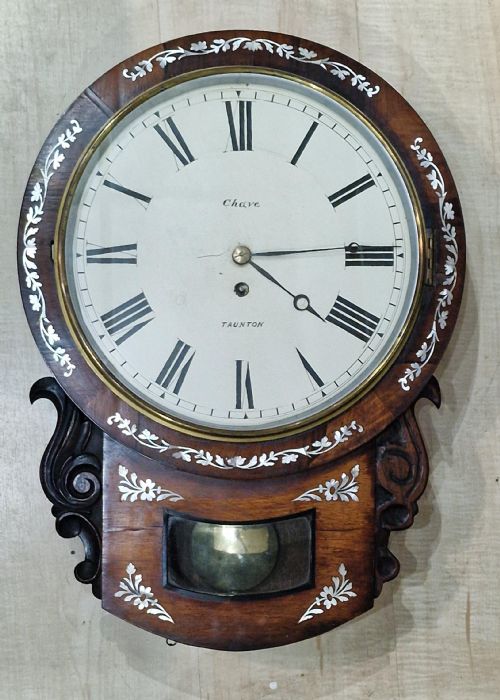
A victorian rosewood clock typically appears as a drop-dial wall timepiece, a striking bracket clock, or an architectural portico mantel piece.
The evidence shows examples spanning wall clocks with octagonal or round dial surrounds alongside library and carriage timepieces.
Makers housed these movements in rich cases featuring brass, mother-of-pearl, and lemon wood inlay reflecting styles from Regency to late Victorian periods.
Materials and Construction
Cases rely on solid or veneered rosewood chosen for its dark grain, frequently embellished with brass stringing, marquetry, and mother-of-pearl inlay.
Mechanical parts incorporate brass gear trains, enamel dials with Roman numerals, and glass panels protecting delicate escapements.
Movements utilise fusee mechanisms, spring-driven barrels, or pendulum regulations to drive strike trains and anchor the timekeeping.
Victorian Rosewood Clock Retail Price Guide 2026
Typical asking prices for victorian rosewood clock among the pieces listed under this phrase on Sellingantiques today, from the lower quarter to the upper quarter. They describe what is for sale here now, not the wider market.
Listings demonstrate movements ranging from simple 8-day timepieces to complex twin fusee bracket clocks with bell striking capabilities.
Assessing Craftsmanship
Quality rests upon the crispness of the rosewood cabinetwork, the subtlety of the brass or mother-of-pearl inlay, and the retention of original dial paint.
Mechanical refinement separates standard timepieces from high-grade library and bracket clocks, particularly twin fusee movements and signed backplates.
Proportion and architectural balance define the upper tier, where portico frames and drop-dial cases retain clean lines without heavy restoration.
Samuel Chave·S Simpson·Halliday and Rich·L Morris·Arnold and Frodsham·Paul Garnier·Kleyser·Walker and Hall·L Donne·Dumont·James Bell·J Fisher·Dent of London·W and J Gardner·Robert Bryson
The Victorian Rosewood Clock Glossary
- Fusee
- A conical pulley used in spring-driven clocks to equalise the torque of the mainspring as it unwinds. This mechanism helps maintain consistent timekeeping throughout the 8-day run.
- Portico clock
- A mantel clock designed with architectural columns supporting the movement housing. French makers favoured this symmetrical style during the 19th century.
- Drop-dial wall clock
- A wall-mounted timepiece featuring an extended lower wooden case beneath the circular dial. These were common fixtures in Victorian offices and halls.
- Bracket clock
- A portable table or shelf clock historically placed upon a dedicated wall bracket. They often feature complex striking trains and carrying handles.
- Platform escapement
- A self-contained escapement unit fitted to portable clocks such as carriage timepieces. It allows accurate timekeeping regardless of the clock's tilt.
Victorian Rosewood Clock: Frequently Asked Questions
How do fusee movements work?
A fusee movement uses a conical pulley connected to a cord or chain that winds the mainspring. As the spring loses tension, the chain pulls on a wider section of the cone to maintain steady power.
This clever mechanical design ensures the clock maintains consistent timekeeping from the moment of a full wind until it requires attention again.
Where were drop-dial clocks used?
Drop-dial wall clocks served as reliable timekeepers in railway stations, offices, and domestic hallways throughout the 19th century. Their clear dials allowed quick reading from a distance.
The extended lower case housed the pendulum swing and often featured a side or front door for easy access to the movement.
How do I care for a rosewood case?
Rosewood cases benefit from stable room environments away from direct sunlight and central heating radiators. Excessive heat can cause the timber veneers or delicate inlay to lift.
Apply a light application of appropriate wax polish occasionally to nourish the dense grain and maintain the deep natural lustre of the wood.
What is a portico clock?
A portico clock is a mantel timepiece built in the architectural form of a classical temple or portico. These symmetrical pieces often feature four upright columns supporting the central dial housing.
French workshops frequently produced these designs using rosewood veneers, accented with ormolu mounts and intricate marquetry inlay.