


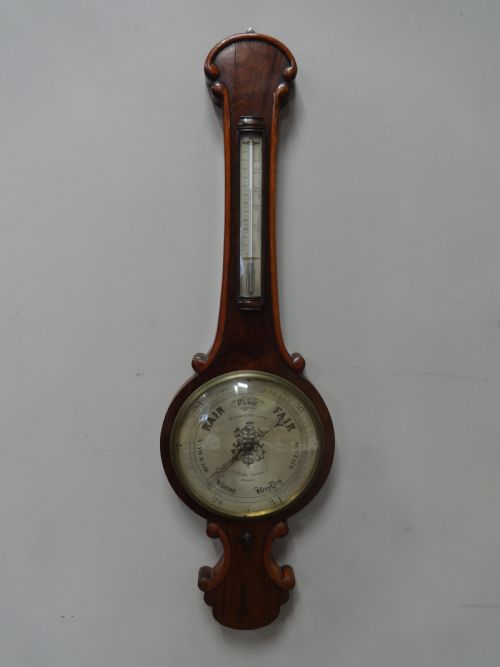

Victorian Rosewood Barometer
A victorian rosewood barometer brings rich timber grain and precise atmospheric measurement together into a distinguished domestic wallpiece.
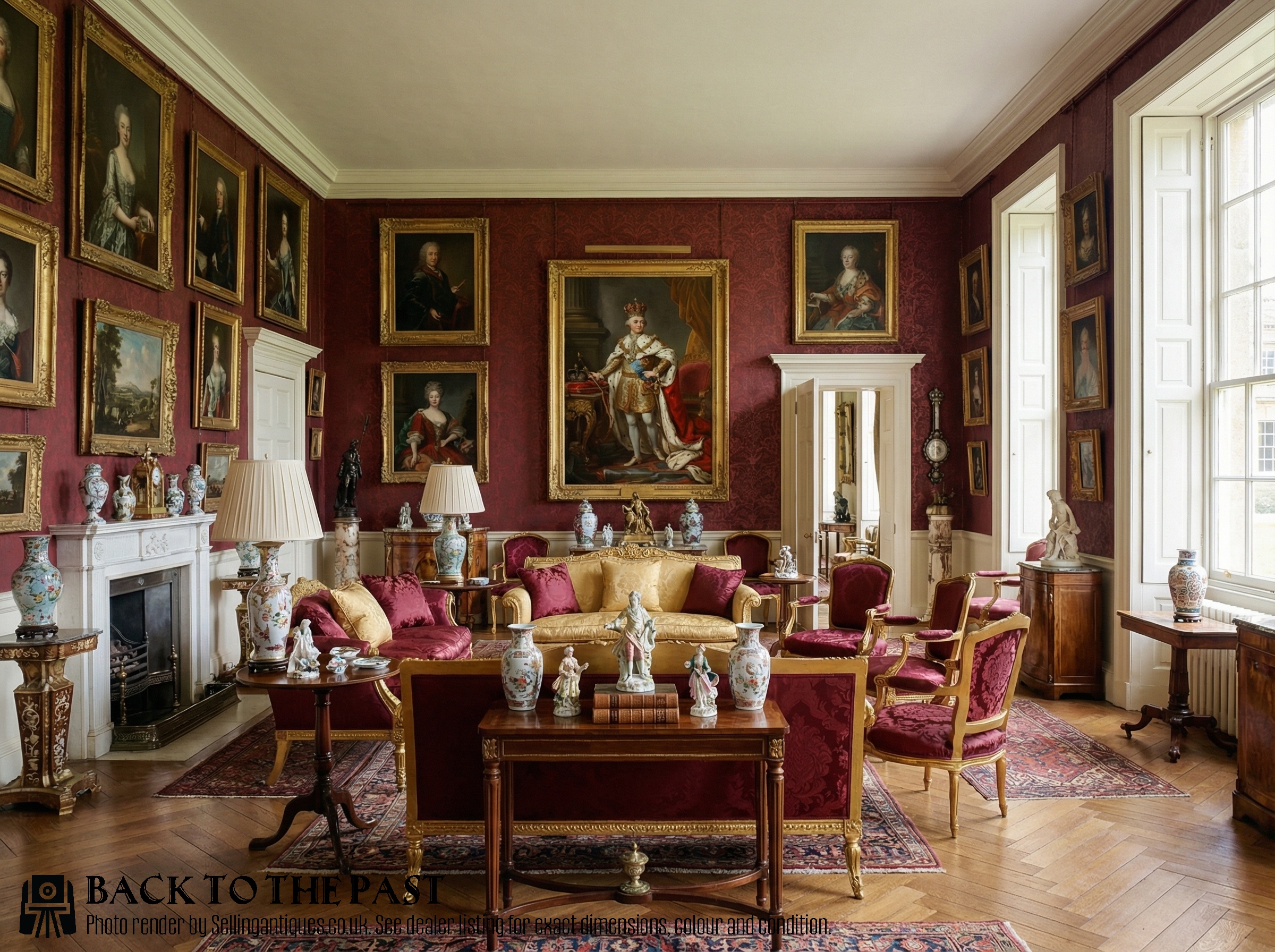
Victorian Rosewood Barometer
A victorian rosewood barometer is a domestic weather glass housed in dark, heavily grained tropical timber, designed to hang upon the wall to measure atmospheric pressure. The examples found here span the nineteenth century, encompassing the decades from eighteen fifty to eighteen ninety.
Buyers will encounter several distinct forms on this page, dominated by the traditional stick barometer and the larger wheel or banjo barometer. Marine versions and aneroid instruments also appear, alongside specialised pieces featuring embedded thermometers and double verniers.
The origins of these instruments range from London workshops to regional makers operating across England and Scotland. These pieces combine scientific utility with the heavy decorative presence characteristic of the period.
What varies in quality
The standard of a victorian rosewood barometer rests largely upon the crispness of the dial engraving and the complexity of the cabinetwork. Instruments featuring elaborate mother of pearl inlay and intact brass work sit comfortably above plain utilitarian models.
The presence of a signed maker's plate upon the silvered dial elevates an instrument considerably. The integrity of the rosewood case and the preservation of the delicate mercury tube further divide standard production from exceptional work.
The listings here feature instruments constructed from rosewood, glass, brass, mother of pearl, boxwood inlay, and bone.
Fagioli of Clerkenwell London·Jenkins Of Old Swindon·Joseph Somalvico and Co·Chadburns Sheffield·Adie Edinburgh·Ballard of Cranbrook·Negretti and Zambra London·Newton and Co of Fleet Street London·Freeman of Great Yarmouth·Bithray Royal Exchange·JB and J Ronchetti Manchester·Evans of Welspool
The Victorian Rosewood Barometer Glossary
- Aneroid barometer
- An instrument measuring pressure without liquid, using a flexible metal box that expands or contracts.
- Stick barometer
- A tall, slender wall instrument where the mercury column is exposed along a vertical scale.
- Banjo barometer
- A domestic weather glass shaped like a musical instrument, featuring a circular dial at the base.
- Vernier
- A small auxiliary scale enabling the user to read barometric measurements with greater precision.
- Gimbal
- A pivoting ring mounting that allows a marine barometer to remain vertical aboard a rolling ship.
Victorian Rosewood Barometer: Frequently Asked Questions
How do stick and wheel barometers differ?
Stick barometers display a tall vertical column of mercury, offering a direct view of the atmospheric pressure movement.
Wheel barometers enclose the mechanism within a wider case, using a pulley and index hand to point at a circular dial.
Can these barometers be hung near a window?
Placing rosewood instruments in direct sunlight can cause the rich timber tones to fade and dry out over time.
Interior walls away from direct heat sources provide a stable environment for both the cabinetwork and the internal mechanics.
How do I identify a marine stick barometer?
Marine versions frequently incorporate brass gimbals or cistern covers designed to keep the mercury column stable on a ship.
The cases often feature robust construction to withstand maritime conditions while retaining decorative rosewood veneers.
What is the purpose of mother of pearl inlay?
Mother of pearl provides bright tonal contrast against the dark, dense grain of the rosewood cabinet.
Artisans shaped the shell into floral motifs and geometric banding to accentuate the status of the instrument.