



Victorian Rosewood Armchair
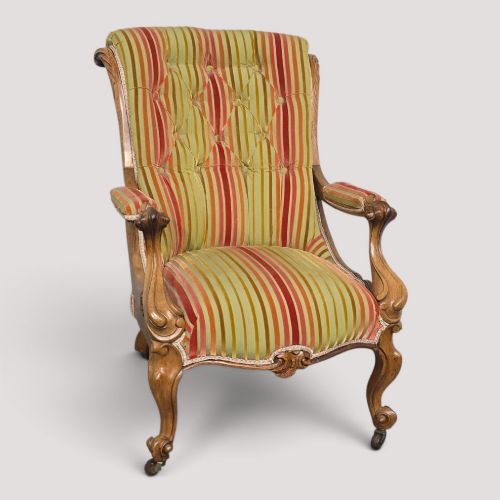
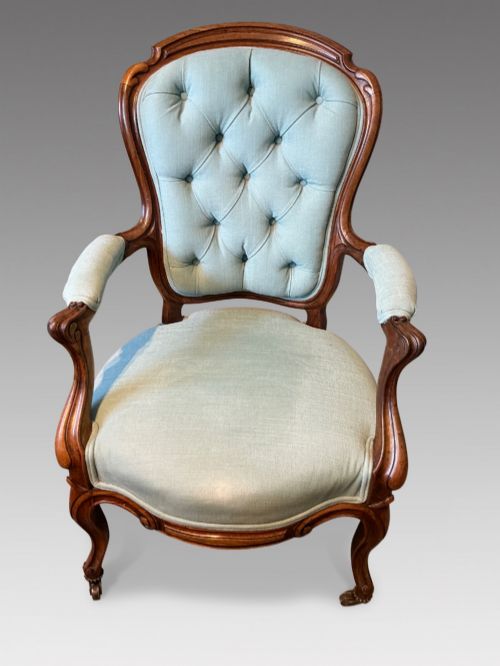
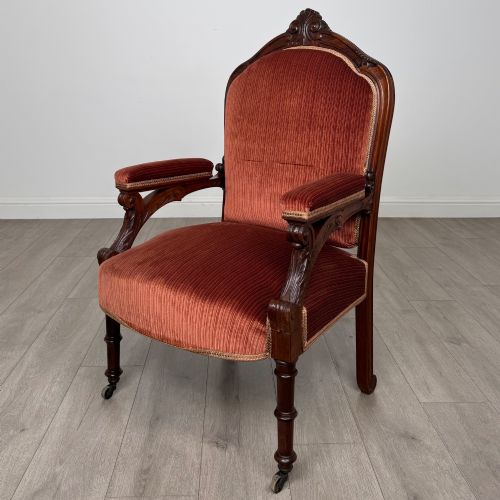
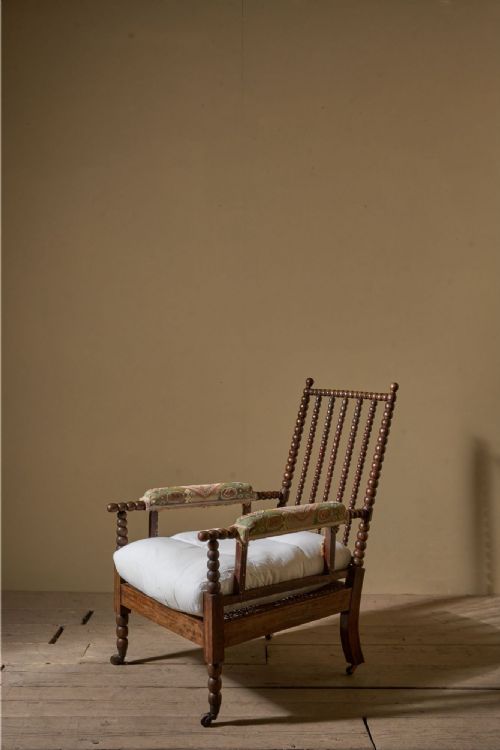
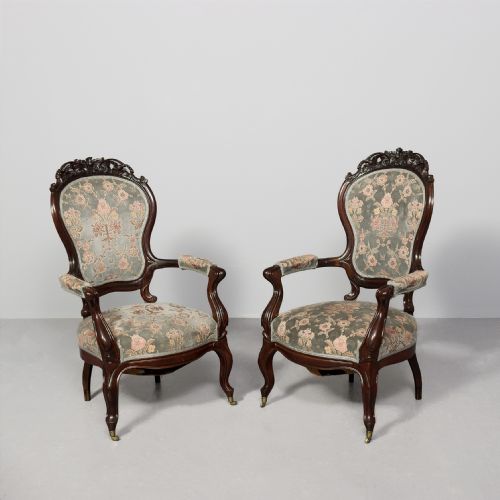
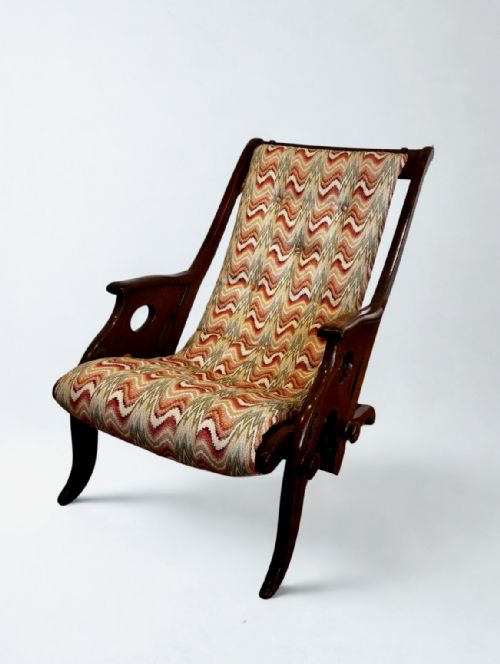
A victorian rosewood armchair combines dense tropical hardwood with the curved lines of nineteenth-century seating.
Victorian Rosewood Armchair
A victorian rosewood armchair spans the nineteenth century, including pieces from the Regency, William IV, and Victorian periods. The selection here leans heavily toward mid-century Victorian examples alongside earlier Regency and William IV forms.
Buyers encounter various functional types within this category, ranging from library and gentleman's armchairs to low nursing chairs, open armchairs, and tub chairs. Frames often display stylistic influences such as Rococo Revival, Gothic Revival, or Anglo-Indian carving.
These chairs serve as both functional seating and focal points in period interiors. Their varied silhouettes accommodate studies, parlours, and bedrooms alike.
Materials and Construction
Solid rosewood and rosewood veneers form the primary structural and decorative surfaces, often paired with parcel gilt or marquetry inlay. Some frames utilise simulated rosewood or alternative hardwoods where specified.
Upholstery relies on traditional textiles including leather, velvet, damask, and patterned fabrics, frequently finished with button-backed detailing. Brass castors and turned wooden legs support the heavier library and easy chair frames.
Victorian Rosewood Armchair Retail Price Guide 2026
Typical asking prices for victorian rosewood armchair among the pieces listed under this phrase on Sellingantiques today, from the lower quarter to the upper quarter. They describe what is for sale here now, not the wider market.
The listings combine solid rosewood, simulated rosewood, and inlaid surfaces across the nineteenth century.
Evaluating the Pieces
The depth of hand-carved ornamentation and the crispness of details like cabriole legs separate standard examples from finer works. The choice of timber grain and the precision of marquetry inlay further distinguish the better items in the range.
Original elements such as brass castors, matching stools, or documented maker attributions elevate certain chairs. The integrity of the underlying rosewood frame and the historical suitability of the upholstery contribute substantially to an individual piece's standing.
J. Herbert McNair·Robert Daws
The Victorian Rosewood Armchair Glossary
- Rosewood
- A dense, dark timber prized for its prominent grain and deep colour, frequently used in high-status nineteenth-century furniture. It takes a high polish and accepts intricate carving.
- Cabriole leg
- A furniture leg that curves outward and then tapers inward, typically ending in a scroll or pad foot. This form became popular during the Rococo Revival and Victorian periods.
- Button back
- An upholstery technique where deep buttons are pulled tight into the padding to create a geometric pattern of tufts. It offers both firm support and decorative texture.
- Showwood
- Exposed wooden framing around an upholstered back or arms, allowing the polished timber to display its grain. It marks a deliberate contrast with fully upholstered seating.
- Tub chair
- A low, curved armchair where the back and arms form a continuous semi-circular rail. They were designed for intimate parlour seating.
Victorian Rosewood Armchair: Frequently Asked Questions
What is a nursing chair?
A nursing chair is a low-seated armchair designed in the nineteenth century to allow a person to sit comfortably while tending to an infant or nursing.
These chairs typically lack high arms so that voluminous skirts of the period could drape freely around the seat.
How do I identify a Regency armchair?
Regency armchairs date from the early nineteenth century and often feature classical influences, sabre legs, and restrained carving compared to later Victorian exuberance.
They frequently utilise dark rosewood with simple brass inlay or parcel gilding rather than heavy floral relief work.
Were these chairs originally upholstered in leather?
Library and desk armchairs were frequently fitted with leather upholstery to withstand heavier daily use in studies and offices.
Parlour and nursing chairs more commonly featured textiles such as damask, velvet, or patterned fabric.
How should I care for rosewood furniture?
Rosewood benefits from being kept away from direct sunlight and sudden temperature changes, which can dry out the timber and cause splitting.
Routine dusting with a dry, soft cloth maintains the polished surface without the need for heavy waxes or oils.