

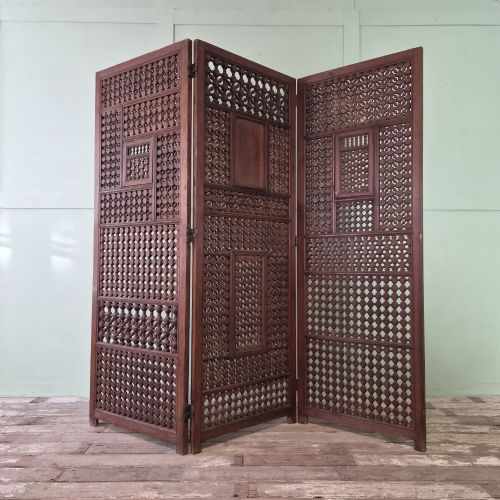
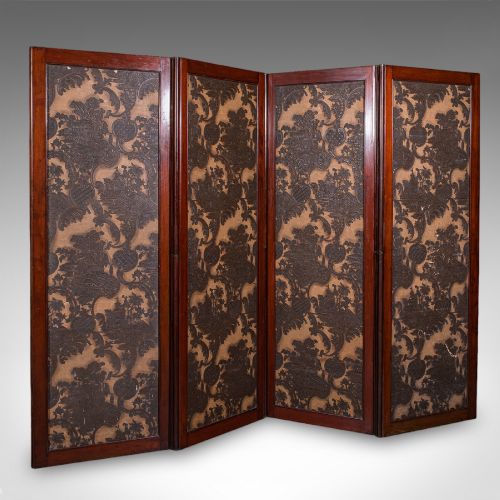
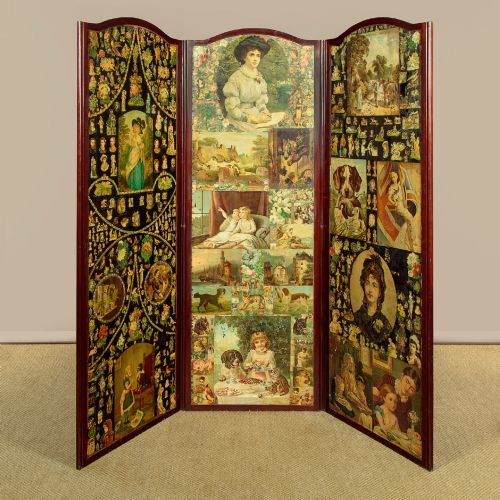
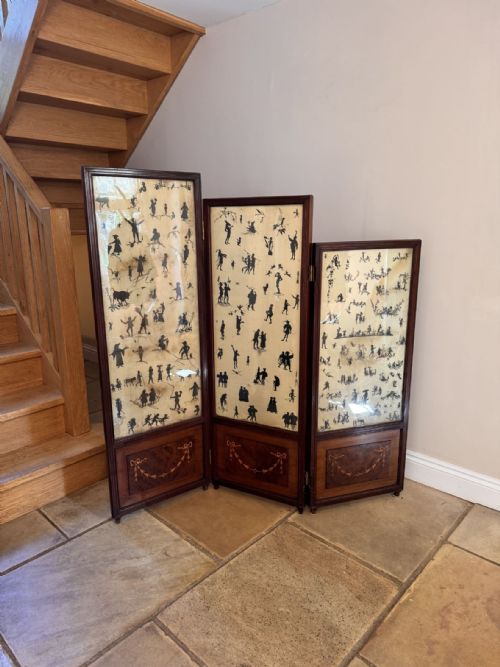


Victorian Room Screen
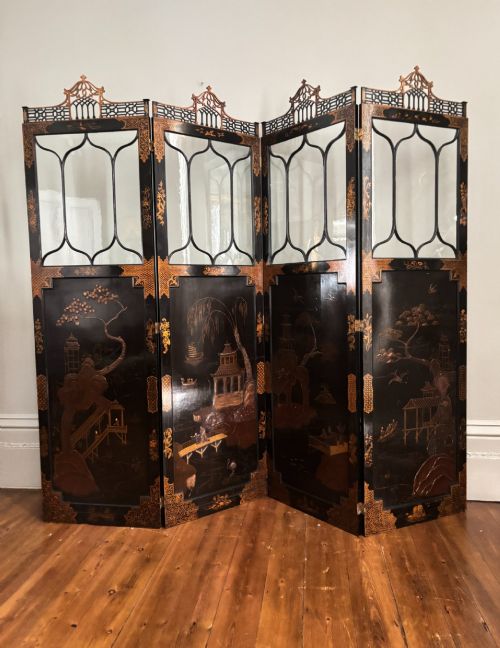
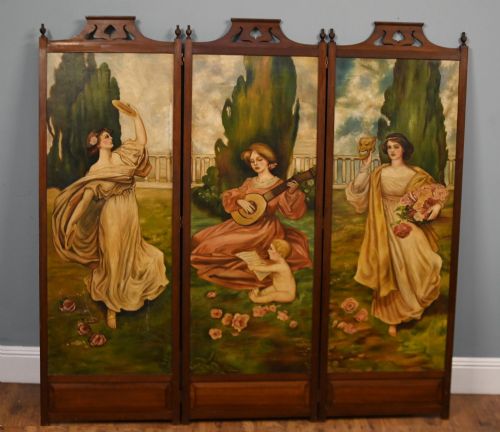
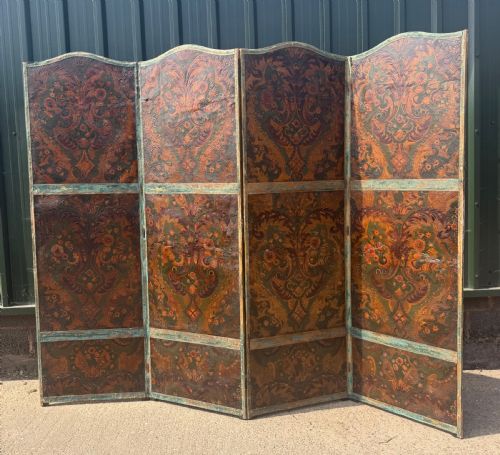
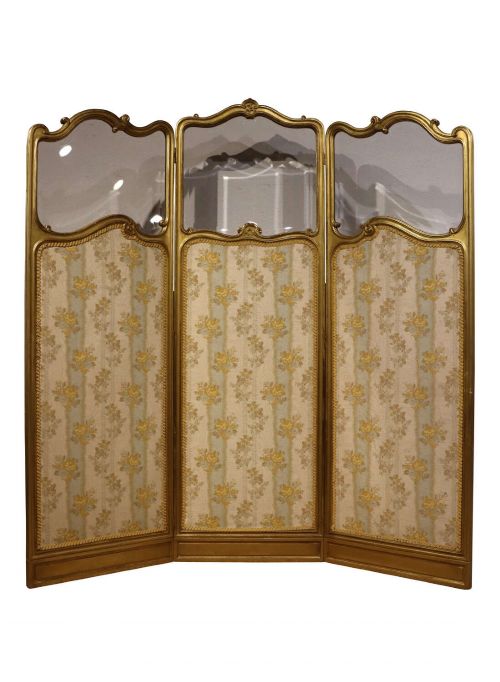
A victorian room screen shapes a space and catches the light through painted canvas, carved mahogany, and gilded glass.
Victorian Room Screen
A victorian room screen divides a space or frames a corner through multi-panel folding designs. The pieces on this page span folding screens, room dividers, dressing screens, and fire screens originating across the nineteenth century.
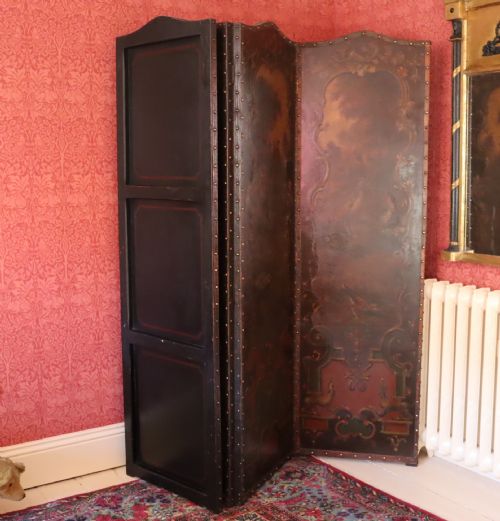
Mahogany, walnut, and giltwood provide the structural frames for these folding dividers. Panels feature canvas, paper, leather, silk, and glass, operating as privacy screens or decorative partitions.
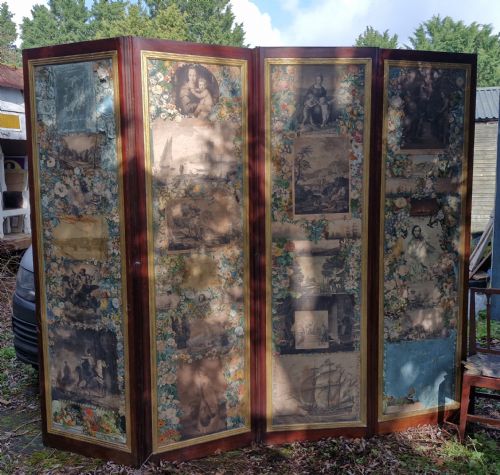
Styles range from straightforward nineteenth-century mahogany frames to elaborate French Chateau, Chinese Chippendale, and Victorian Chinoiserie interpretations. Makers utilised techniques such as hand-painting, needlepoint, scrap work, and decoupage to finish the panels.
Materials and Construction
Wood frames in mahogany, walnut, and giltwood support hinged panels made to fold in multiple directions. Brass hardware secures the joints while allowing smooth movement across three, four, or five folds.
Surface decoration relies on applied materials including oil paint on canvas, hand-painted or tooled leather, silk, glass, and paper decoupage or scrap work. Needlepoint inserts also provide tactile surface texture within wooden frameworks.
Victorian Room Screen Retail Price Guide 2026
Typical asking prices for victorian room screen among the pieces listed under this phrase on Sellingantiques today, from the lower quarter to the upper quarter. They describe what is for sale here now, not the wider market.
Materials across these listings include brass, mahogany, wood, paper, canvas, oil paint, glass, and leather.
Evaluating Execution
The sophistication of the painted or decorative surface dictates the standing of each piece, moving from simple scrap work collages to detailed hand-painted oil scenes or intricate needlepoint. Giltwood and mahogany frames show superior joinery and carving compared to plain secondary timbers.
The scale and weight of the panels affect stability, particularly on four and five-fold screens that must stand upright without sagging at the hinges. Bevelled glass, intact silk panels, and well-preserved tooled leather elevate the overall refinement.
The Victorian Room Screen Glossary
- Decoupage
- The art of decorating a surface with paper cutouts pasted and varnished. Victorian examples frequently layer printed scraps across multiple folding panels.
- Chinoiserie
- European interpretations of Chinese and East Asian artistic traditions. These screens use black lacquer, gilt motifs, and oriental figures.
- Giltwood
- Timber coated with a thin layer of gold leaf or gesso powder. It provides a bright, reflective surface on French Chateau and revival frames.
- Scrap work
- A technique utilising mass-printed Victorian scraps and greeting cards arranged densely across a screen. It creates a dense, collaged surface texture.
- Needlepoint
- Embroidery stitched on canvas mesh to form pictorial or geometric patterns. It appears frequently in nineteenth-century privacy screens.
Victorian Room Screen: Frequently Asked Questions
How do I use a room screen?
A screen partitions a large room into smaller zones or blocks draughts near doors and windows. They also serve as decorative backgrounds or dressing partitions.
Position the folds at gentle angles to ensure stability while allowing the painted or carved panels to face into the room.
What is a nursery screen?
A nursery screen traditionally protected children from the intense heat of an open fireplace or kept them away from hearth hazards. They often feature adjustable panels or lighter timber frames.
Many surviving examples utilise mahogany or inlaid woods with low heights suited to domestic oversight.
How do I clean leather screens?
Painted and tooled leather surfaces require gentle dusting with a dry, soft cloth to prevent moisture damage. Avoid modern chemical cleaners that strip nineteenth-century varnishes.
Consult a specialist conservator if the leather shows cracking or lifting along the panel folds.
Are these screens fully reversible?
Some multi-fold screens feature decorated surfaces on both sides, allowing them to face different directions in a room. Check the hinge construction to see if the panels swing both ways.
Reversible designs offer flexibility when rearranging furniture layout or altering room divisions.