




Victorian Rococo Stool
These Victorian rococo stools combine fluid carved frames with rich textiles, offering both decorative presence and practical seating.
Victorian Rococo Stool
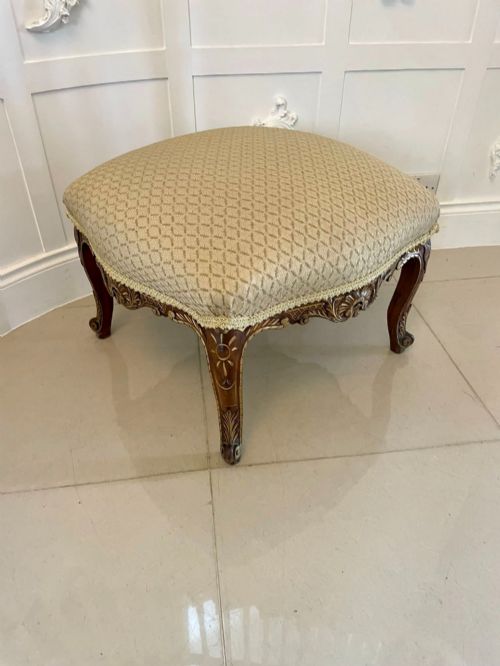
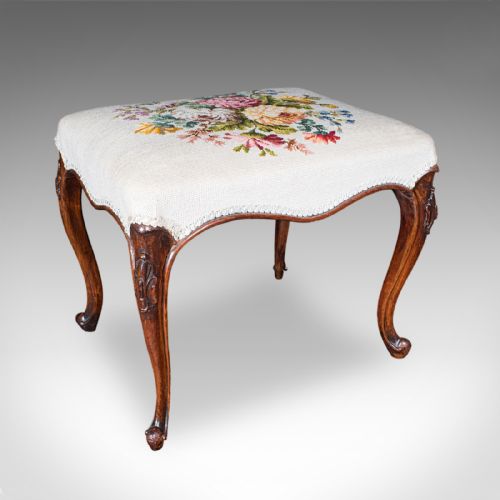
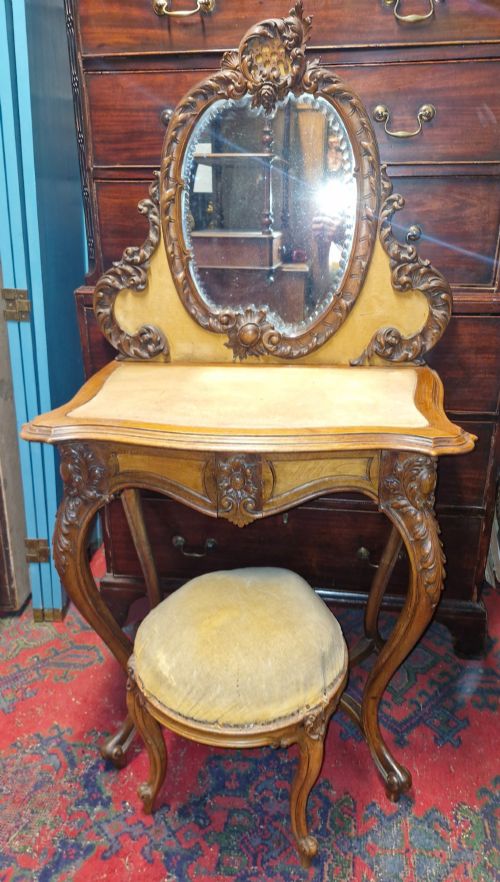
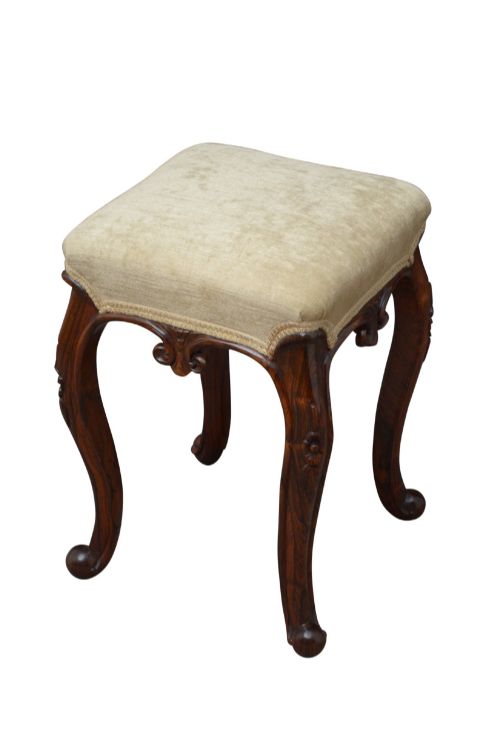
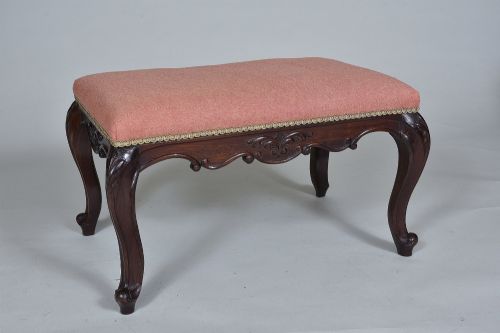
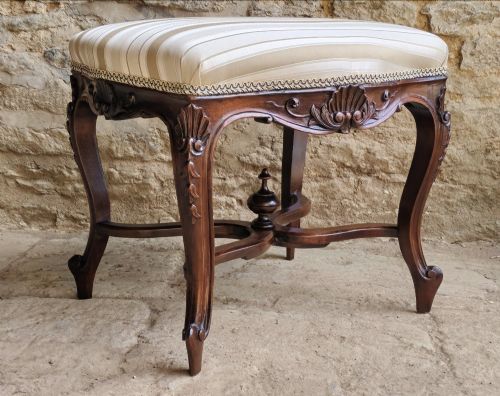
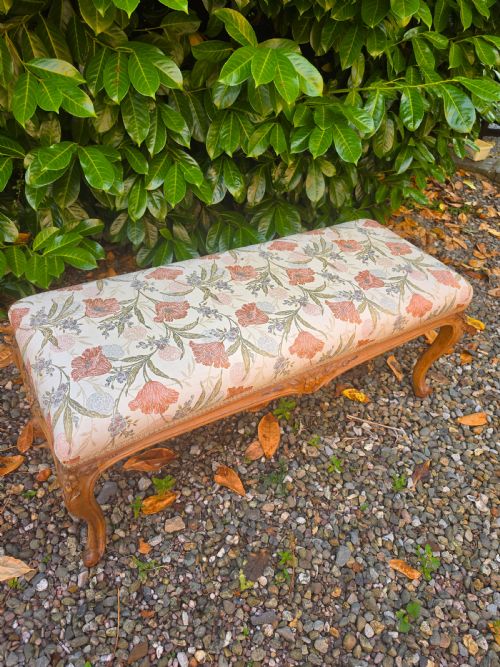
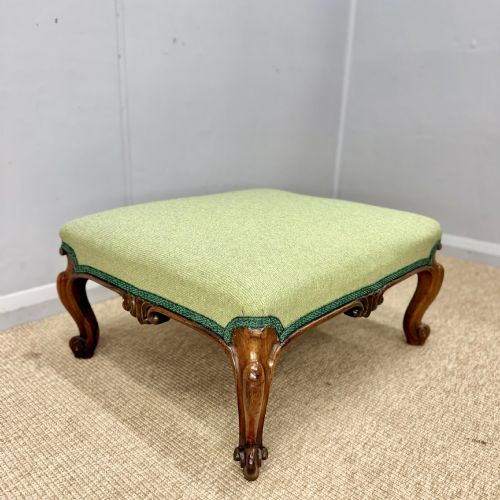
A victorian rococo stool is typically encountered as a walnut, mahogany, or rosewood piece resting on cabriole legs. These low seats serve various domestic functions, appearing as footstools, dressing table seats, music chairs, and larger salon or centre stools.
The aesthetic draws heavily on earlier French designs, incorporating the curved lines and ornate carving characteristic of the revival styles popular during the nineteenth century. Makers frequently paired carved wooden frames with textile upholstery, ranging from simple velvet to detailed needlepoint.
Most examples date from the mid to late nineteenth century, spanning from the early Victorian period through to the eighteen-eighties and nineties. Buyers will also find occasional pieces from the Regency era alongside later nineteenth-century interpretations.
Materials and construction
Frames are constructed from dense hardwoods such as walnut, mahogany, and rosewood, occasionally utilising exotic timbers like goncalo alves wood or finished with giltwood. These timbers provide the structural strength required for the sweeping, curved profiles of the cabriole legs.
Joinery relies on traditional methods to support the organic, flowing contours typical of the style. Carving is executed directly into the solid wood framing, often highlighting the knees of the legs and the scrollwork of the rails.
Upholstery techniques secure various textiles over padded foundations, including traditional needlepoint, velvet, and woven fabrics. Many pieces retain or have been fitted with removable cushions or spring-assisted mechanisms in the case of music chairs and revolving piano seats.
Listings feature walnut, mahogany, and rosewood frames paired with fabric, velvet, and needlepoint upholstery across the nineteenth century.
Assessing craftsmanship and proportion
The standard of carving distinguishes standard production pieces from finer examples. Superior items display deep, crisp relief work along the wooden frame and cabriole legs, whereas lesser examples feature shallow or mechanical shaping.
Timber selection and grain figure significantly impact the overall character of a piece. Well-chosen walnut or rosewood with rich natural figuring elevates the visual weight of the frame, supported by sturdy joinery that maintains rigidity across larger salon and centre stools.
The Victorian Rococo Stool Glossary
- Cabriole leg
- A furniture leg that curves outward and then tapers inward, mimicking an animal's curving leg. This form is a defining characteristic of rococo revival seating.
- Giltwood
- Timber that has been coated with a thin layer of gold leaf or gilt paint. It appears on more decorative salon and dressing stools.
- Needlepoint
- A type of canvas work embroidery used historically for durable upholstery. Many surviving footstools and music seats retain this stitched textile work.
- Centre stool
- A freestanding piece designed to be viewed from all angles rather than placed against a wall. These larger formats often occupy the middle of a room.
- Duet stool
- A wider seating form originally intended for two people playing a piano or keyboard instrument. They frequently incorporate upholstered tops.
Victorian Rococo Stool: Frequently Asked Questions
Where were these stools used?
These pieces served multiple functions across nineteenth-century interiors, acting as dressing table seats, fireside footstools, and music chairs near pianos. Larger versions functioned as centre stools or window seats in formal reception rooms.
Their portable nature allowed them to be moved easily between rooms as needed for entertaining or daily comfort.
How do I care for the upholstery?
Protect antique textiles by keeping them out of direct sunlight to prevent fading and degradation of natural fibres. Gentle vacuuming with a soft brush attachment helps remove surface dust without damaging delicate threads or needlepoint.
Avoid harsh chemical cleaners on both the fabric and the polished wooden frame. Professional conservation cleaning is recommended for antique needlepoint and velvet.
Are the frames solid wood?
Nineteenth-century makers built these frames using solid hardwoods such as mahogany, walnut, and rosewood. These dense timbers were necessary to support the curving shapes and weight loads placed on cabriole legs.
Giltwood and lesser decorative finishes were also applied over solid timber substrates rather than modern manufactured boards.
How do I date a Victorian stool?
Dating relies on identifying timber choices, joinery methods, and stylistic cues recorded in the physical structure. Mid-nineteenth-century examples frequently feature rich rosewood or walnut with hand-carved cabriole legs.
Later Victorian pieces from the eighteen-eighties often display heavier proportions and machine-assisted detailing, while Regency pieces show distinct earlier framing characteristics.