


Victorian Rococo Hall Table
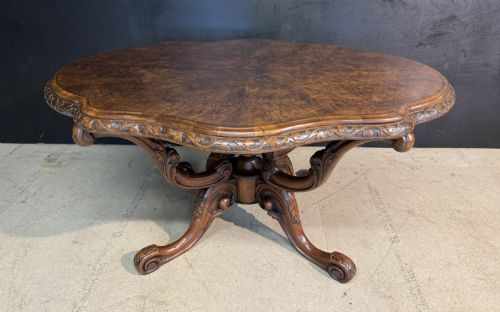
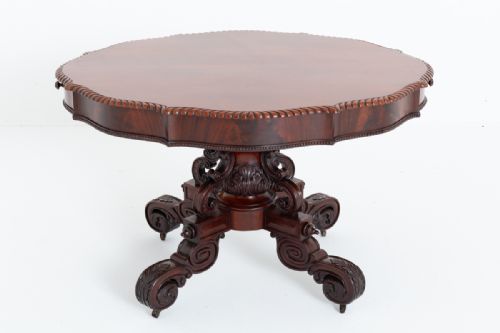
These victorian rococo hall table examples combine flowing organic curves with substantial timbers to anchor an entrance hall with distinct period presence.
Victorian Rococo Hall Table
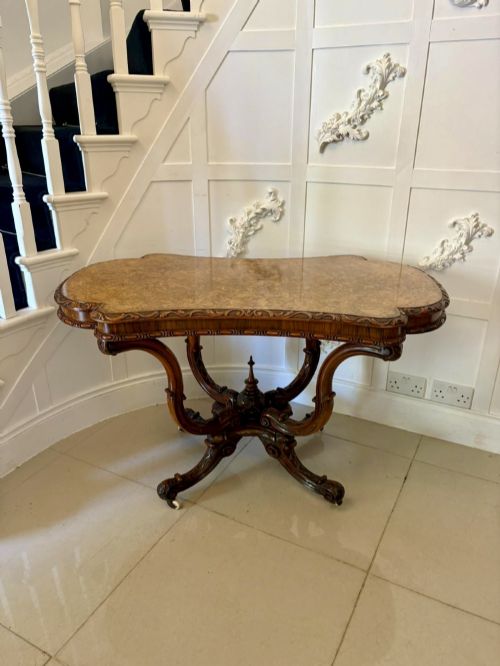
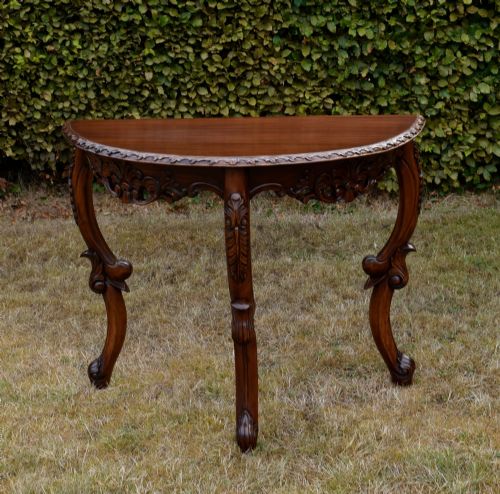
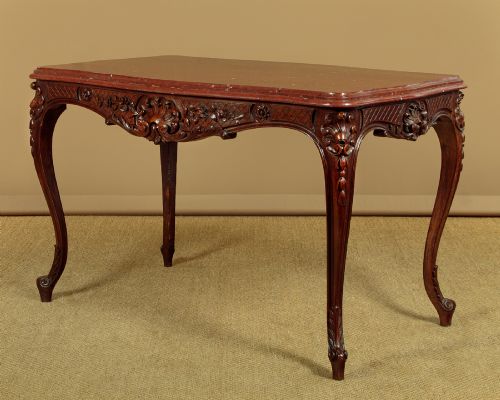
A victorian rococo hall table takes many shapes across the nineteenth century, appearing as centre tables, console tables, and pier tables designed for prominent placement. Walnut, mahogany, and rosewood form the structural foundation of these pieces, often enriched with burr veneers and marble tops.
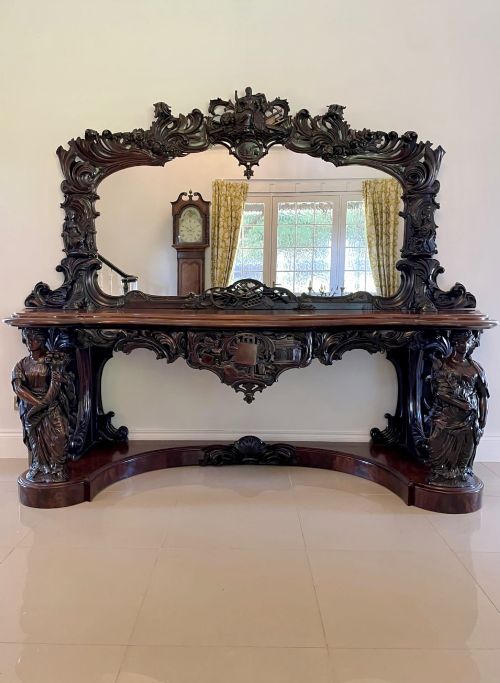
Makers working within this idiom draw heavily on French Rococo Revival styles, incorporating serpentine fronts and elaborate mirror backs. The selection spans freestanding centre tables intended for the middle of a room alongside console tables meant to stand flat against a wall.
Dated examples cluster around the mid-nineteenth century, though variations extend into later revival periods with similar stylistic traits. Buyers encounter both freestanding designs and tables equipped with associated wall mirrors intended for hallway display.
Markers of Quality
Depth and crispness of the hand-carving separate standard production from exceptional pieces, particularly in the rendering of asymmetric rococo scrolls and foliage. The choice of timber grain, such as highly figured burr walnut or rich rosewood, dictates the visual weight and desirability of the top.
Structural integrity relies on the retention of original marble slabs, stable stretcher arrangements, and solid joints that withstand freestanding placement without wobble. Scale also plays a role, with unusually large proportions and matching mirror components altering the architectural impact of the table.
Listings for this phrase feature woods such as walnut, mahogany, rosewood, and amboyna, frequently paired with marble tops.
Holland + Son
The Victorian Rococo Hall Table Glossary
- Centre table
- A freestanding table finished on all sides, designed to stand in the middle of a room rather than against a wall.
- Console table
- A table supported by wall brackets or console legs, built to sit flush against a vertical surface.
- Pier table
- A table designed specifically to fit against the wall space between two windows, often paired with a matching wall mirror.
- Serpentine front
- A tabletop or cabinet front curved in a wave-like shape, featuring a convex centre flanked by concave sides.
- Burr walnut
- Timber taken from walnut tree growths, prized for its swirling, highly figured grain patterns used in fine veneering.
Victorian Rococo Hall Table: Frequently Asked Questions
Where should I place a console table?
These tables find their natural home in entrance halls and corridors, where their shallow profile fits neatly against a wall.
Pairing a console table with a matching wall mirror creates a balanced focal point near an entryway.
How do I care for a marble top?
Marble surfaces require regular dusting with a soft cloth and immediate wiping of any spilled liquids to prevent staining.
Avoid placing acidic items directly on the stone to protect the polished finish over time.
What is the difference between a centre table and a console table?
A centre table is finished on all sides for placement in the middle of an open room.
A console table relies on wall support or flat rear legs to sit securely against a vertical surface.
How do I identify the Victorian Rococo style?
The style is recognisable by its asymmetric scrolls, naturalistic floral carvings, and flowing serpentine outlines.
Dark hardwoods like walnut and rosewood provide the primary medium for these elaborate decorative curves.