



Victorian Renaissance Revival Chair
A victorian renaissance revival chair brings heavy architectural carvings and commanding silhouettes straight from the nineteenth century into modern rooms.
Victorian Renaissance Revival Chair
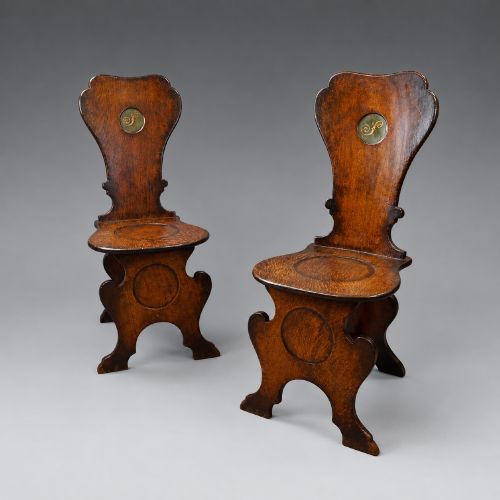
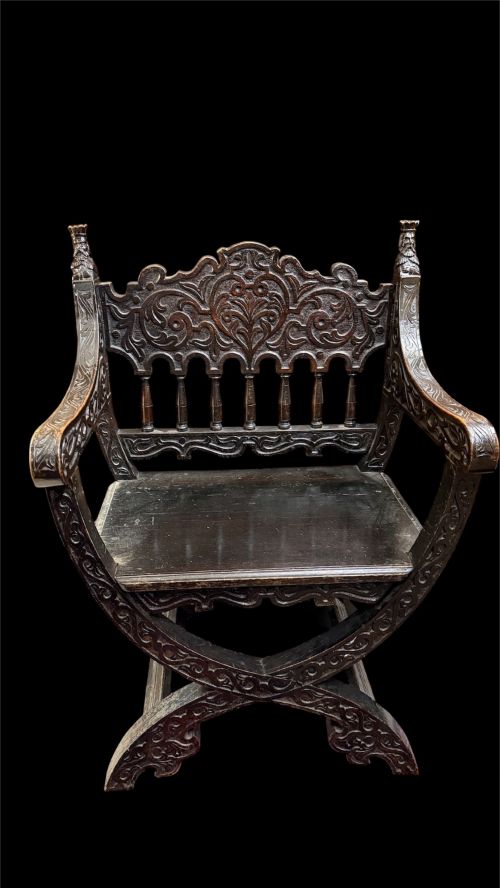
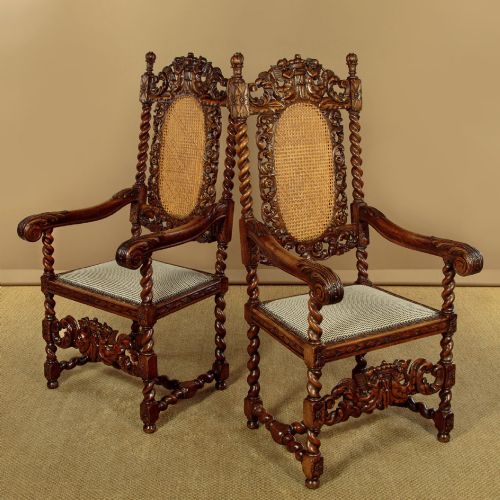
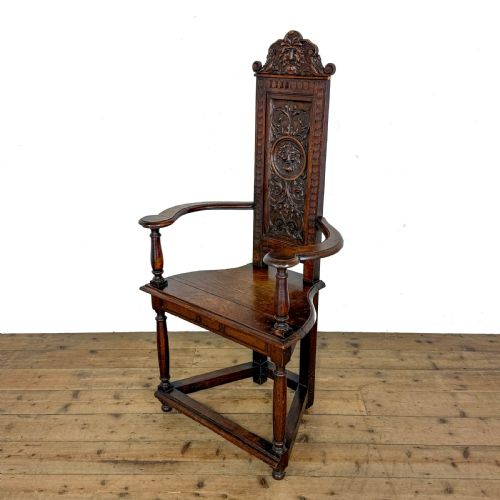
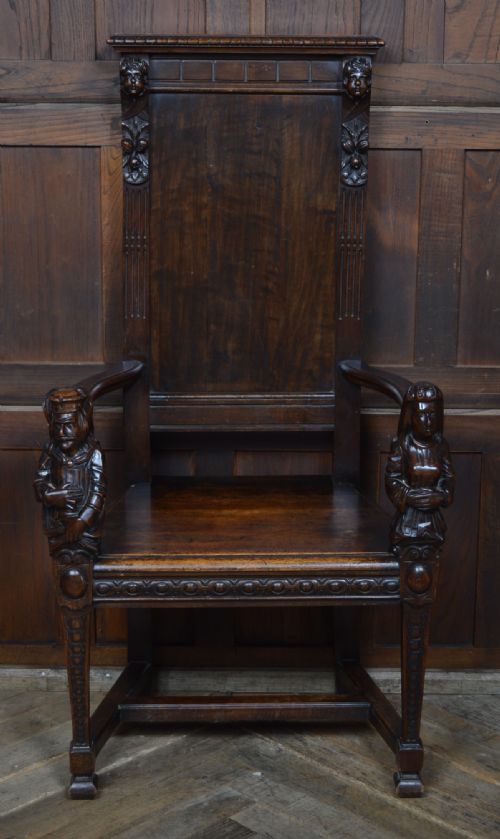
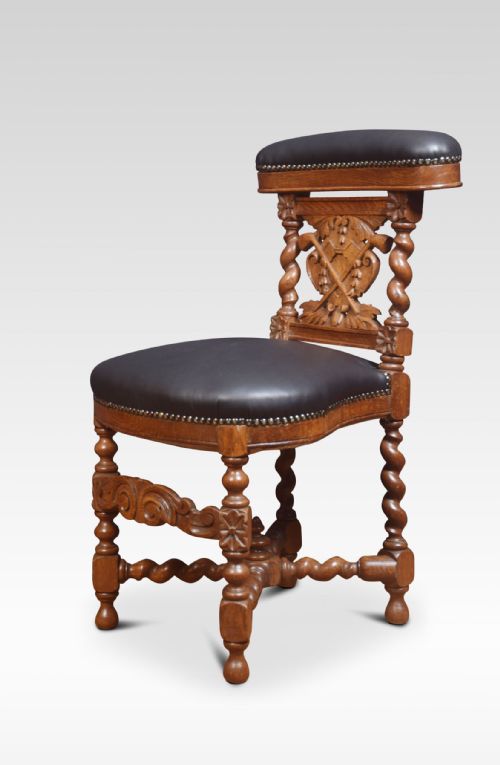
When you search for a victorian renaissance revival chair, you encounter sturdy seating designed during the nineteenth century, drawing heavily on historical motifs from earlier architectural eras. The examples meeting you on this page span the 1860s through the 1900s, encompassing walnut, oak, and mahogany frames.
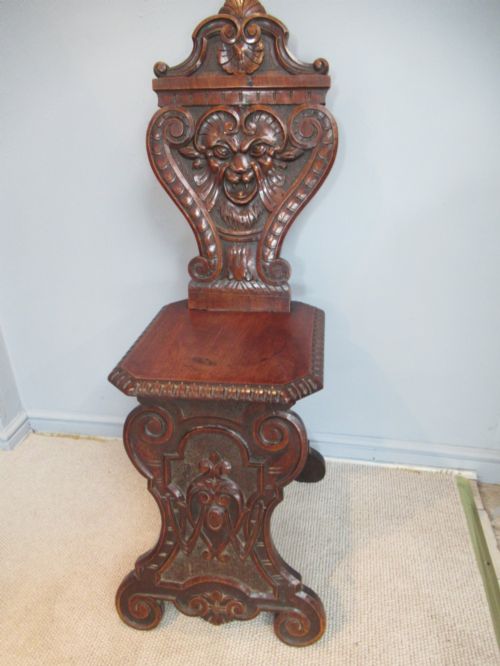
The forms vary widely across the selection, ranging from upright hall chairs and sgabello designs to heavily carved armchairs, dining sets, and corner chairs. Many pieces incorporate dense woodwork, high backs, and figural details typical of revivalist tastes during the Victorian epoch.
How they were made
Carpenters utilised dense hardwoods such as walnut, oak, mahogany, and fruitwood to construct these substantial frames. Timber selection dictated the depth and permanence of the ornamentation carved directly into the structural elements.
Makers applied hand carving alongside turned supports, brass accents, and upholstery in leather, fabric, and textile. Joinery relied on traditional framing methods to support the heavy high backs and broad armrests.
Monks managed to sneak benches into the nineteenth century disguised as deeply pious seats for quiet contemplation.
What varies in quality
The depth and crispness of the hand carving separate standard production from superior examples. Master carvers rendered figures, strapwork, and foliage with distinct relief and proportion.
The choice of primary timber influences the character and durability of the piece. Dense walnut and figured mahogany support more ambitious architectural details than simpler fruitwoods.
The Victorian Renaissance Revival Chair Glossary
- Sgabello
- A light wooden chair featuring a high back and solid trestle supports rather than traditional legs. These pieces originate from Renaissance Italy and were often used in halls.
- Renaissance Revival
- A nineteenth-century design movement drawing inspiration from sixteenth-century architectural and decorative arts. It favours symmetry, heavy moulding, and classical motifs.
- Throne Chair
- A tall, imposing armchair with an elevated back and substantial arms designed to project authority. These seats frequently feature elaborate crest rails and dense carving.
- Corner Chair
- A seat designed to fit into the angle of a room, featuring a diagonal orientation with a curved back rail supported by turned columns.
Victorian Renaissance Revival Chair: Frequently Asked Questions
Where should I place a heavy wooden armchair?
These commanding seats suit studies, hallways, or spacious living rooms where their architectural presence anchors the corner. They require sufficient floor space to display the carved backs properly.
Position them away from direct heat sources to protect the vintage timber and original leather or fabric upholstery from drying out.
How do I distinguish a hall chair from a dining chair?
Hall chairs typically feature solid wooden seats and high, decorative backs designed for occasional sitting rather than long meals. They were traditionally placed along entrance walls.
Dining chairs prioritise padded seats in leather or fabric and offer lower, more comfortable proportions for extended sitting around a table.
What woods were used for these revival seats?
Cabinetmakers relied primarily on walnut, oak, and mahogany for their structural stability and rich grain. Fruitwoods also appear in regional pieces.
Dark finishes and heavy wax layers were frequently applied to accentuate the deep relief carvings characteristic of the revival style.
How do I care for nineteenth-century wood and leather?
Apply a microcrystalline wax periodically to nourish the hardwood surfaces and maintain the natural sheen of the timber. Avoid modern silicon polishes that build up over time.
Treat leather upholstery with specialised saddle soap or leather conditioner to prevent cracking while preserving the historical patina.