


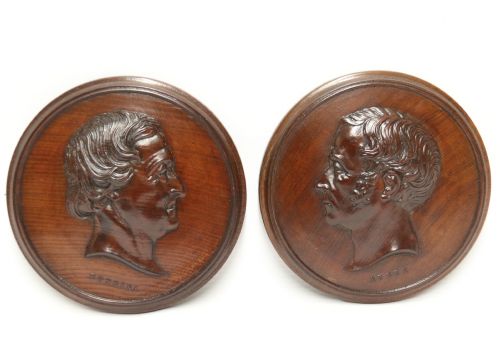


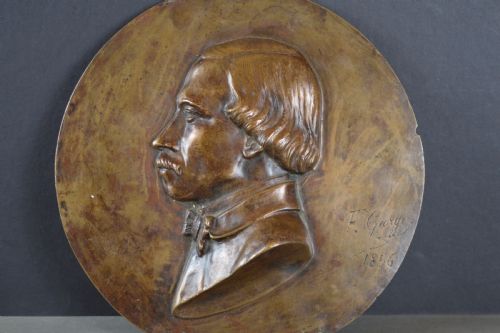


Victorian Relief Medallion
A victorian relief medallion brings nineteenth-century portraiture and classical design directly to your walls in bronze, cast iron, and mahogany.
Victorian Relief Medallion
A victorian relief medallion appears primarily as a wall plaque, architectural salvage, or commemorative exhibition medal. These pieces showcase prominent historical figures, literary icons, and classical profiles in three-dimensional depth.
The selection centres on nineteenth-century examples spanning the Victorian and Edwardian periods. Buyers encounter round copper plaques, framed intaglios, and monumental cast iron portrait panels originating from British, French, and Italian workshops.
What varies in quality
The distinction lies in the fidelity of the portraiture and the integrity of the material, whether patinated bronze, carved mahogany, or cast iron. Signed works by recognised modellers elevate the standing of a piece.
Listings feature materials spanning bronze, copper, cast iron, mahogany, plaster, and glass across the Victorian and Edwardian periods.
Giovanni Liberotti·Clement Messier·MAINFROY·Smith Beck And Beck·Gustav Grohe·J Lavergne·Coalbrookdale·Mintons·Carl Ranch·De Grave Short And Fanner
The Victorian Relief Medallion Glossary
- Relief medallion
- A sculptural panel or medal where the figures project from a flat background. This technique creates a sense of depth and dimensionality on wall plaques and medals.
- Intaglio
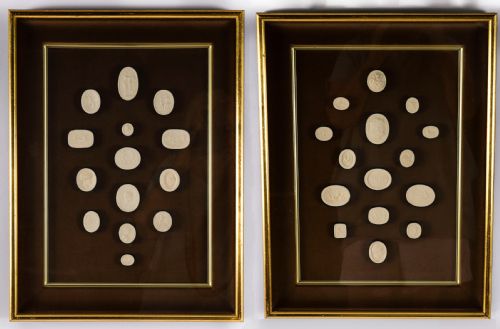
- A design carved into the surface of a material rather than raised above it. These are often displayed in box frames for close examination.
- Patinated bronze
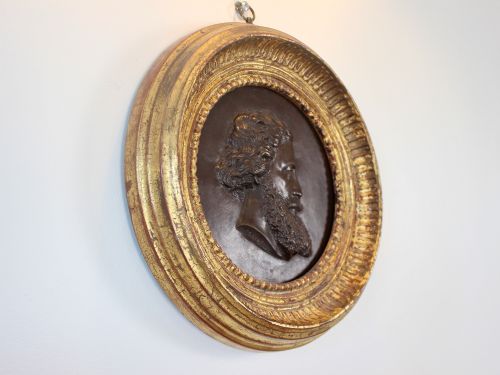
- Bronze treated with chemicals or heat to produce a distinct surface coloration and protective finish. This process highlights the fine details of portrait plaques.
- Cast iron
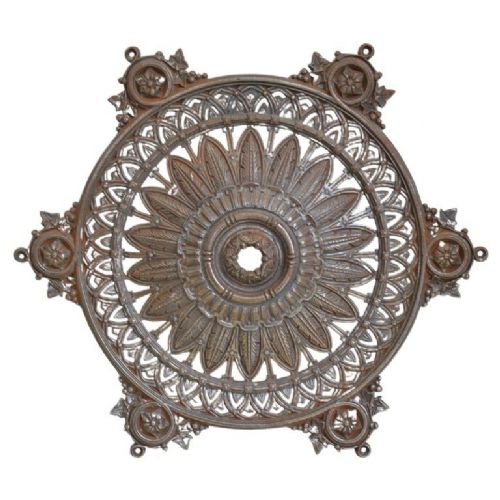
- Molten iron poured into a mould to form solid decorative objects. It provides heavy durability and sharp detail for architectural salvage and wall art.
- Pate sur pate
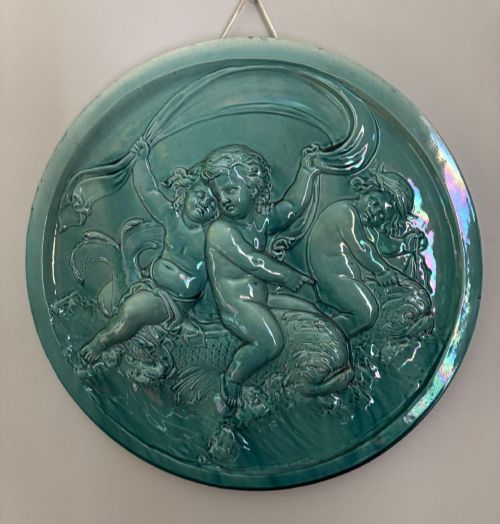
- A ceramic decorating method where liquid white clay is applied in layers onto a darker body to build a raised design. Mintons utilised this technique for decorative tondos.
Victorian Relief Medallion: Frequently Asked Questions
What is a victorian relief medallion?
A victorian relief medallion is a sculptural wall plaque, medal, or architectural panel featuring raised portraits or classical motifs. They capture likenesses of historical figures and literary icons in materials like bronze, copper, and cast iron.
These pieces were produced during the nineteenth and early twentieth centuries to commemorate exhibitions, events, or notable personalities. They function primarily as decorative wall art.
How were bronze portrait plaques displayed?
Bronze portrait plaques were manufactured for wall mounting in domestic interiors and public spaces. Many feature dedicated wooden panels or frames designed to showcase the metal relief.
Cast iron examples often served as architectural elements, such as ceiling roses or heavy wall panels. Smaller medals were kept in cabinets or fitted frames.
How do I identify the period of a plaque?
Dating relies on the stylistic markers of the nineteenth century, including Neoclassical, Renaissance Revival, and French Art Nouveau influences. Signatures, exhibition dates, and maker stamps provide precise chronological context.
Materials also offer clues, as cast iron and patinated bronze feature prominently in mid to late nineteenth-century production.
Who made these nineteenth-century medals?
Exhibition medals and commemorative plaques were produced by established foundries, scientific instrument makers, and ceramic manufacturers. Companies like Coalbrookdale and Mintons created notable cast iron and pottery works.
Individual sculptors and medallists signed their works, recording the names of artists who worked across Britain, France, and Italy.