


Victorian Reclining Sofa
A victorian reclining sofa brings nineteenth-century comfort and elegance into a modern room, offering a chaise or daybed for lounging.
Victorian Reclining Sofa
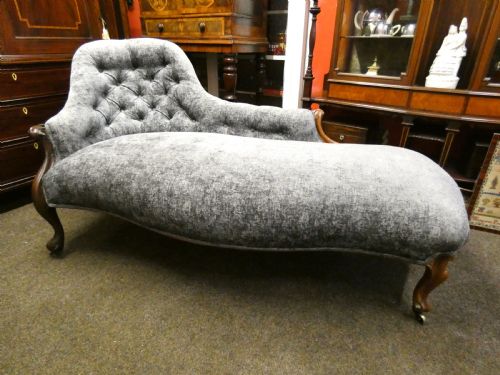
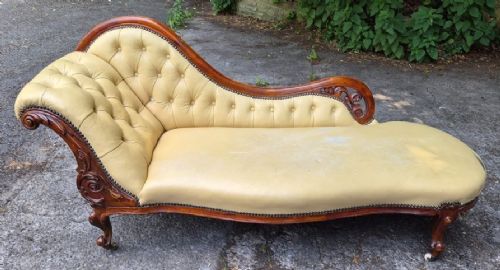
When you search for a victorian reclining sofa, you are looking at nineteenth-century daybeds, chaise longues, and settee forms designed for repose. These pieces originate primarily from the Victorian period, with examples spanning from the 1850s through to 1900, alongside occasional French nineteenth-century variants.
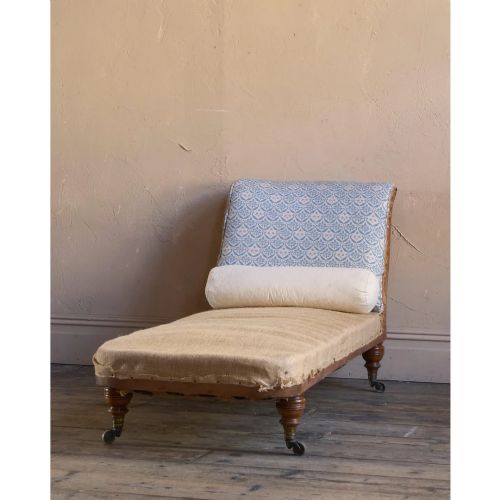
You are most likely to meet mahogany, rosewood, and walnut frames upholstered in velvet, hessian, or general upholstery fabric. Forms range from double spoonback designs and carved wooden frames to simpler day beds sitting upon turned legs with original castors.
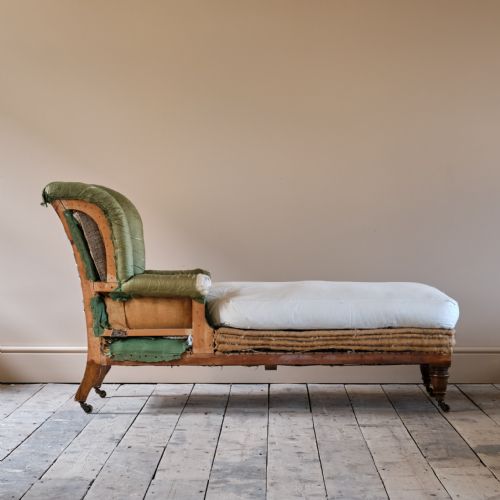
Many examples provide specific functional details, such as concealed storage compartments or adjustable reclining actions intended for afternoon resting. Whether described as a lounge, couch, or settee, each piece reflects the domestic comfort priorities of the nineteenth century.
Judging quality in nineteenth-century seating
Quality rests upon the crispness of the timber carving and the architectural proportion of the wooden frame. Heavier, denser woods like rosewood and walnut generally indicate higher-tier commission work compared to simpler secondary timbers.
The integrity of the original mechanism for any reclining action separates standard daily seating from specialised pieces. Furthermore, the survival of original castors and undisturbed internal upholstery foundations elevates a piece's authenticity.
The site's listings show Victorian reclining seating framed in mahogany, walnut, and rosewood, often upholstered in velvet or hessian.
Howard and Sons·H Goodall and Sons
The Victorian Reclining Sofa Glossary
- Spoonback
- A chair or sofa back shaped like the bowl of a spoon, curved to fit the human spine. This style is frequently padded and button-tufted in Victorian upholstery.
- Castor
- A small wheel fixed to the bottom of furniture legs to permit rolling. Original brass castors are valued for period accuracy.
- Hessian
- A coarse woven fabric typically utilised as a foundation layer beneath top upholstery materials. It provides hidden structural support inside nineteenth-century seats.
Victorian Reclining Sofa: Frequently Asked Questions
How do I use a daybed today?
These nineteenth-century daybeds fit well in studies, large hallways, or living rooms as alternative seating. They provide a comfortable spot for reading or afternoon resting without dominating a room the way a full sofa does.
Pair the piece with neutral walls to let the carved timber frame stand out. Ensure placement allows easy access to any reclining or adjustable mechanisms.
How do I date a Victorian chaise?
Dating relies on examining the timber species, framing style, and turning on the legs. Early examples from the 1850s often feature heavy rosewood frames and elaborate hand-carving.
Later pieces from the late nineteenth century tend to show simpler walnut or mahogany construction. Original castors and surviving maker stamps also help narrow down the production decade.
Are these sofas comfortable for sleeping?
While designed for daytime repose and reclining, nineteenth-century daybeds offer firm support compared to modern mattresses. The fixed headrests and shorter lengths suit lounging rather than full overnight sleeping.
Adding supportive cushions can adjust the comfort level for modern reading habits. The underlying sprung or webbed decks remain quite firm by contemporary standards.