


19th Century Fainting Couch
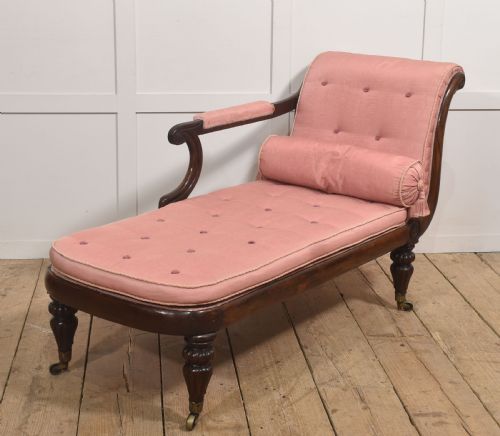
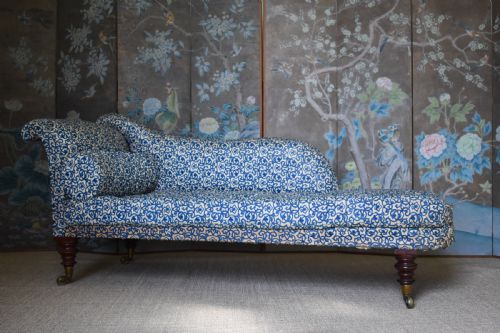
A 19th century fainting couch brings dramatic nineteenth-century proportion and a reclining seat to a room.
19th Century Fainting Couch
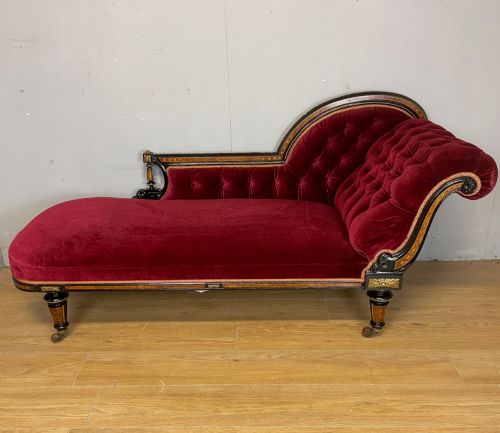
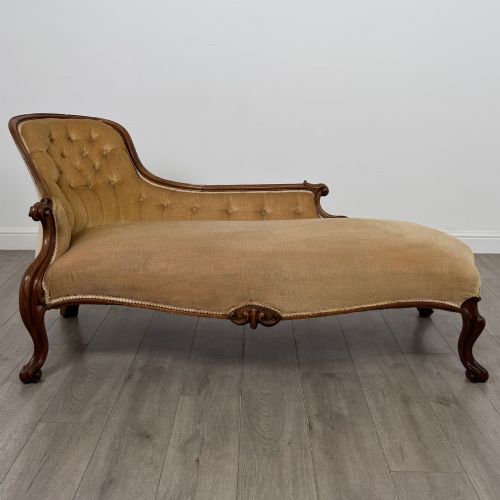
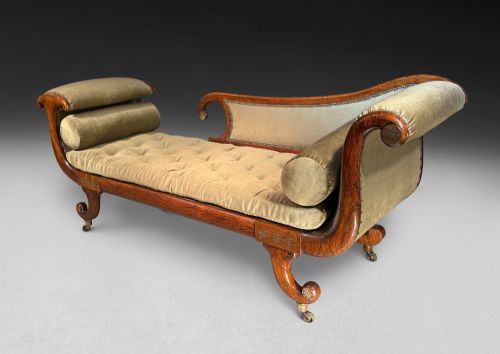
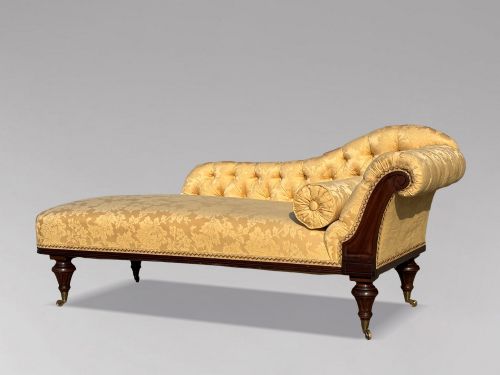
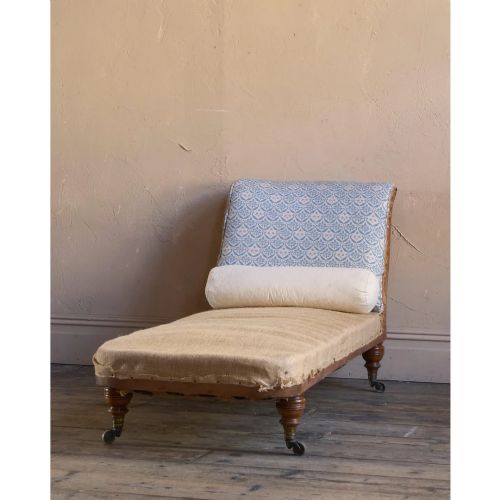
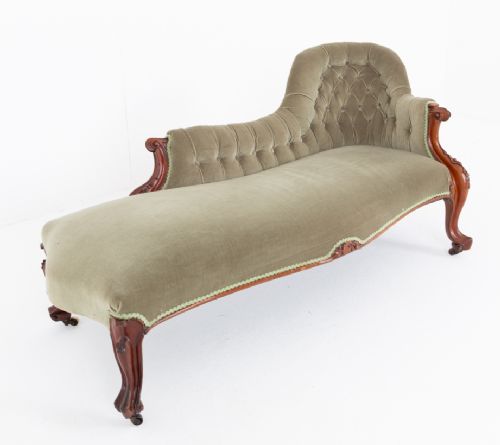
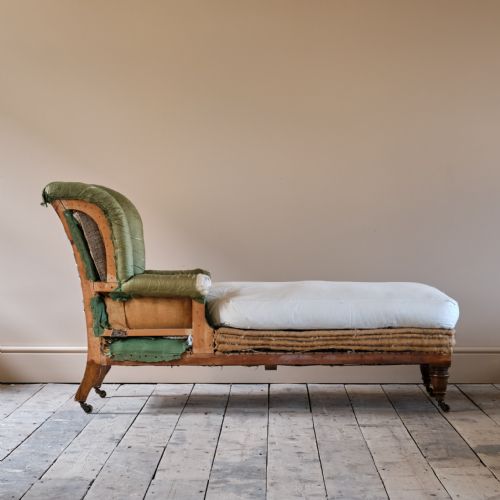
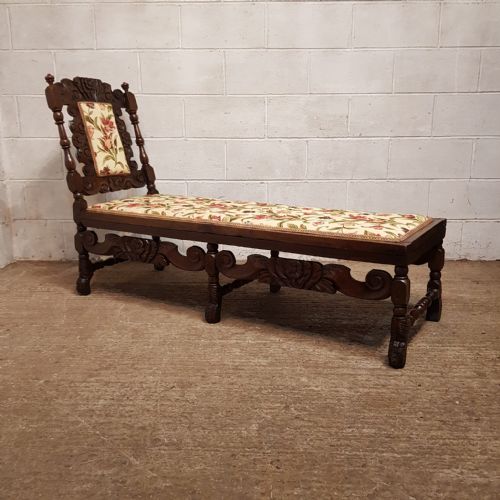
A 19th century fainting couch typically presents as a long, reclining seat with an elevated end, taking the form of a chaise longue, daybed, or asymmetric sofa. These pieces appear across the nineteenth century, spanning Regency, William IV, and Victorian periods.
The most frequent examples on this page belong to the Victorian era, executed in rosewood, mahogany, or walnut, often featuring carved scroll arms or double spoonbacks.
Early examples show Regency and William IV influences with brass inlay, simulated rosewood, or solid rio rosewood, while later pieces adopt robust oak or ebonised wood frames.
Materials and construction
Frames are built from dense hardwoods like mahogany, rosewood, walnut, and oak, occasionally incorporating brass inlay, ormolu decoration, or cane seating.
Upholstery relies on traditional fabrics including velvet, leather, and various dedicated upholstery textiles stretched over sprung or padded interior supports.
Several pieces are attributed to workshop makers, proving that even a Victorian couch appreciates a good pedigree.
Design and execution
Quality rests in the sculptural integrity of the timber frame, seen in crisply carved mahogany scrolls, precise brass inlays, and robust joinery rather than superficial surface finish.
Makers known for exceptional cabinet work, such as Howard and Sons or Holland and Sons, distinguish themselves through balanced proportions and superior structural framing.
Howard and Sons·Holland and Sons·H Goodall and Sons·Jas Shoolbred·Miles and Edwards
The 19th Century Fainting Couch Glossary
- Chaise longue
- An elongated chair for reclining, combining the qualities of a chair and a daybed. It forms the primary shape for this search phrase.
- Spoonback
- A chair or sofa back curved to resemble the bowl of a spoon, providing ergonomic support. This style appears frequently on Victorian examples.
- Ormolu
- Gilt-bronze mounts applied as decorative ornaments to furniture. It is found on select ebonised frames.
- Simulated rosewood
- Painted or grained wood finished to imitate the appearance of genuine rosewood. This technique occurs on Regency pieces.
19th Century Fainting Couch: Frequently Asked Questions
Where did they place them?
These seats sat primarily in formal drawing rooms, libraries, and bedrooms where occupants relaxed or rested during the day.
Their elongated shape suited spaces with generous wall lengths and open floor plans.
How do I spot Regency style?
Regency pieces rely on classical restraint, featuring brass inlay, simulated rosewood, and clean architectural lines.
They date earlier in the century than heavily carved Victorian examples.
What distinguishes William IV pieces?
William IV furniture displays heavy, substantial mahogany frames with bold carving and architectural proportions.
This transitional style bridges the Regency period and the Victorian era.
Are daybeds different from chaises?
Daybeds and chaise longues share similar reclining functions, though daybeds often feature symmetric or lower ends.
Both types served identical resting purposes in nineteenth-century interiors.