


Victorian Recamier Sofa
These Victorian recamier sofa designs offer singular nineteenth-century lounging comfort, combining sculptural timber frames with luxurious upholstered surfaces.
Victorian Recamier Sofa
When you search for a Victorian recamier sofa, you encounter asymmetric daybeds and chaise longues designed for reclining in nineteenth-century drawing rooms. The pieces recorded here span the Victorian era, William IV period, and Napoleon III styles, with origins stretching from the mid nineteenth century.
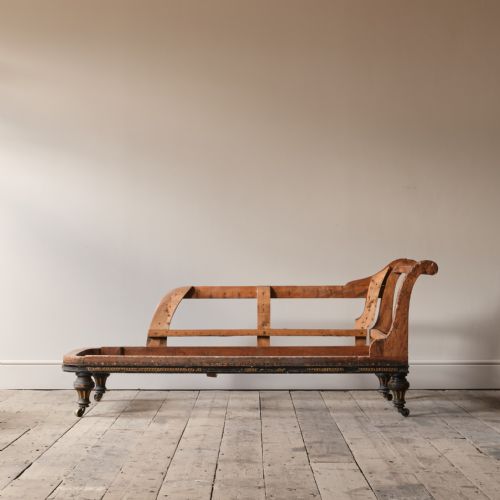
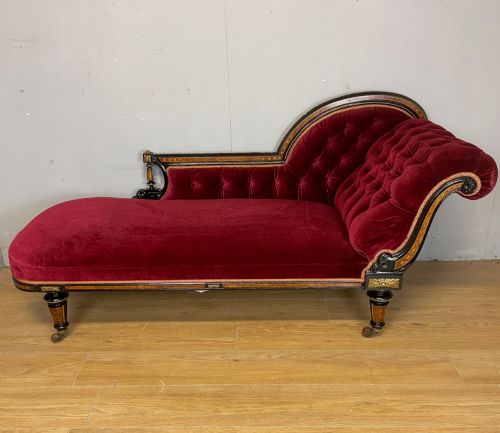
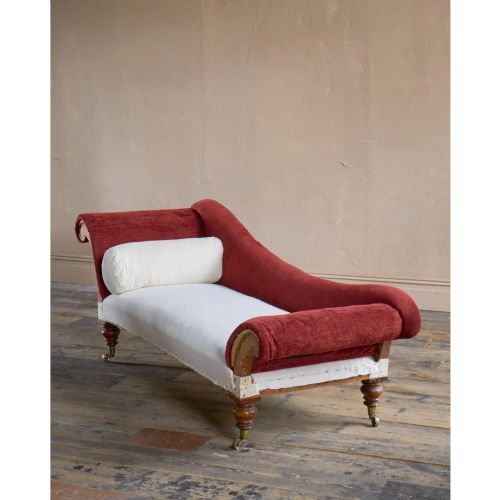
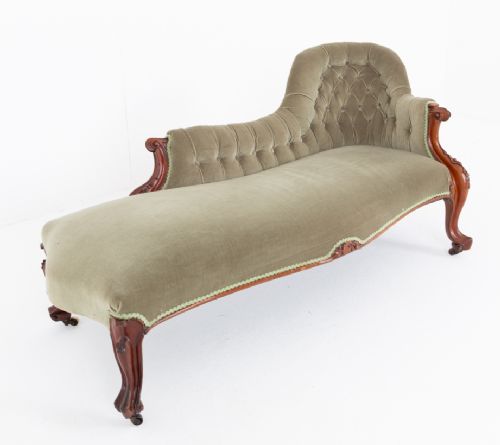
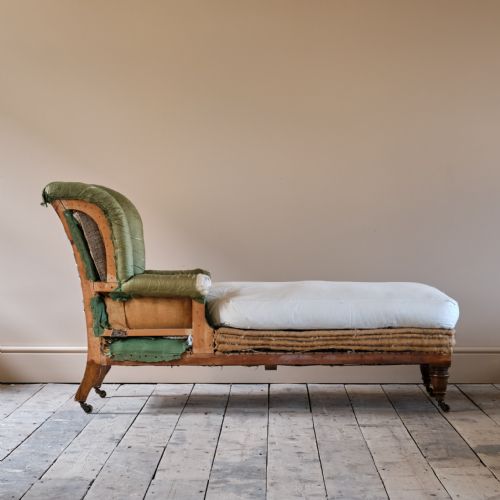
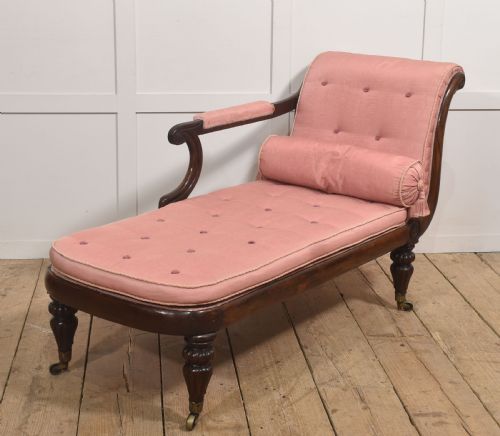
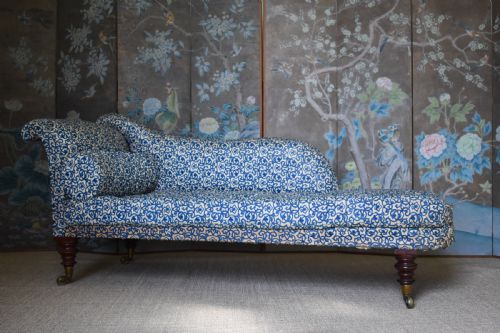
The common form on this page is the chaise longue, constructed with a raised headrest and a single sloping backrest. These daybeds and couches appear in rich timbers including mahogany, walnut, rosewood, and ebonised wood, upholstered in velvet, fabric, calico, blue damask, or whisky brown leather.
What varies in quality
The distinction between standard production and top-tier workshop execution lies in the depth of timber carving and the sophistication of the frame silhouette. Pieces attributed to premier makers display refined proportions, crisp joinery, and superior decorative embellishments like ormolu mounts.
Upholstery standard and timber selection further separate the grades of work available. Solid rosewood or figured walnut frames paired with complex carved details represent the upper tier of nineteenth-century seating manufacture.
Holland & Sons·Miles & Edwards
The Victorian Recamier Sofa Glossary
- Chaise Longue
- An elongated upholstered chair designed for reclining, featuring a backrest at one end. This form dominates the nineteenth-century daybed category.
- Ormolu
- Gilded bronze ornamentation applied to furniture frames. It provides metallic contrast against dark timbers like rosewood and ebonised wood.
- Ebonised Wood
- Timber treated to resemble ebony, popular in nineteenth-century cabinetmaking for a sleek black finish. It often contrasts with inlaid walnut panels.
- Damask
- A reversible figured fabric traditionally woven with intricate patterns. Blue damask frequently appears as an upholstery choice for antique daybeds.
- Caning
- Woven plant material used to form resilient seat panels. It offers a lighter seating surface compared to fully padded upholstery.
Victorian Recamier Sofa: Frequently Asked Questions
How do I use a recamier sofa?
These pieces function as daybeds for daytime resting or reading in a drawing room or study.
Position the sofa against a wall where the single raised backrest supports a seated or reclined posture.
What wood types are used?
Makers constructed frames from solid hardwoods including mahogany, walnut, and rosewood.
Selected examples feature ebonised wood finishes combined with inlaid panels or gilded bronze mounts.
Are these daybeds comfortable?
Original upholstery utilises traditional springing and padding methods to support reclining.
Many pieces are re-covered in fabrics such as velvet, damask, or leather while retaining their historic frames.
How do I identify a Victorian piece?
Look for characteristic nineteenth-century stylistic markers such as William IV carved mahogany or Napoleon III piecrust framing.
Construction details and timber choices like rosewood align these forms directly with the mid nineteenth century.