



Victorian Pub Measure Jug
These Victorian pub measure jugs are utilitarian tavern vessels of copper, pewter, and brass, offering robust historical character for a traditional interior.
Victorian Pub Measure Jug
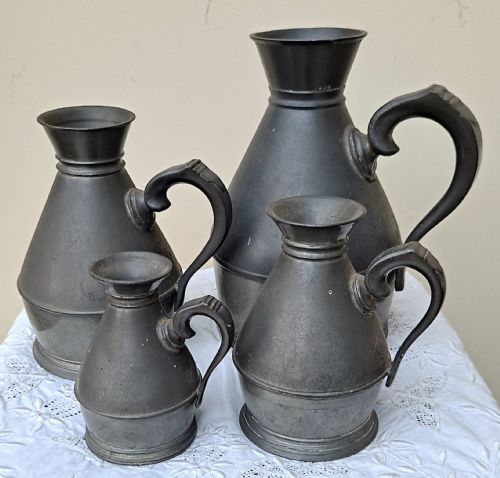
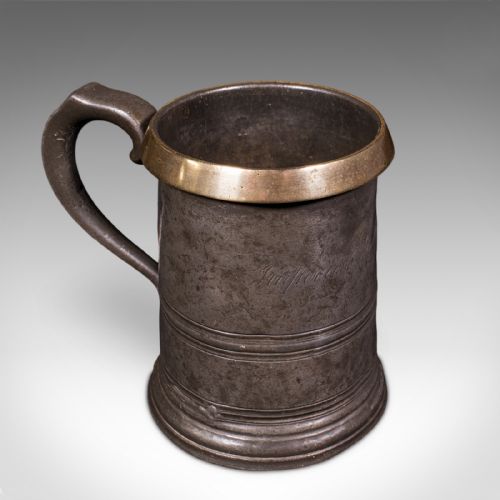
When someone searches for a Victorian pub measure jug, they are looking at heavy metal vessels used historically for dispensing and measuring ale, spirits, and other liquids in public houses and taverns. The examples found here span the nineteenth century, including specific regional styles such as Irish haystack measures and standard English tavern tankards.
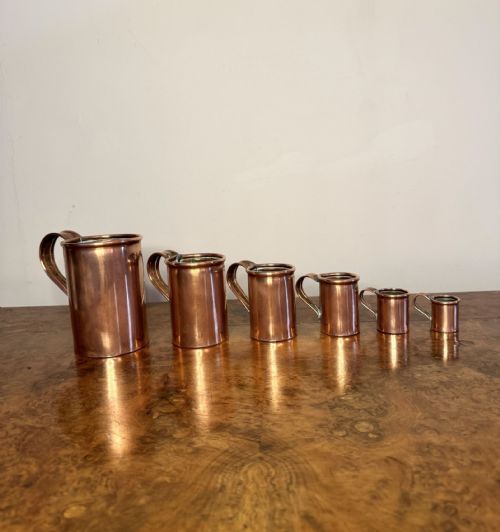
The version most commonly met on this page is the pewter measure, often appearing individually or in graduated sets marked with VR verification stamps. These range from single quart vessels up to large one gallon and two gallon capacities, alongside equivalent forms rendered in warm copper and brass.
The forms encompass tavern measures, spirit measures, flagons, and harvest jugs, reflecting the rigorous demands of nineteenth century hospitality and domestic kitchenalia. They survive as tactile examples of everyday metalworking from the 1800s and the 1860s.
How they were made
These vessels are constructed primarily from durable metals including pewter, copper, and brass, utilising traditional sheet metalworking and casting techniques suited for heavy commercial use. Pewter components are typically soldered and shaped to create smooth tavern tankards and haystack profiles.
Copper and brass variants often feature hand-beaten surfaces and riveted construction, particularly visible on larger two gallon flagons and harvest jugs. Metal thickness was chosen to withstand the relentless knocks of a busy nineteenth century public house.
Victorian Pub Measure Jug Retail Price Guide 2026
Typical asking prices for victorian pub measure jug among the pieces listed under this phrase on Sellingantiques today, from the lower quarter to the upper quarter. They describe what is for sale here now, not the wider market.
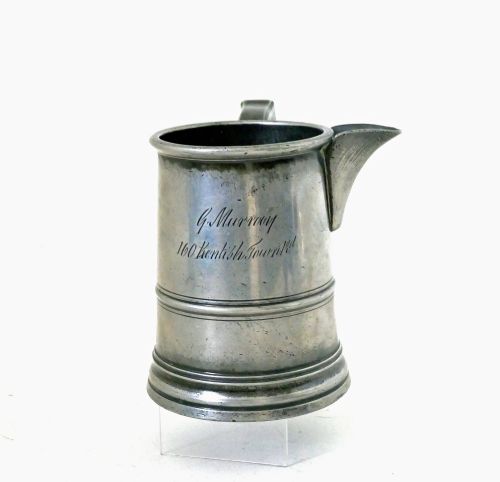
At least one nineteenth century pewter ale jug carries an engraved Kentish Town address, turning a humble container into a surviving local London landmark.
What varies in quality
Quality in these pieces is dictated by the crispness of maker or verification marks, such as VR cyphers or specific regional engravings like those recording Kentish Town addresses. Complete graduated sets of multiple vessels hold greater integrity than isolated single items.
The heaviness of the gauge metal and the preservation of original patination on copper and pewter separate utilitarian survivors from finer display specimens. Artisanal touches like named inscriptions or maker attribution by craftsmen elevate particular examples above standard commercial output.
G Murrouy·J Bower·S Hancock
The Victorian Pub Measure Jug Glossary
- Haystack measure
- A distinctively shaped nineteenth century liquid measure featuring a bulbous body tapering toward the top, reminiscent of a hayrick. These Irish and English tavern vessels were produced in graduated sets.
- Pewter
- A malleable metal alloy consisting primarily of tin, historically used for tavern tankards and measures. It develops a dull grey patina over centuries of handling and cleaning.
- VR mark
- A royal cypher standing for Victoria Regina, stamped onto nineteenth century weights and measures to signify official crown verification and accuracy. These stamps provide reliable chronological markers.
- Flagons
- Large metal drinking vessels with handles and lids, utilised in public houses for serving ale or wine in substantial quantities. Copper examples double as impressive decorative objects.
- Kitchenalia
- Domestic or commercial utilitarian items from past centuries, encompassing measures and flagons originally employed in kitchens and taverns. Their appeal lies in honest, functional design.
Victorian Pub Measure Jug: Frequently Asked Questions
What were pub measure jugs used for?
These vessels were employed in nineteenth century public houses and taverns for storing, measuring, and serving ales, spirits, and other liquids directly to patrons. Their robust construction allowed them to endure the heavy daily demands of commercial hospitality.
Larger capacities functioned as stock vessels behind the bar, while smaller quart sizes and graduated sets served customers at their tables. They bridged the gap between strict trade regulation and social drinking.
How do I identify a Victorian measure?
Identification relies on observing characteristic nineteenth century forms, such as the distinctive swelling profile of haystack measures or traditional cylindrical tankards. Materials are typically heavy-gauge pewter, copper, or brass.
Many pieces bear official crown verification stamps like the VR mark, or contemporary engravings detailing pub names and locations. These stampings and regional variations help anchor the pieces firmly in the 1800s.
What is a graduated set of measures?
A graduated set consists of multiple vessels of descending sizes designed to nest or display together, representing standard commercial measurement increments. In nineteenth century pubs, these sets ensured accurate dispensing of varying quantities of ale or spirits.
Finding a complete set in matching copper, brass, or pewter provides a cohesive visual display that highlights the utilitarian hierarchy of the Victorian tavern. Such groupings are particularly sought after by collectors of breweriana.