


Victorian Prayer Seat
These Victorian prayer seat examples combine devotion and domestic comfort, offering low seats and padded kneeling ledges shaped by nineteenth-century craftsmanship.
Victorian Prayer Seat
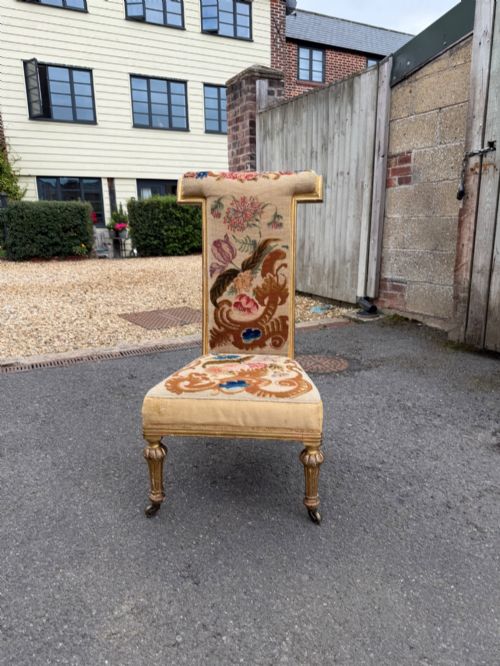
A Victorian prayer seat, often known as a prie-dieu, is a low-backed chair designed specifically for private devotion, featuring an upper armrest or shelf for reading and a lower ledge for kneeling. The pieces encountered here span the nineteenth century, including examples from around eighteen-fifty and eighteen-sixty, alongside related church seating.
Makers produced these forms primarily as accent or side chairs for domestic bedrooms and withdrawing rooms rather than solely for ecclesiastical settings. Variants range from standard upholstered iterations to marked cathedral seating and carved oak regional interpretations.
Most entries draw upon classical timber frameworks and revival aesthetics, showing how personal piety merged with Victorian interior design. Buyers frequently encounter rosewood and mahogany constructions alongside ebonised finishes and specialised textile coverings.
Materials and construction
Cabinetmakers utilised dense hardwoods such as rosewood, mahogany, oak, and walnut to build the foundational frames of each prayer seat. Structural turning often includes barley twist details on the uprights and legs.
Upholstery relies on traditional textiles, notably green velvet, fabric, and handworked needlepoint inserts. Frames are frequently joined using pegged mortise and tenon techniques native to nineteenth-century joinery.
Several prayer seats include built-in elbow rests, proving Victorians took their quiet contemplation with a generous measure of comfort.
Assessing quality and origin
Superior examples distinguish themselves through the precision of timber carving and the integrity of the original frame construction. Rosewood and walnut models with complex turnings or documented institutional provenance command greater interest than plain utilitarian pine or later provincial copies.
The choice of upholstery materials and the survival of period needlepoint or velvet heavily influence the overall character of the piece. Surviving maker marks, such as stamps from Edinburgh workshops or cathedral inventory inscriptions, separate standard domestic chairs from notable commissions.
R Whytock of Edinburgh
The Victorian Prayer Seat Glossary
- Prie-dieu
- A French term meaning pray-God, used to describe a devotional chair with a low seat and an elevated upper rest. This form became a staple of Victorian domestic bedrooms.
- Barley twist
- A type of turned woodwork resembling a spiralling rope column. It appears frequently on the vertical supports and legs of nineteenth-century seating.
- Gothic Revival
- An architectural and decorative style drawing inspiration from medieval design. This aesthetic heavily influences the pointed arches and severe lines found on many ecclesiastical chairs.
- Needlepoint
- Canvas work embroidery using tent stitch to create pictorial or geometric designs. Victorian prayer seats often retain this textile on their kneeling pads and back panels.
- Ebonisation
- The process of treating lighter timber such as fruitwood or beech to imitate ebony. Cabinetmakers utilised this finish to achieve a sombre, formal appearance on ecclesiastical furniture.
Victorian Prayer Seat: Frequently Asked Questions
How were Victorian prayer seats used?
These seats served primarily for private daily devotion within domestic bedrooms and parlours. The upper shelf supported prayer books while the user knelt on the lower platform.
Over time, many lost their strict devotional purpose and functioned simply as low nursing chairs or decorative bedroom seating.
How do I identify Gothic Revival features?
Gothic Revival pieces display architectural motifs borrowed from medieval churches, such as pointed arches, trefoils, and heavy structural framing. These elements reflect the nineteenth-century interest in medieval design.
Makers combined these stern architectural lines with domestic comfort through plush velvet and needlepoint upholstery.
Are church chairs the same as prayer seats?
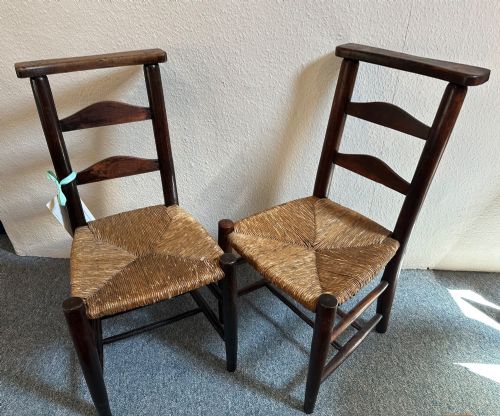
Church chairs usually refer to utilitarian chapel seating produced in sets for public worship, lacking the specialised kneeling ledge of a domestic prie-dieu. Some institutional examples feature carved plaques or cathedral inventory stamps.
Both categories share nineteenth-century origins and ecclesiastical aesthetic influences.