


Victorian Pouffe Stool
A victorian pouffe stool brings low seating and soft footrests into a room, offering practical comfort shaped by nineteenth-century craftsmanship.
Victorian Pouffe Stool
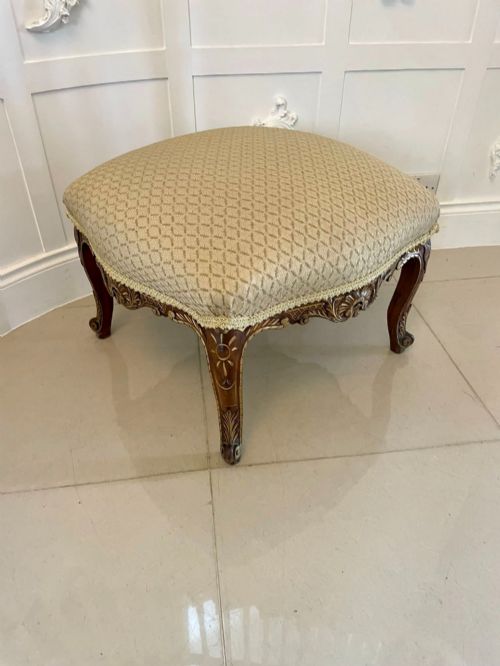
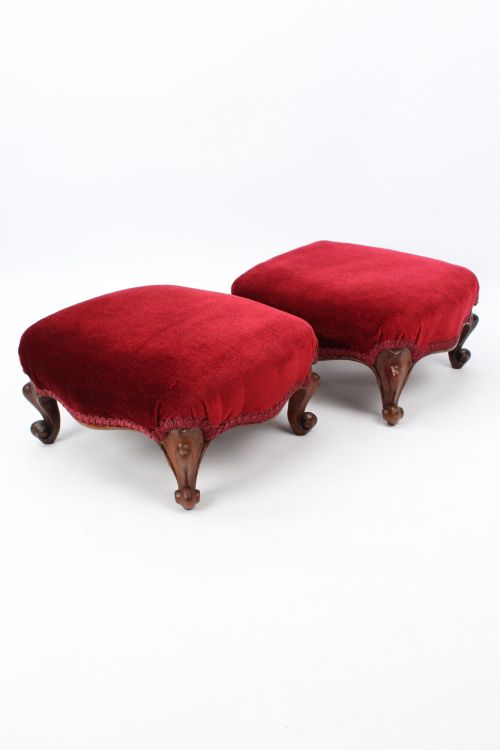
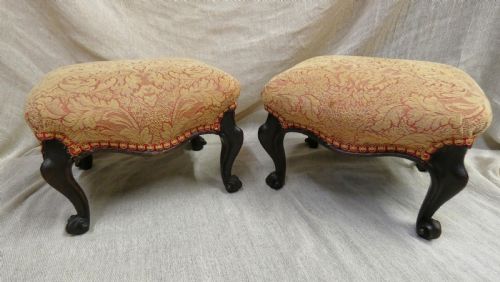
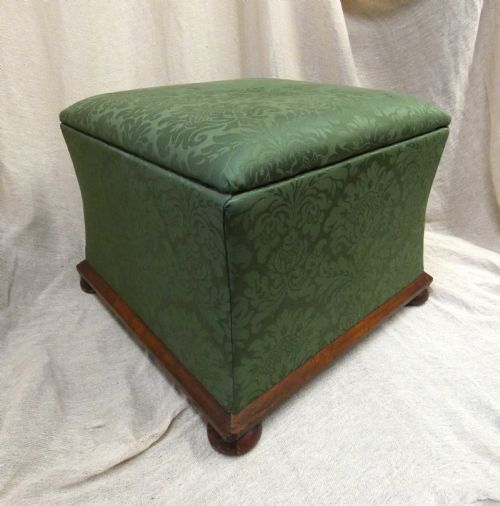
A victorian pouffe stool comprises low seating forms such as footstools, ottomans, and fireside stools originating primarily in the nineteenth century. These pieces serve functional roles in domestic spaces, often providing low resting surfaces or concealed storage beneath upholstered tops.
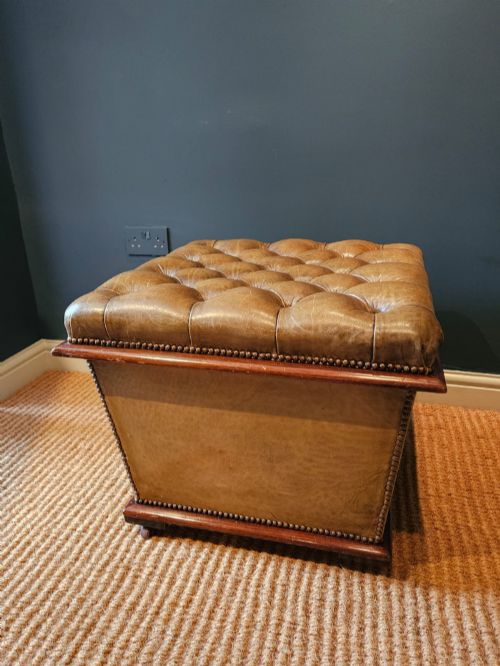
The selections available here predominantly date from the Victorian period, supplemented by nineteenth-century examples and occasional Georgian or revival pieces. Buyers frequently encounter compact round footstools, large buttoned leather centre stools, and rectangular ottomans.
Geographic and stylistic influences vary across the selection, ranging from English country house seating to Anglo-Indian carved hardwood designs. French nineteenth-century and second empire forms also appear alongside standard domestic British variations.
Materials and construction
Makers built the frames of a victorian pouffe stool from dense timbers including mahogany, walnut, rosewood, oak, and hardwood. These woods provided structural support for heavy upholstery and frequent use.
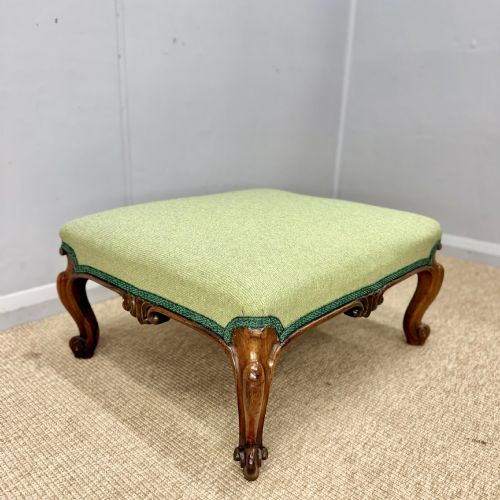
Surfaces received carved ornamentation, inlay work such as Tunbridge ware, or gilt highlights, depending on the stylistic influence. Structural elements often incorporate brass fittings and turned cabriole legs.
Upholstery techniques defined the upper sections, employing leather, fabric, needlepoint, Kilim tapestry, and textiles. Many examples utilised buttoning to secure the padding and shape the seating surface.
Design influences range from English country house seating and Anglo-Indian carving to French nineteenth-century styles.
Distinctions in quality
The refinement of the timber carving and the complexity of inlaid details separate standard seating from exceptional examples. Dense hardwoods like rosewood and walnut, shaped with detailed mouldings or Tunbridge ware, indicate higher workshop ambition.
The integrity of the frame construction and the execution of upholstery methods determine daily durability and aesthetic balance. Original buttoned leather or precise needlepoint tapestries reflect the skill applied to the top surface.
Howard and Sons·A.M.E. Fournier
The Victorian Pouffe Stool Glossary
- Ottoman
- A low upholstered seat or footstool without a back or arms, often containing internal storage. These pieces function as supplementary seating or resting places in nineteenth-century interiors.
- Tunbridge ware
- A form of decorative woodwork produced in Kent using small pieces of coloured wood to form geometric mosaic patterns. Craftsmen applied these panels to small items such as round footstools.
- Needlepoint
- Canvas work embroidery executed with wool or silk threads to cover footstool tops. This technique created durable, decorative surfaces featuring geometric or floral designs.
- Cabriole leg
- A furniture leg that curves outward and then tapers inward, finishing in a pad or foot. This stylistic element appears frequently on walnut and mahogany Victorian seating.
- Buttoned
- An upholstery method where tufting pulls the fabric deep into the padding using buttons to create a diamond pattern. This technique secures interior stuffing and provides firm support.
Victorian Pouffe Stool: Frequently Asked Questions
What is a victorian pouffe stool used for?
These pieces served as low footstools, fireside seats, or ottomans in nineteenth-century rooms. Their compact size allowed them to move easily between sitting areas.
Some variants included internal storage boxes beneath hinged upholstered tops. They provided functional comfort while adding decorative textile elements to domestic interiors.
How do I identify a nineteenth-century stool?
Look at the underlying timber and construction methods, which typically feature solid mahogany, walnut, or rosewood. Turned legs and traditional joinery point to the period.
Upholstery styles such as buttoned leather or needlepoint tapestries also indicate nineteenth-century manufacture. Revivals of Queen Anne or Jacobean styles often retain distinct Victorian proportions.
How do I care for antique upholstery?
Protect antique leather and textiles from direct sunlight to prevent fading and drying out. Regular gentle dusting preserves the surface fibres.
Avoid chemical cleaners on older fabrics and leather. Professional conservation helps maintain fragile needlepoint and buttoned surfaces over time.
Are these stools suitable for daily use?
Solid hardwood frames and sturdy joinery make most examples structurally capable of supporting feet or light seating. The condition of the internal padding determines the current comfort level.
Pieces with newly upholstered surfaces handle regular use well. Fragile antique needlepoint tops often require more careful placement to prevent wear.