


Victorian Pottery Jardiniere Pot
These Victorian pottery jardiniere pot examples bring plant displays indoors with rich glazes and robust earthenware bodies.
Victorian Pottery Jardiniere Pot
A Victorian pottery jardiniere pot stands as a plant holder designed to sit directly on furniture or sometimes upon matching pedestals. You will most frequently meet pieces fashioned from earthenware or stoneware dating from the late nineteenth century.
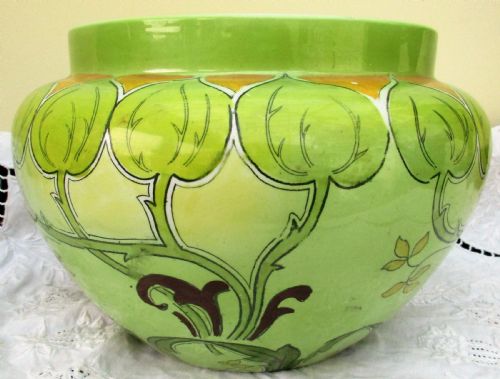
The styles span from robust majolica and naturalistic plant designs through to crisp Art Nouveau and Arts and Crafts modelling. Makers ranged from large English potteries to smaller art pottery operations producing distinct decorative vessels.
Materials and methods of construction
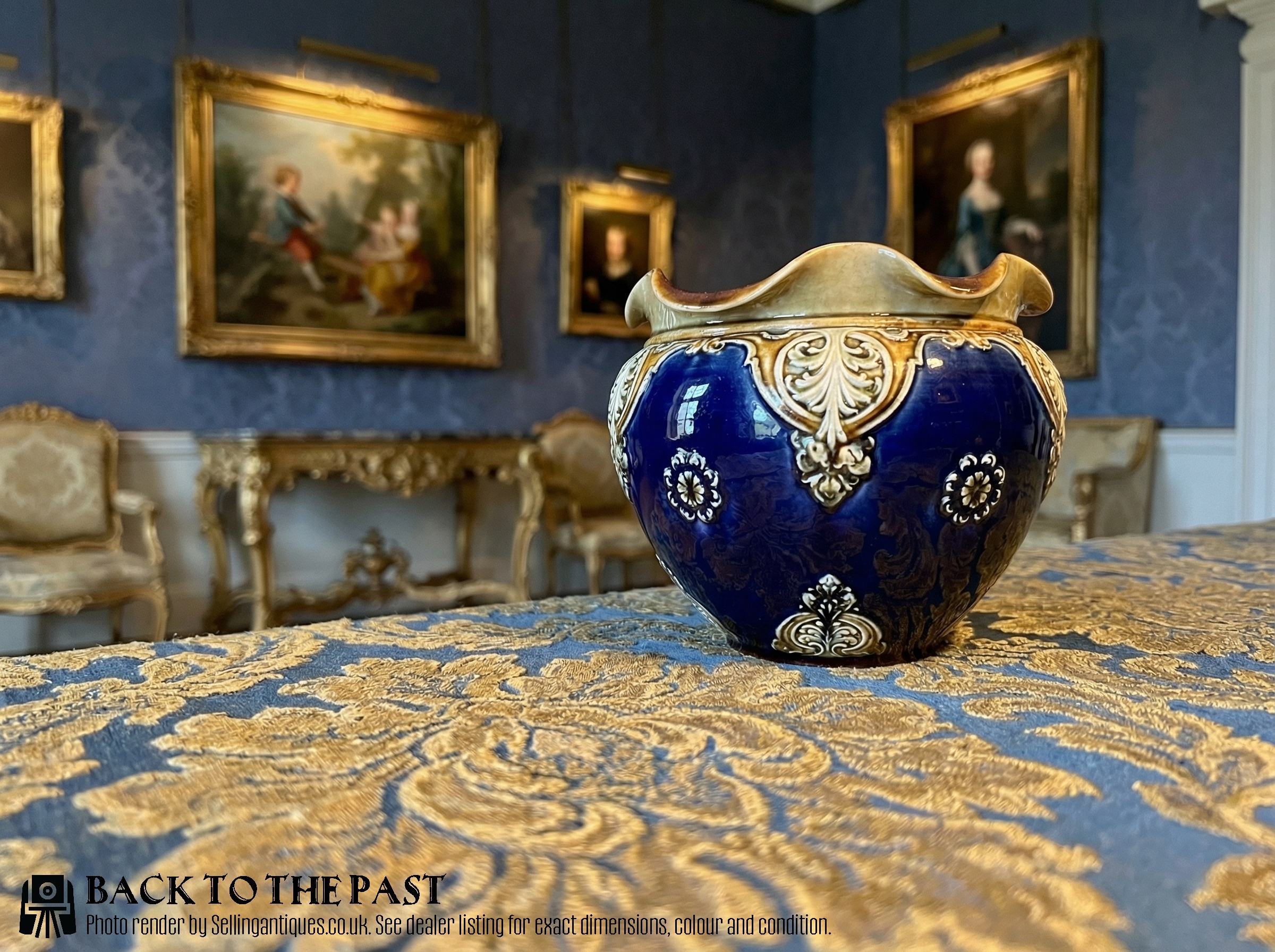
Potters shaped these vessels primarily from earthenware or stoneware using moulds or throwing techniques on a wheel. The bodies received heavy glazes, enamel decoration, or salt glazing to achieve impermeable surfaces suitable for holding damp soil.
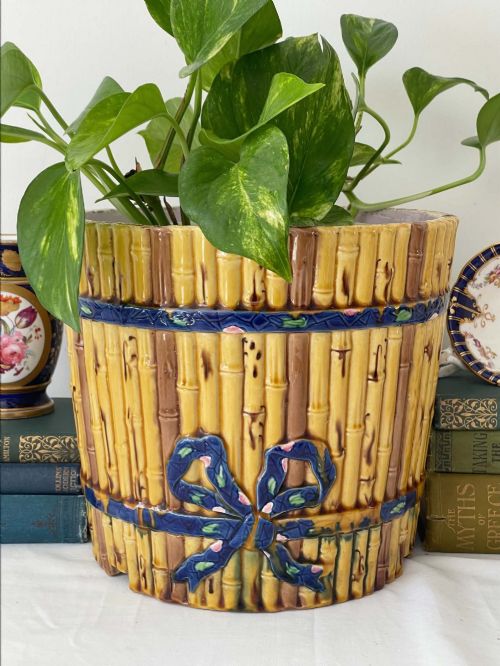
Makers applied specialised techniques such as majolica colour glazes, slip trailing, and impressed ornament to create textured surfaces. Some pieces incorporate detailed modelling with handles, bamboo motifs, or relief panels.
Listings demonstrate that these pots span from the 1870s through to the Edwardian period, utilising earthenware, stoneware, and specialised glazes.
Judging the quality of these planters
The distinction between ordinary and superior pieces rests upon the crispness of the modelled relief and the richness of the glaze application. Hand-painted details and signed works from noted potteries demonstrate higher levels of craftsmanship.
Condition plays a primary role, as these pots held damp plants and frequently suffered from hairline cracks, chips, or glaze flaking. Retaining a matching pedestal stand or possessing clear factory impressed marks elevates a piece.
Minton·W.A. Adderley·Doulton Burslem·Doulton Lambeth·Burmantofts·Royal Doulton·George Jones·William Adams & Sons·Linthorpe Pottery
The Victorian Pottery Jardiniere Pot Glossary
- Majolica
- A type of earthenware decorated with opaque coloured lead glazes that pool richly in relief details.
- Slaterware
- A ceramic technique developed by Doulton featuring textured lace or fabric impressions applied directly onto the clay body.
- Jardiniere
- A large decorative pot or planter intended to hold a living plant, usually displayed freestanding or on a stand.
- Salt glaze
- A vitreous coating of glossy texture formed by throwing common salt into the kiln during the high-temperature firing of stoneware.
Victorian Pottery Jardiniere Pot: Frequently Asked Questions
What is a jardiniere pot used for?
These vessels were designed specifically to hold potted plants indoors, concealing the standard flowerpot inside a decorative ceramic container.
Victorian homes utilised them in parlours and conservatories to bring greenery into formal living spaces without exposing mundane terracotta plant pots.
How do I care for an antique jardiniere?
Protect the antique glaze by placing a modern plastic saucer inside the pot to catch drainage water and prevent moisture from seeping into the porous earthenware body.
Clean the surface gently with a soft dry cloth and avoid using harsh chemical cleaning agents that might harm historical glazes or enamel work.
Can I put soil directly into the pot?
Planting directly into these antique vessels is generally discouraged because damp soil and standing water can cause moisture damage and weaken the historic ceramic body.
Using a separate inner pot preserves the interior walls and prevents mineral salts from the soil from staining or eroding the antique glaze.