



Victorian Pottery Character Jug
These Victorian pottery character jugs bring expressive faces and robust figures straight into a room, offering both traditional earthenware utility and spirited character display.
Victorian Pottery Character Jug
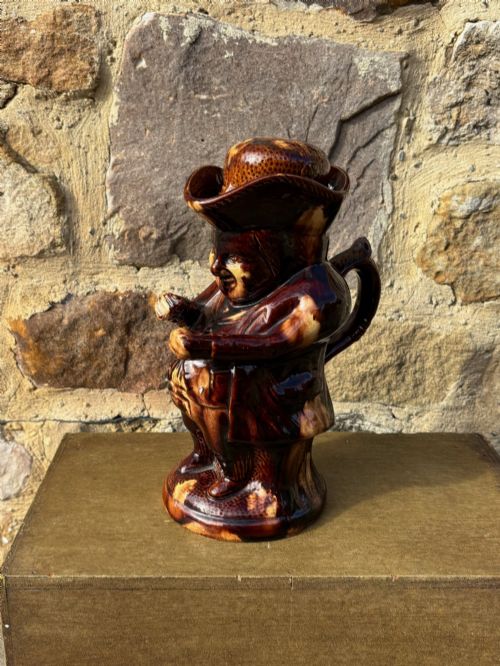
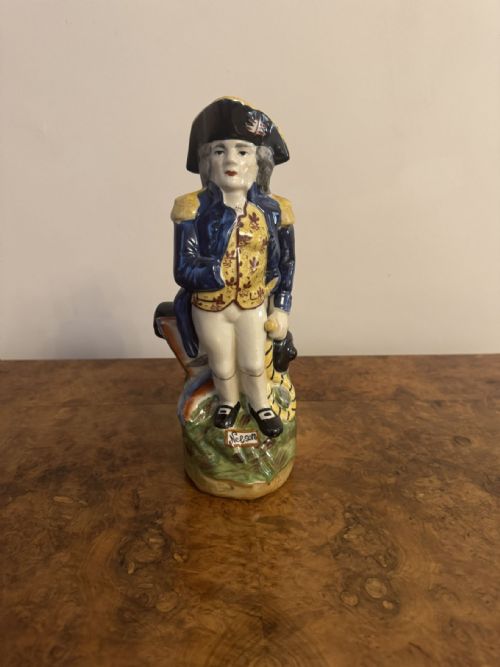
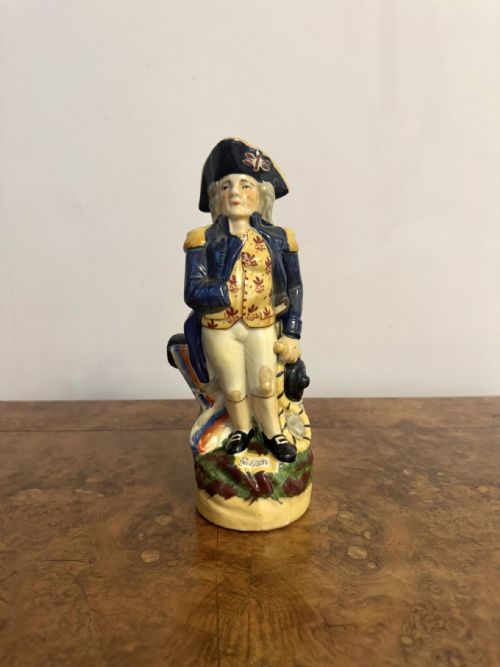
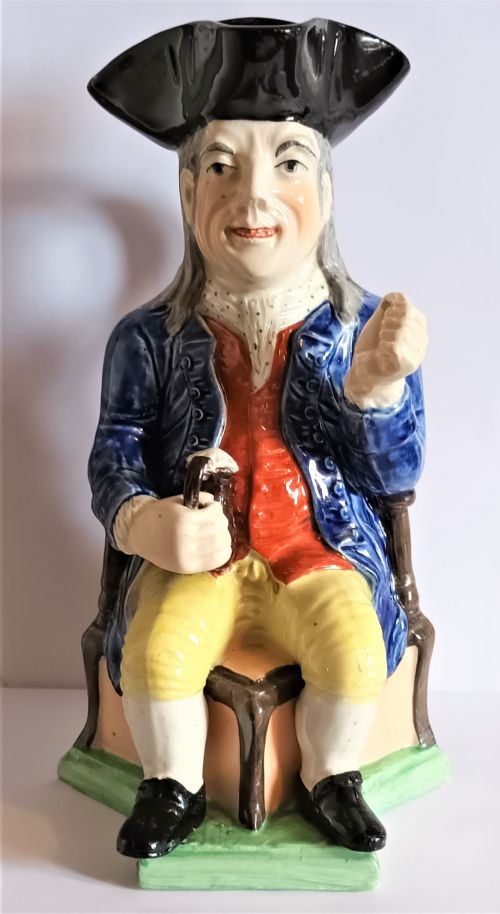
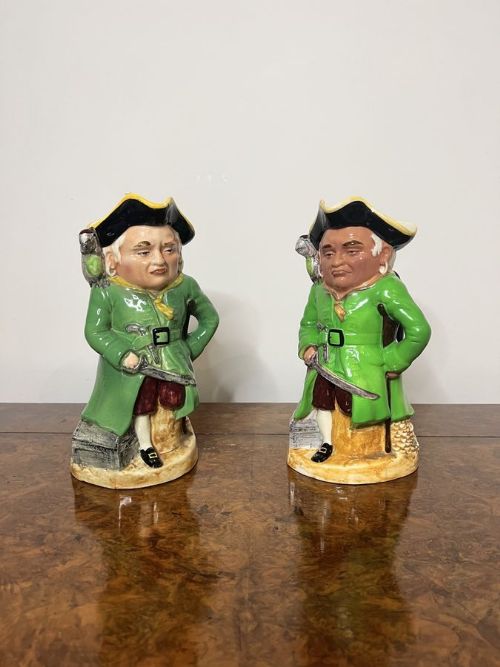
A victorian pottery character jug takes the form of a seated or standing figure, often depicting named historical figures like Lord Nelson or regional archetypes like the Squire and Mr Snuff. These pieces emerge chiefly from Staffordshire potteries during the nineteenth century, capturing the robust spirit of domestic drinking vessels and decorative tablewares.
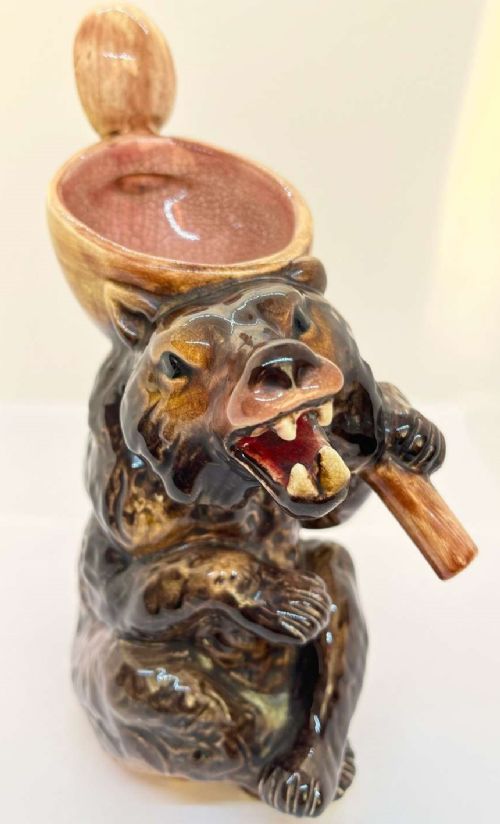
The versions most commonly met on this page span the mid to late nineteenth century, taking shapes from standard character jugs and pepperpots to specialised water jugs and vases. Makers utilise earthenware bodies moulded into specific human and animal forms, such as spaniels, before applying coloured lead glazes and enamel highlights.
How they were made
Makers then apply lead glazes and painted enamels over the ceramic surface, creating the rich colouration characteristic of nineteenth-century Staffordshire production. Firing in kilns sets both the body and the glossy surface finish.
Victorian Pottery Character Jug Retail Price Guide 2026
Typical asking prices for victorian pottery character jug among the pieces listed under this phrase on Sellingantiques today, from the lower quarter to the upper quarter. They describe what is for sale here now, not the wider market.
A cheerful Victorian Staffordshire jug wishes everyone a Merry Christmas from the mantelpiece.
What varies in quality
The application of glaze and enamel colouration also defines the standard of a piece, with careful brushwork bringing depth to the character's attire and face. Smooth, even glazing without heavy pooling preserves the underlying definition of the ceramic form.
Holdcroft
The Victorian Pottery Character Jug Glossary
- Earthenware
- A porous pottery body fired at lower temperatures, commonly used for nineteenth-century figures and jugs. It requires a glaze to become impermeable to liquids.
- Lead glaze
- A glossy coating containing lead oxide, applied to ceramics to give a shiny, protective surface. This finish enhances the colours of the painted decoration underneath.
- Majolica
- A colourful, lead-glazed earthenware style popular during the Victorian period, known for vibrant tones. Holdcroft utilised this technique for figural animal wares.
- Staffordshire pottery
- Wares produced in the Stoke-on-Trent region of England, famous for figural ceramics and Toby jugs. This designation covers a broad range of nineteenth-century domestic pottery.
Victorian Pottery Character Jug: Frequently Asked Questions
What is a character jug?
A character jug is a ceramic vessel modelled in the shape of a human head or an entire seated figure. These pieces combine sculptural portraiture with the functional capacity of a pitcher.
Peculiar regional figures and notable historical commanders frequently serve as the subject matter for these nineteenth-century ceramic pieces.
How were Toby jugs used?
Toby jugs served primarily as drinking vessels for ale and beer in domestic settings and local taverns during the Victorian era. Their robust earthenware construction made them suitable for everyday handling.
Over time, many of these figural pitchers transitioned from active tavern service to decorative mantelpiece displays.
How do I date a Staffordshire jug?
Dating relies on examining the specific moulding style, the composition of the earthenware body, and the characteristics of the coloured lead glazes. Nineteenth-century pieces often display distinct figural types and glaze depth compared to later reproductions.
Reference to specific historical figures depicted in the titles also provides a narrow timeframe for manufacture.
Are these jugs waterproof?
Most of these glazed earthenware vessels can hold liquids safely, though their primary role today is decorative. The interior lead glaze seals the porous ceramic body against moisture.
Careful handling remains necessary when using older ceramic pitchers for serving beverages.