





Staffordshire Pottery Toby Pitcher
These Staffordshire pottery toby pitchers are spirited ceramic vessels that bring character and history directly to a shelf.
Staffordshire Pottery Toby Pitcher
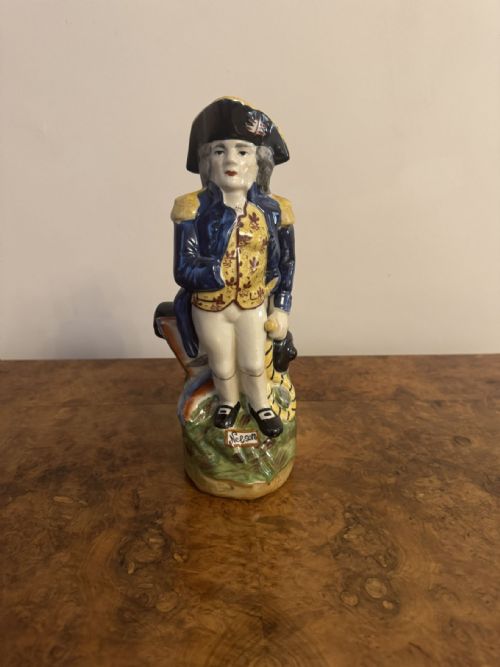
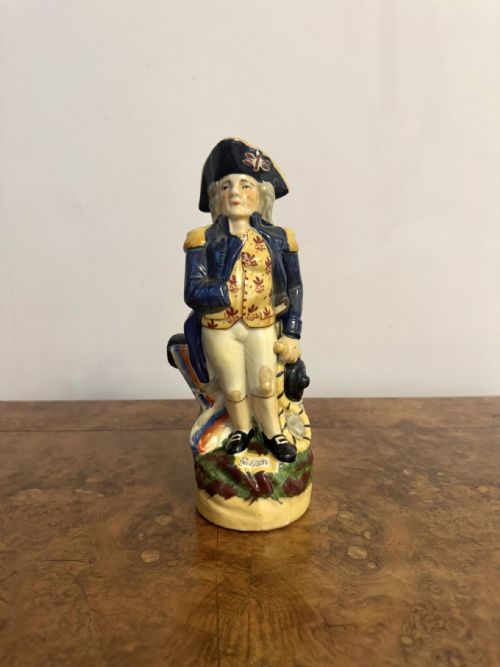
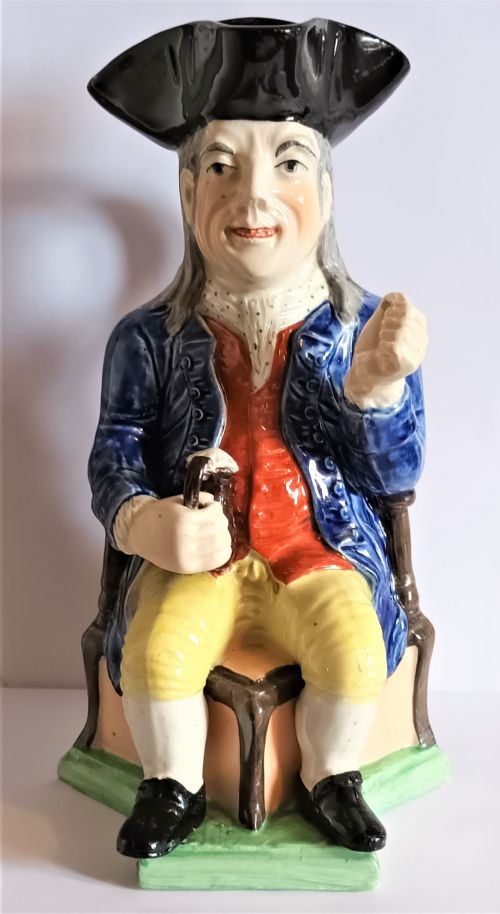
When you search for Staffordshire pottery toby pitcher, you are looking at figural drinking jugs shaped like seated eighteenth and nineteenth-century characters. The selection on this page centres primarily on Victorian pieces, alongside examples from the Georgian period.
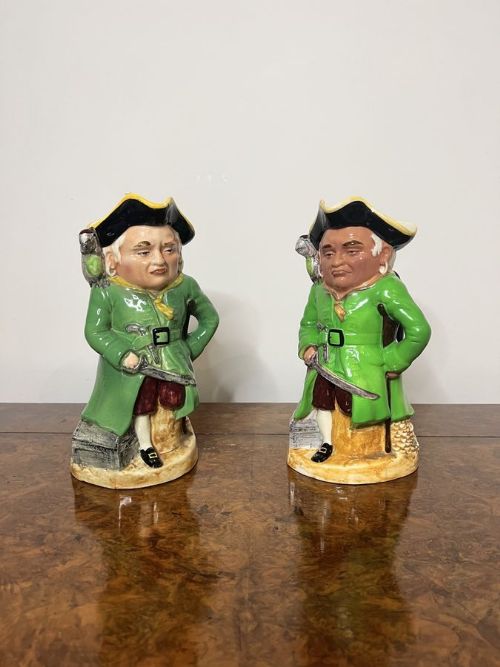
The figures depicted include historical commanders such as Admiral Lord Nelson, alongside regional archetypes like the Squire, Mr Snuff, and even a spaniel. These earthenware vessels combine functional pouring with sculptural portraiture, capturing popular personalities of their day.
Most items appearing here date from the nineteenth century, spanning decades from eighteen-sixty to nineteen-hundred. They range from single character jugs to matched pairs designed for display.
How they were made
Potters built these pitchers using earthenware clay, shaping them into three-dimensional human and animal forms through moulding and hand-finishing techniques. The resulting bodies provide a sturdy, heavy foundation suited to both holding liquids and standing on display.
Staffordshire Pottery Toby Pitcher Retail Price Guide 2026
Typical asking prices for staffordshire pottery toby pitcher among the pieces listed under this phrase on Sellingantiques today, from the lower quarter to the upper quarter. They describe what is for sale here now, not the wider market.
Among the human dignitaries and squires, a ceramic spaniel sits proudly ready to pour your water.
What varies in quality
The distinction between standard examples and the finest pieces lies in the crispness of the moulding and the detail of the hand-painting. Superior vessels show sharp facial expressions and clean application of enamel colours.
Age and period also shape desirability, with earlier Georgian pieces sitting alongside later Victorian interpretations. The handling of the glaze and the preservation of the painted surface determine the visual impact of each character.
The Staffordshire Pottery Toby Pitcher Glossary
- Earthenware
- A porous type of pottery fired at lower temperatures, commonly used for traditional Staffordshire figures and jugs. It requires a glaze to become impermeable.
- Lead glaze
- A glossy coating containing lead oxide applied to ceramic surfaces before firing to give a smooth, shiny finish. This treatment protects the painted decoration beneath or above it.
- Enamel paint
- Vitreous coloured pigments fused to the ceramic surface during a secondary low-temperature firing. It provides the bright reds, blues, and blacks seen on coats and hats.
- Toby jug
- A pottery jug modelled in the shape of a stout, cheerful man usually holding a mug of beer and a pipe. The form evolved in eighteenth-century England and remained popular through the Victorian era.
Staffordshire Pottery Toby Pitcher: Frequently Asked Questions
How old are these jugs?
The pieces available here primarily date from the nineteenth century, with examples spanning from the Georgian era through to nineteen-hundred. Victorian interpretations form a significant portion of the selection.
Specific dates or periods are identified through stylistic markers, materials, and manufacturing techniques recorded in each listing.
Who do the figures represent?
The designs portray a variety of recognizable figures, including military commanders such as Admiral Lord Nelson. Other common subjects include traditional archetypes like the Squire, Mr Snuff, and occasionally animals such as spaniels.
Each character reflects the popular culture and social humour of the period in which it was modelled.
Were these jugs used for drinks?
Historically, these vessels were produced as functional pitchers for serving beverages at the table or in taverns. The hollow body holds liquid while the handle and spout allow for easy pouring.
Over time, many collectors transitioned to displaying them on shelves rather than using them for daily service.