


Victorian Portrait Sketch
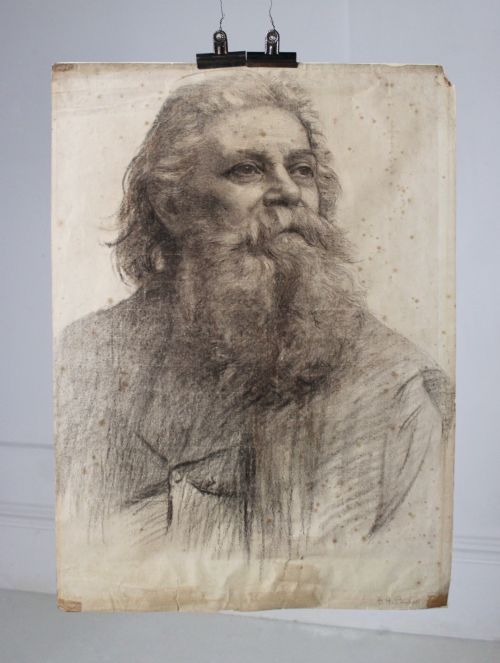
A victorian portrait sketch captures the likeness of a sitter through direct, expressive handwork on paper.
Victorian Portrait Sketch
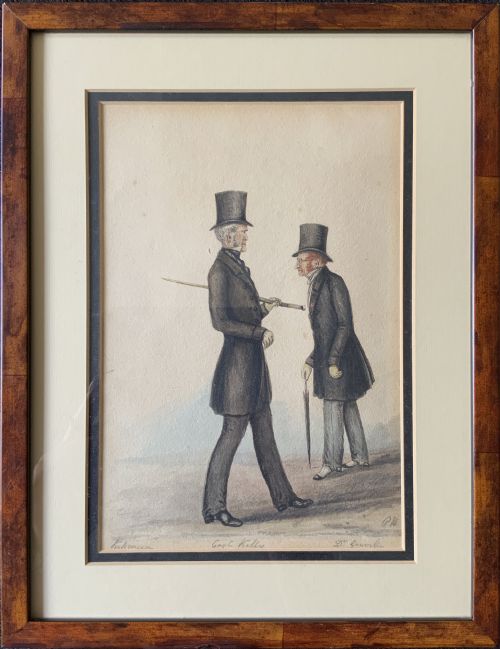
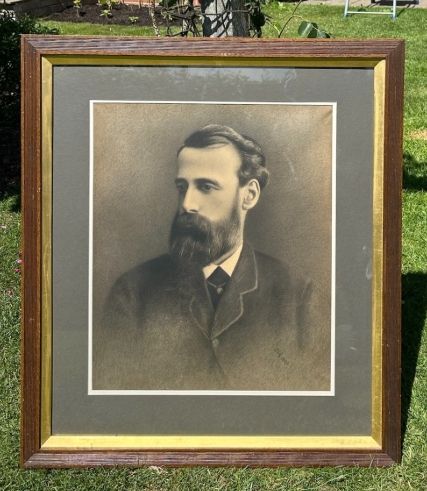
A victorian portrait sketch presents an intimate record of an individual, ranging from precise academic studies to rapid character notes. The pieces meeting this search phrase appear as framed drawings, wall art, and original portrait paintings executed during the nineteenth century.
Makers recorded in this category include named artists and regional schools producing works in graphite, charcoal, chalk, and watercolour. Subjects span English gentlemen, young boys, ladies with pets, and prominent public figures.
The prevalent forms combine paper supports housed beneath glass within wood frames, preserving the delicate marks of the draughtsman. Examples extend from mid-nineteenth-century works to later academic productions.
Materials and technique
Artists executed these works on paper using dry media such as graphite, charcoal, and chalk, frequently combined with watercolour washes to build tone and colour. These materials allowed for immediate execution, capturing transient expressions and careful anatomical observations alike.
Surviving works are preserved behind glass within wooden frames, protecting the friable surfaces of charcoal and pastel from atmospheric disturbance. The physical support relies upon period papers that display varied textures and watermarks characteristic of nineteenth-century production.
Among the sitters recorded by these nineteenth-century hands are a young girl accompanied by a hummingbird and a gentleman alongside his spaniel.
Assessing quality and execution
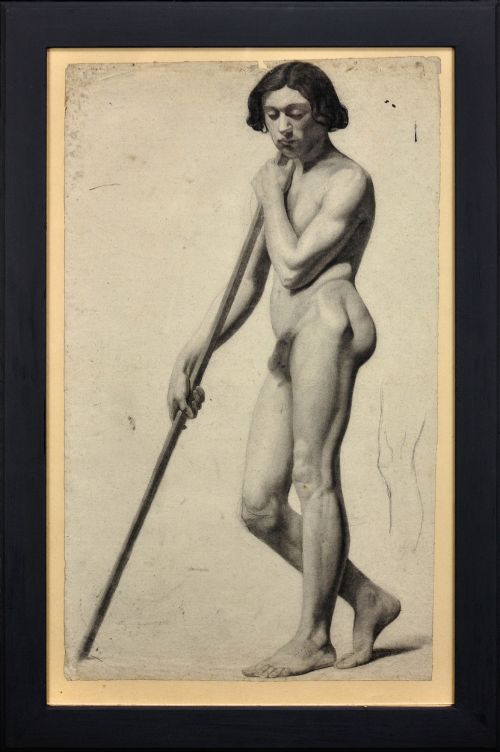
Quality rests upon the draughtsman's anatomical command and the expressive economy of the line, distinguishing hasty amateur output from accomplished academic life studies. Superior examples demonstrate a secure grasp of shadow, bone structure, and psychological presence.
The preservation of the paper support and the clarity of the medium without excessive fading or smudging govern visual success. Original framing and documented attributions to known academic practitioners further separate standard works from the finest surviving pieces.
Henry Arthur Roberts·Sir Edwin Landseer·Theobald Chartran·George Richmond·Sir William Charles Ross
The Victorian Portrait Sketch Glossary
- Graphite
- A form of carbon used as a drawing medium in pencils, producing crisp grey lines and tonal shading. It became widely utilised for detailed nineteenth-century portraiture.
- Charcoal
- A dry drawing material made from burnt organic matter, capable of deep blacks and broad, atmospheric smudges. It served both for rapid sketches and finished tonal portraits.
- Academic Realism
- A style of painting and drawing taught in official art academies, emphasising precise anatomical accuracy and classical training. Works in this manner display rigorous attention to form and light.
- Watercolour
- A paint consisting of pigment suspended in a water-based solution, applied in translucent washes over preparatory drawings. It added subtle colour to nineteenth-century portrait sketches.
- Chalk
- A soft mineral material used for drawing, providing rich textures and adherence to tinted papers. Artists employed it to create highlights and deep shadows in portrait studies.
Victorian Portrait Sketch: Frequently Asked Questions
What mediums were used for a victorian portrait sketch?
Artists employed paper supports worked in graphite, charcoal, chalk, pencil, and watercolour. These materials permitted both rapid notation and finished tonal depth.
Dry media predominated for line and shadow, sometimes augmented by watercolour washes to introduce delicate flesh tones and background details.
How should these paper works be framed?
Works on paper require mounting behind glass within wooden frames to shield the delicate surface from dust and moisture. Professional framing utilises acid-free materials to prevent the paper from yellowing over time.
Original frames, where present, offer period context but must be assessed for structural stability to protect the artwork.
Who are the subjects in these drawings?
Subjects range from anonymous sitters, such as young boys and English gentlemen, to documented historical figures and writers. Academic life studies of models also appear alongside portraits of society figures.
Inscriptions on the reverse or front frequently identify the sitter, date, and occasionally the artist.
How do you date a nineteenth century sketch?
Dating relies upon artist signatures, period inscriptions, costume details, and stylistic markers associated with academic training. Watermarks on the paper stock and framing construction provide additional chronological evidence.
Works often carry specific years noted by the draughtsman at the time of execution.