


Victorian Porcelain Serving Dish
A victorian porcelain serving dish brings functional utility and painted charm to the table, offering a tangible connection to nineteenth-century dining traditions.
Victorian Porcelain Serving Dish
A victorian porcelain serving dish encompasses rectangular platters, oval dishes, square cabinet pieces, and dessert services designed for nineteenth-century tables. The pieces on this page span the broader nineteenth century alongside related Georgian, Regency, and Edwardian items, reflecting shifts in dining habits over decades.
Makers utilised ceramic, bone china, earthenware, and ironstone to form these vessels, decorating them with hand-painted flora, birds, landscapes, and transferware patterns. Collectors frequently encounter forms attributed to prominent potteries alongside unmarked serving trays and soup tureens from the same era.
How they were made
Potters shaped porcelain, bone china, and ironstone bodies before applying glazes and hand-painted or transfer-printed designs. Many items received rich gilt highlights or gold leaf applied by hand around the rims and handles.
Firing techniques allowed factories to achieve cobalt blue grounds and intricate polychrome scenes, from Watteau figures to botanical studies. Enamel colours were fused to the ceramic surface during secondary kiln firings to secure the decoration.
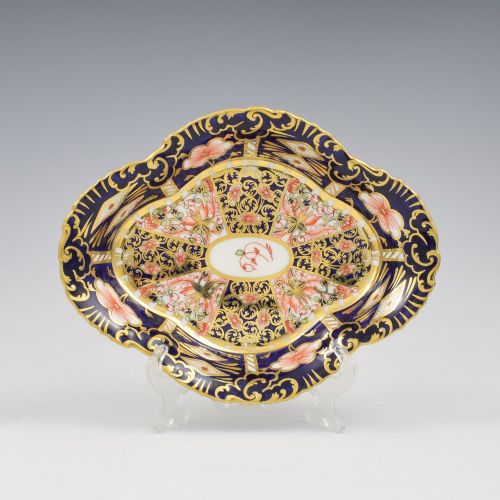
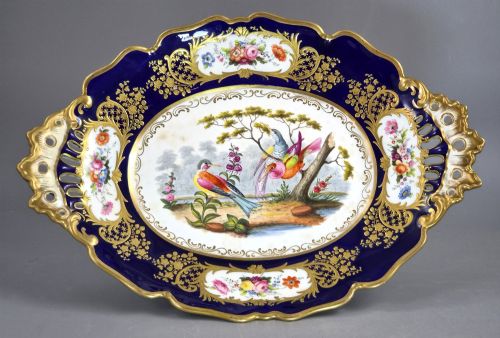
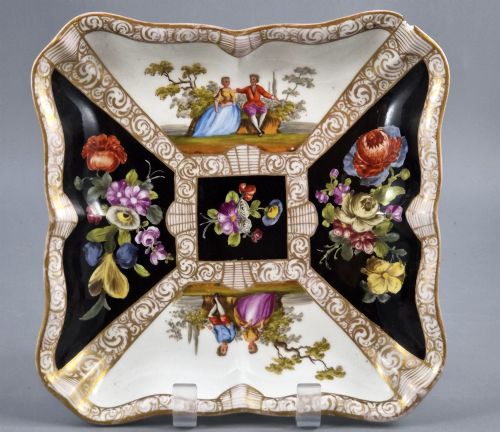
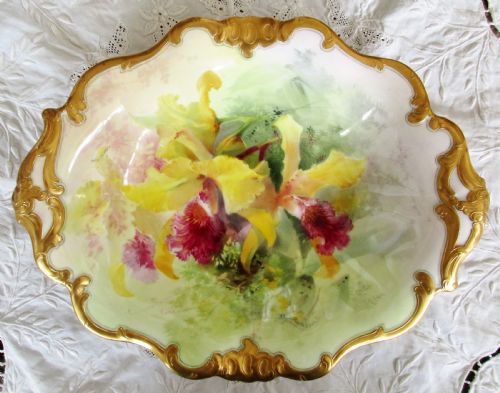
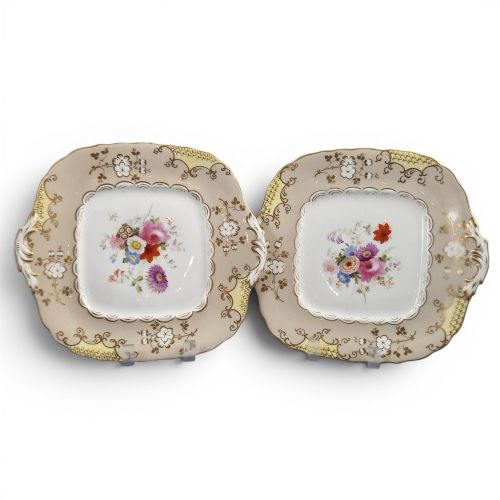
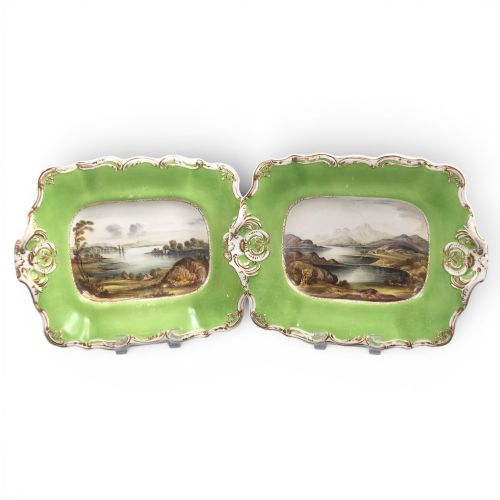
Decoration across the available dishes includes hand-painted orchids, Scottish views, Watteau scenes, and Chinese Tree transferware patterns.
What varies in quality
The standard of hand-painted artistry separates routine factory output from exceptional studio work, particularly in botanical or figurative subjects. Precision in gilding and the crispness of transferware patterns also indicate the care taken during production.
The choice of ceramic body, whether fine bone china, robust ironstone, or translucent porcelain, dictates the refinement of the piece. Provenance and attribution to specific makers elevate the standing of individual dishes within a collection.
Coalport·Meissen·Royal Doulton·Copeland and Garrett·John Ridgway·Minton·Carlton Ware·Royal Crown Derby·Masons·Wedgewood
The Victorian Porcelain Serving Dish Glossary
- Bone china
- A type of soft-paste porcelain incorporating bone ash, known for its high strength and milky whiteness. This material allowed nineteenth-century potteries to produce thin, elegant serving vessels.
- Transferware
- Pottery decorated by pressing a design from an engraved copper plate onto tissue paper, which was then transferred onto the ceramic body before glazing. This technique enabled mass production of intricate blue and white patterns.
- Gilt
- A thin layer of gold applied to the surface of porcelain as a decorative accent. It often outlines the borders and handles of serving dishes.
- Ironstone
- A heavy, durable earthenware patented in the nineteenth century as a tough alternative to porcelain. It formed the body for robust tureens and large platters.
- Cabinet dish
- A decorative porcelain piece intended for display in a cabinet rather than functional use at the dining table. These items typically feature elaborate hand-painted scenes.
Victorian Porcelain Serving Dish: Frequently Asked Questions
How do I clean a porcelain dish?
Wash the dish by hand in warm soapy water using a soft cloth, avoiding abrasive scourers that might damage the glaze or wear away the gold leaf.
Dry the piece immediately with a lint-free towel to prevent water spots from forming on the ceramic surface.
Can I use these for food?
Many nineteenth-century dishes remain safe for serving dry foods, though antique glazes can sometimes contain trace elements from historic manufacturing processes.
Hand washing is essential, and items with heavy gilt or delicate hand-painted enamels are best reserved for display or light use.
How do I identify the maker?
Examine the underside of the dish for impressed marks, painted pattern numbers, or printed factory stamps associated with nineteenth-century potteries.
Compare stylistic details like border motifs and painting style with documented examples from factories such as Coalport or Minton.
What is a dessert service?
A dessert service is a matched set of plates and serving dishes intended for the final course of a formal nineteenth-century meal. These sets often included pedestal dishes and shaped platters for fruit and sweetmeats.
Many surviving sets have been split up over time, leaving individual plates and serving dishes available on the market today.