
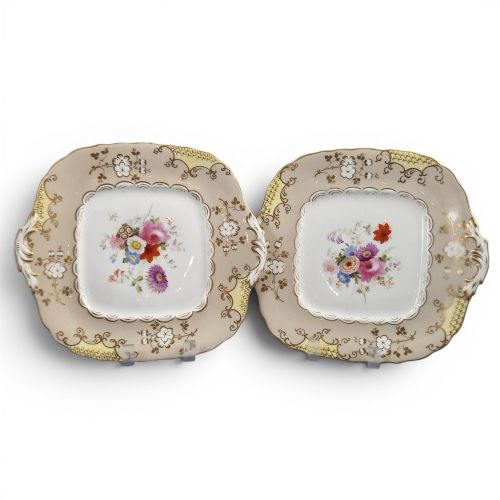
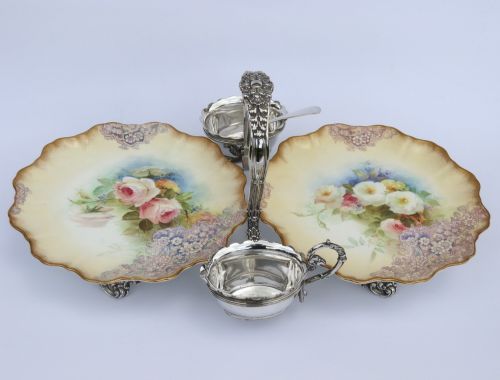


Victorian Floral Dessert Plate
A victorian floral dessert plate brings painted blooms to the table, offering a glimpse into nineteenth-century dining customs through porcelain and bone china.
Victorian Floral Dessert Plate
A victorian floral dessert plate is a piece of tableware intended for the final course of a meal, often decorated with hand-painted botanical motifs. Buyers exploring this category will frequently encounter items originating from the nineteenth century, including pieces associated with the Victorian period and surrounding decades. These objects appear as individual dessert plates, pairs, or part services designed for serving fruit or sweets.
The forms span standard decorative plates, basketweave shapes, and specialised dessert dishes or sets. Maker attributions or factory stamps occasionally accompany these wares, pointing to notable English potteries of the era. Most examples rely on porcelain or bone china as a base, enhanced by coloured enamels and gilt highlights.
Materials and construction
Makers shaped these plates using porcelain and bone china, applying smooth glazes to create a durable surface for dining. Artisans then hand-painted botanical designs directly onto the ceramic body using enamels that required firing in a kiln to fix the colours.
Finishing touches often included gold leaf, gilding, or silver plate applied to the rims and borders to frame the central floral artwork. Some factories utilised moulded elements, such as basketweave textures, to give the edge sculptural relief.
Materials across these listings include porcelain, bone china, gold leaf, and silver plate, spanning the nineteenth and early twentieth centuries.
Assessing quality in the range
Quality rests heavily on the execution of the hand-painted decoration, where fine brushwork and detailed botanical studies distinguish superior work from simpler factory output. The precision of the gilding and the crispness of moulded details, such as basketweave patterns, also separate standard examples from finer commissions.
The standing of the maker influences the character of a piece, with established factories and documented attributions offering greater clarity of origin. Additionally, the preservation of the enamel colours and the brightness of the gold leaf dictate how well the visual impact survives.
Walker and Hall·John Ridgway·Minton Porcelain·Kerr and Binns·Royal Crown Derby·Wedgewood
The Victorian Floral Dessert Plate Glossary
- Bone china
- A type of soft-paste porcelain containing animal bone ash, which yields a strong, slightly translucent body. It became a staple material for English dessert services.
- Gilding
- The application of gold leaf or gold powder to the surface of ceramics, typically used to highlight rims and handles. This technique adds reflective contrast to painted floral scenes.
- Enamel
- A glass-like substance melted onto the ceramic body to provide colour and decoration. Enamels allow for vibrant hues in botanical illustrations.
- Dessert service
- A matching collection of plates and serving dishes intended for the final course of a formal meal. Services often included numerous plates alongside larger dishes for fruit or sweetmeats.
Victorian Floral Dessert Plate: Frequently Asked Questions
What were these plates used for?
These pieces served desserts, particularly fruit, nuts, and sweet dishes, at the conclusion of formal nineteenth-century dinners.
They formed part of larger table arrangements, often accompanied by matching comports or serving dishes.
How do I identify the period?
Dating relies on factory marks, ceramic bodies, and stylistic clues such as Rococo Revival moulding or mid-nineteenth-century floral painting styles.
Reference books and maker stamps help narrow down the decade of manufacture.
Can I use them for dining?
While structurally sound, antique plates with hand-painted enamels and gold leaf are generally treated as decorative items or handled with care during occasional use.
Hand washing prevents the gradual wear of delicate gilding and ceramic glazes.
What is basketweave shaping?
Basketweave shaping refers to moulded surface textures on ceramic plates that imitate woven wicker baskets. This decorative technique added tactile relief to Victorian tableware.
It frequently appeared on plates paired with floral painting.