



Victorian Porcelain Centerpieces
Victorian porcelain centerpieces bring heavy dining tables to life with elaborate painted bowls, figures, and gilt bronze mounts.
Victorian Porcelain Centerpieces
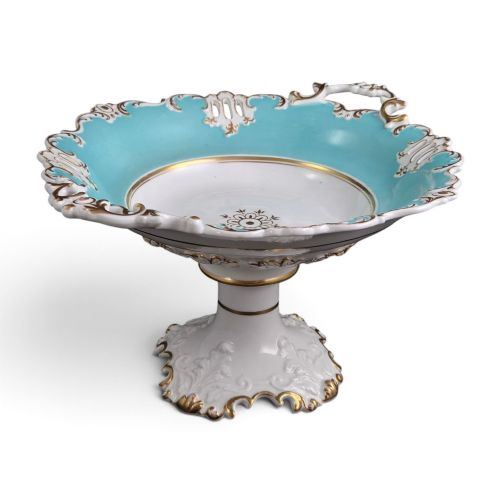
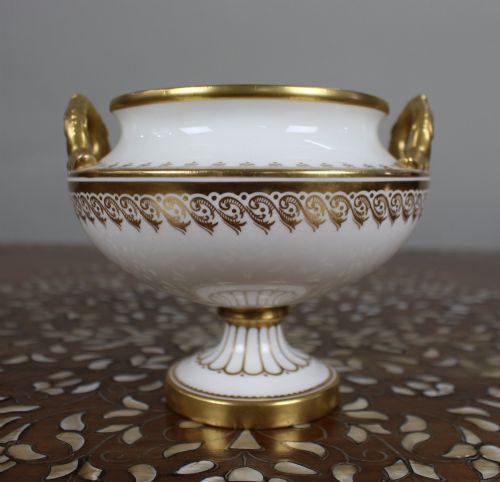
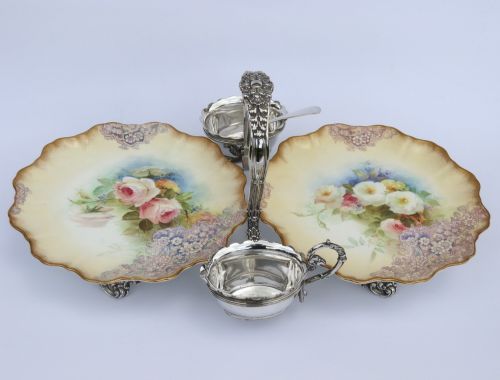
Victorian porcelain centerpieces include large ornamental bowls, tazzas, comports, and figural flower holders designed to anchor a decorated table. These pieces emerge primarily in the nineteenth century across English and continental potteries.
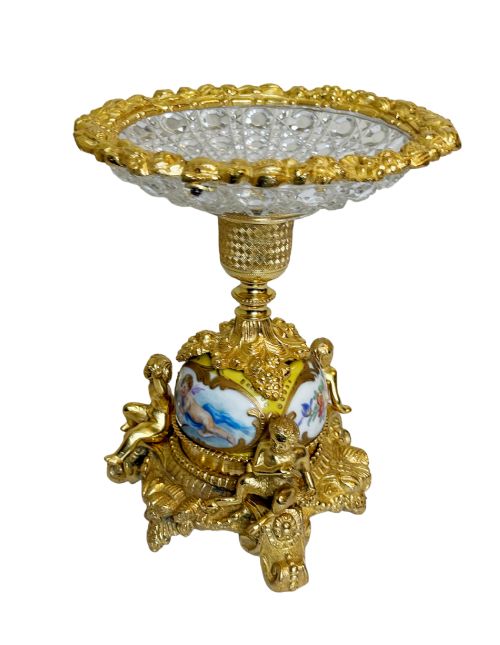
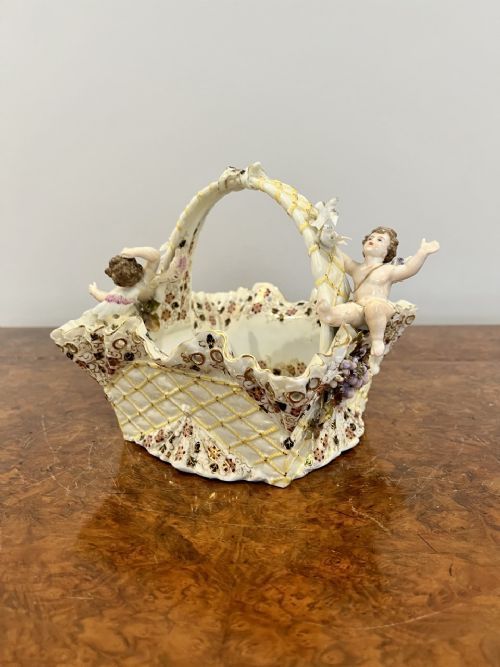
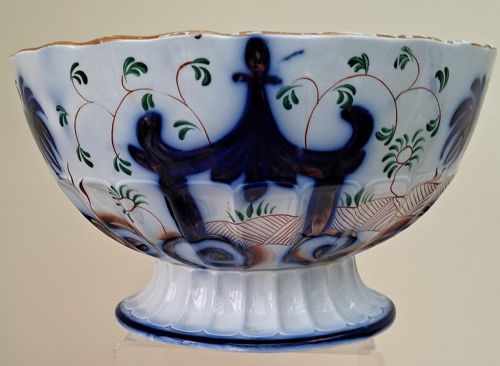
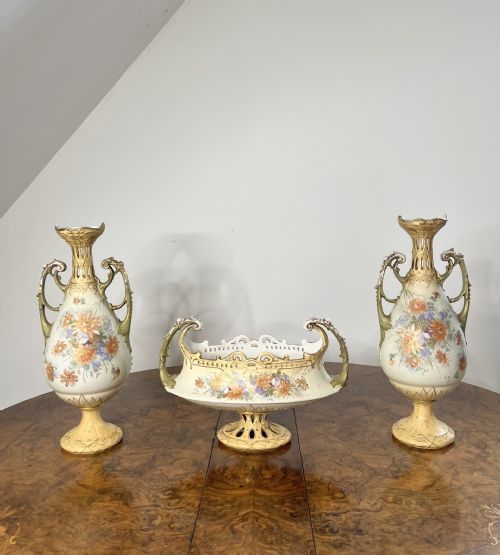
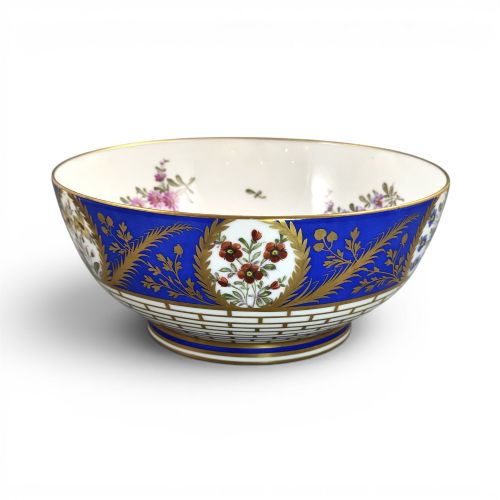
The most common formats on this page are footed bowls and baskets decorated with hand-painted floral sprays, birds, or mythological scenes. Many examples combine fine ceramic bodies with cast ormolu, gilt bronze, and champlevé enamel mounts.
Continental workshops from France, Germany, and Austria contribute heavily alongside English makers like Royal Worcester, Coalport, and Doulton Burslem. Buyers encounter everything from simple blue and white fruit bowls to large musical putti groups.
Materials and Construction
Potters shaped these vessels from fine bone china, hard-paste porcelain, and ironstone, often finishing the surfaces with intricate hand-painted enamels. Gold leaf and gilding highlight moulded rims, handles, and floral details across English and continental works.
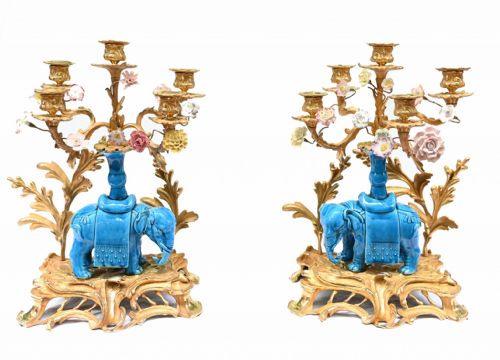
Metal components play a major structural role in the grander forms, utilising gilt bronze and ormolu mounts to secure porcelain bowls. Advanced firing techniques allowed workshops to produce large comports, lattice baskets, and figural candelabras without warping the ceramic.
Alexander the Great rides into battle on Meissen porcelain elephants while putti play musical instruments nearby.
Assessing Quality and Execution
Quality rests upon the crispness of the porcelain moulding and the precision of the hand-painted decoration. Superior pieces display delicate brushwork on floral sprays and figures rather than flat transfer printing.
The integration of metal mounts dictates the overall calibre of heavier centrepieces. Cast ormolu and champlevé enamel frames that fit the porcelain body seamlessly denote skilled workshop production.
Coalport·Royal Vienna·Doulton Burslem·Royal Worcester·Meissen·Sevres·Minton·Royal Crown Derby
The Victorian Porcelain Centerpieces Glossary
- Comport
- A shallow dish raised on a high foot, used traditionally for serving fruit or dessert. These stand as central decorative elements on dining tables.
- Tazza
- An ornamental shallow cup or bowl mounted on a stem and foot. The term derives from the Italian word for cup.
- Ormolu
- Gilded bronze used widely for mounts and decorative accents on nineteenth-century porcelain. It provides structural support and ornamentation to bowls and urns.
- Champlevé
- An enamelling technique where troughs are carved into metal and filled with vitreous enamel before firing. It appears frequently on French mounts.
- Bone china
- A type of soft-paste porcelain containing bone ash for added strength and translucency. English potteries utilised it extensively during the Victorian period.
Victorian Porcelain Centerpieces: Frequently Asked Questions
How were porcelain centerpieces used?
These pieces sat at the middle of large dining tables during formal meals to hold fruit, sweetmeats, or flowers. They served primarily as decorative displays of wealth and taste.
In drawing rooms, smaller comports and figural baskets functioned as ornamental centerpieces on side tables and mantelpieces.
How do I tell English from continental pieces?
English makers like Royal Worcester and Coalport typically utilised bone china bodies with refined floral painting. Continental pieces from France and Germany often incorporate elaborate ormolu mounts and figural groups.
Factory marks on the underside, when present, provide definitive proof of origin through blue underglaze stamps or impressed ciphers.
What is Parian ware?
Parian ware is a type of fine-grained, unglazed porcelain developed in the nineteenth century to imitate white marble. It allowed manufacturers to cast detailed classical figures and relief scenes.
Items like centerpiece dishes utilised this material to achieve a sculptural matt finish resembling carved stone.