

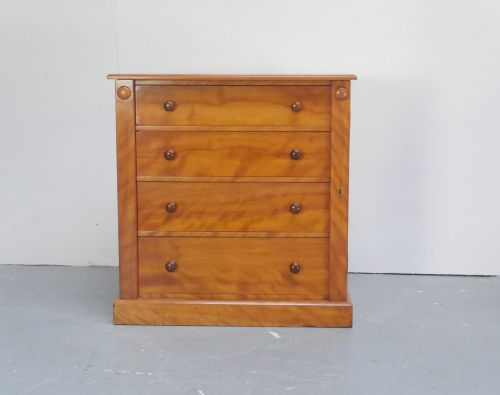
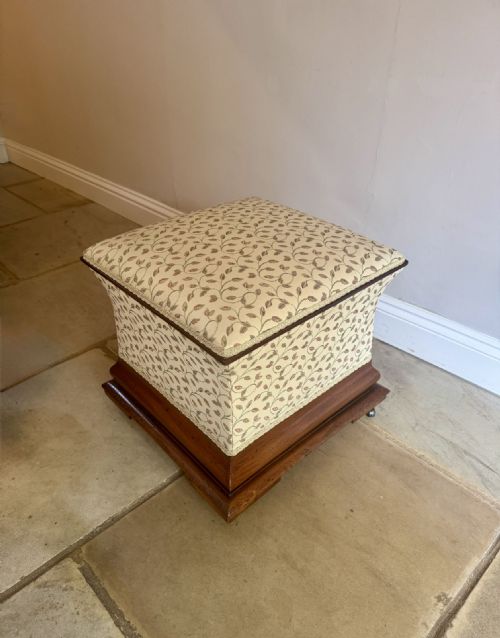
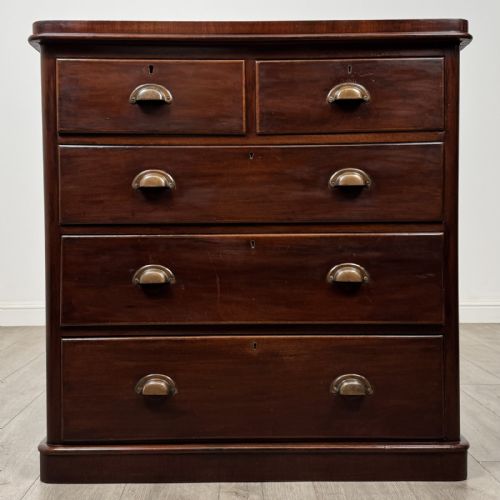
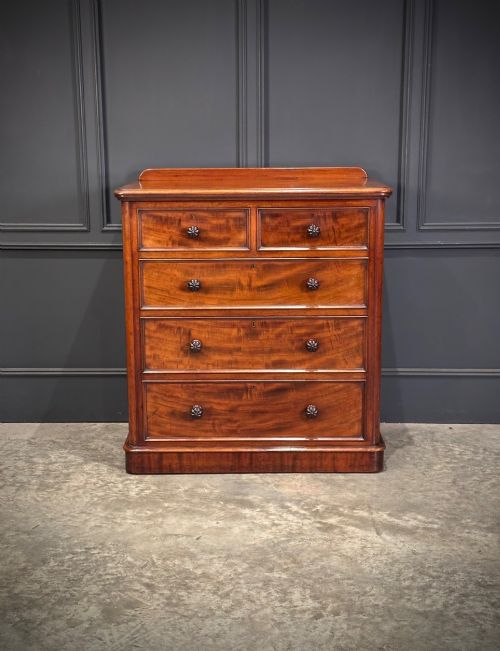
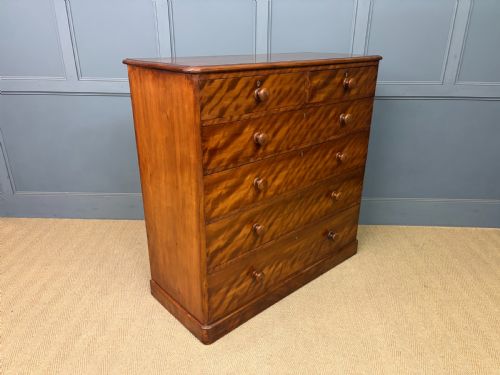
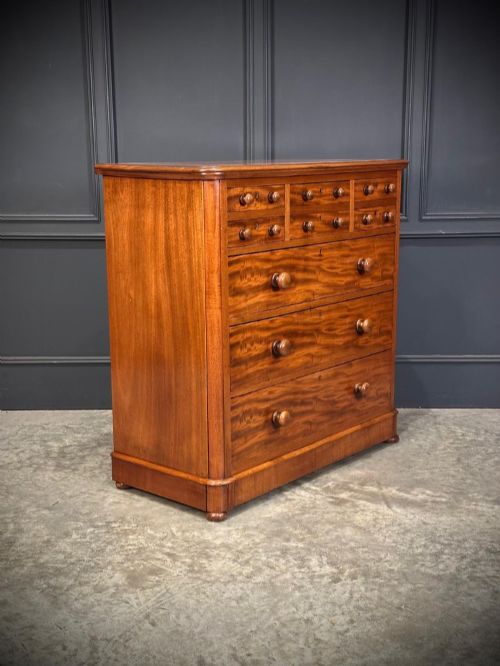
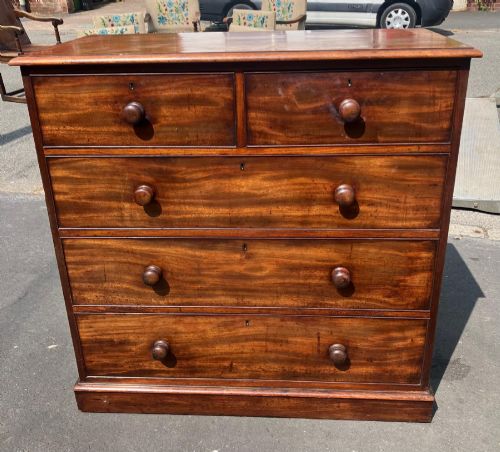
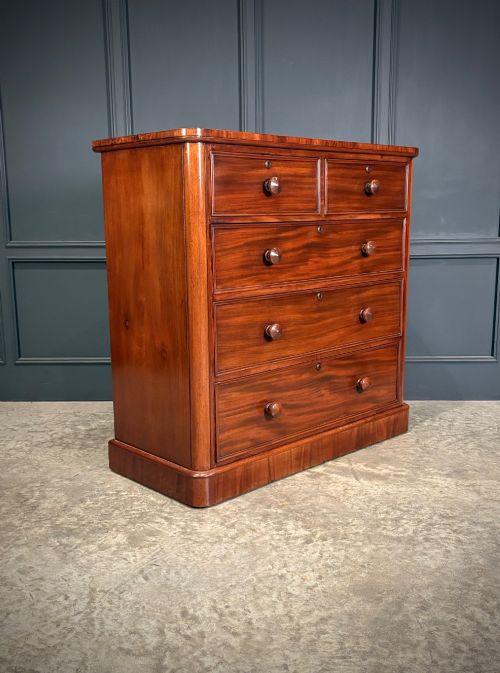
Victorian Plinth Chest
When you want a victorian plinth chest, you are looking for a sturdy bedroom storage piece grounded on a solid wooden base rather than traditional feet.
Victorian Plinth Chest
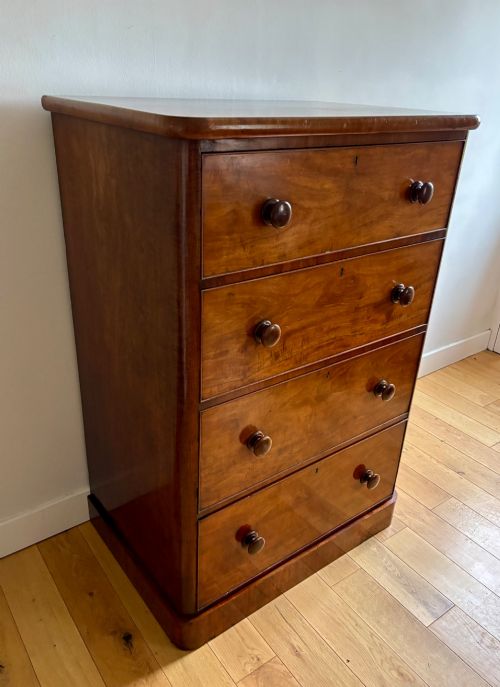
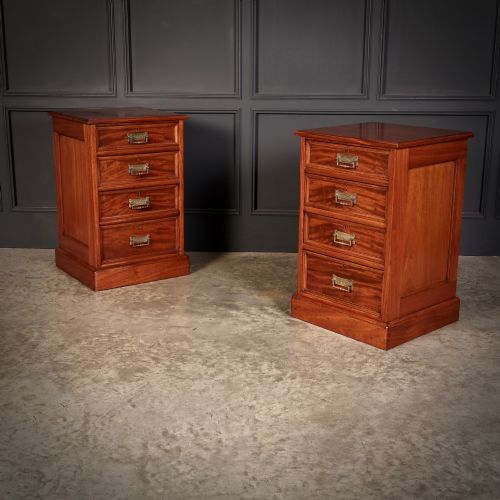
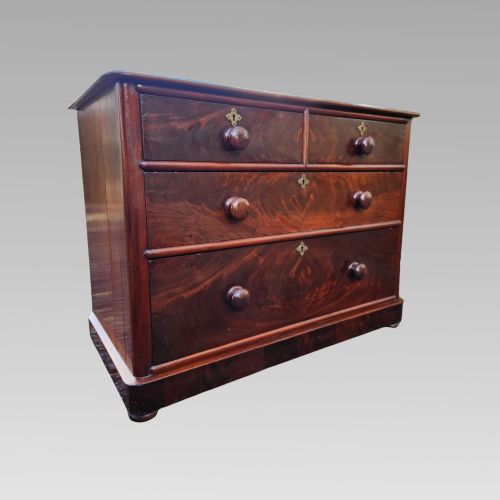
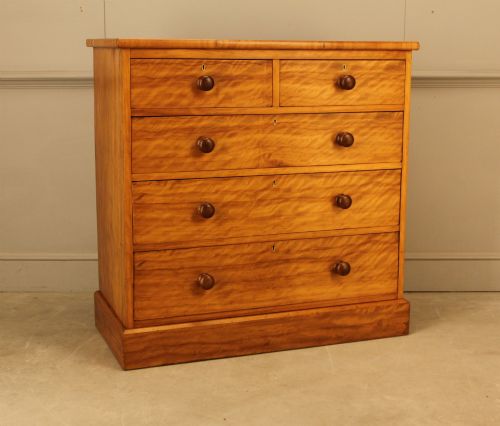
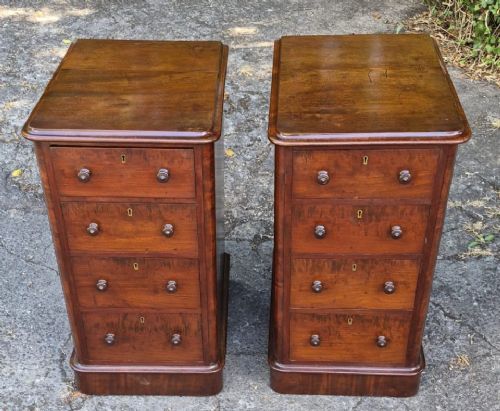
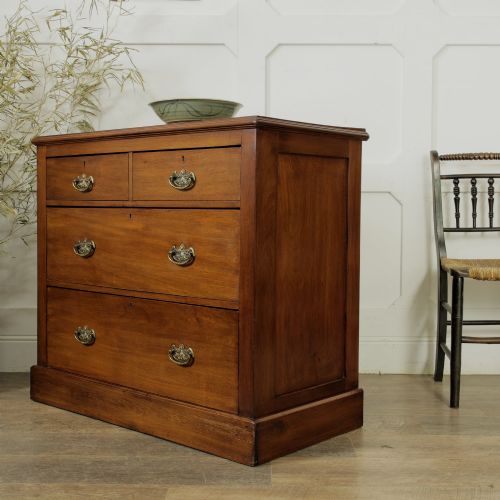
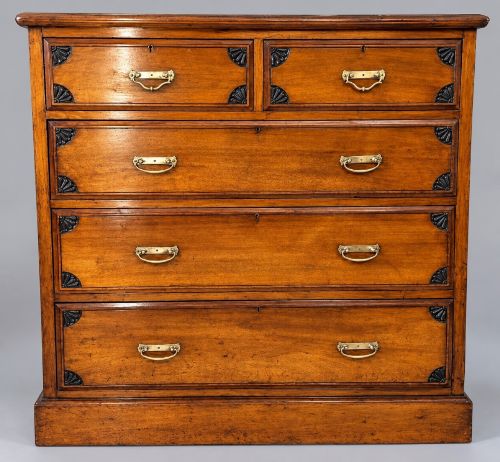
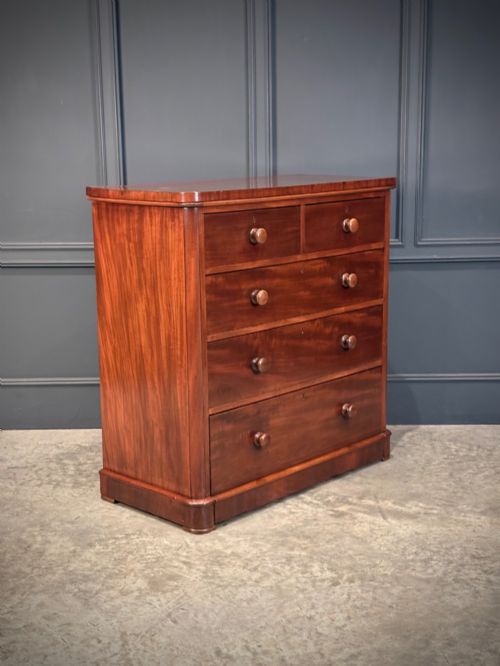
A victorian plinth chest stands firmly on a flat wooden base rather than legs or brackets, giving the furniture a solid, grounded silhouette. These items primarily appear as mahogany or pine chests of drawers, alongside taller Wellington chests and bedside cabinets.
Most examples date through the nineteenth century, ranging from mid Victorian iterations to late nineteenth century pieces. The form prioritises clean lines at the base, letting the grain of the timber dominate the visual weight of the bedroom furniture.
How They Were Made
Cabinetmakers constructed these pieces using solid timbers like mahogany, pine, and ash, frequently applying flame mahogany veneer or burr walnut across the drawer fronts. Secondary woods such as cedar lined the interiors of the drawers.
Joinery relied on traditional hand-cut dovetails for the drawer construction, while brass hardware, wooden knobs, and carved corbels provided functional and decorative accents. The flat plinth base was built directly into the lower frame to support the heavy timber structure.
Victorian Plinth Chest Retail Price Guide 2026
Typical asking prices for victorian plinth chest among the pieces listed under this phrase on Sellingantiques today, from the lower quarter to the upper quarter. They describe what is for sale here now, not the wider market.
The archive records Victorian plinth chests built as standard drawer configurations, bedside chests, and Wellington cabinets.
What Varies in Quality
The choice of surface timber creates the primary distinction between standard utility furniture and high status pieces, moving from simple pine to figured flame mahogany and burr walnut veneers. Subtle embellishments like satinwood inlay and carved corbels elevate the craftsmanship of finer examples.
Construction precision dictates the enduring utility of the drawers, visible in the tightness of the dovetail joints and the selection of secondary timbers for interior linings. Workshop attribution to makers such as Heal and Son or Mawer and Stephenson also signals a higher standard of production.
Heal & Son·Mawer & Stephenson·Harris Lebus
The Victorian Plinth Chest Glossary
- Plinth base
- A flat, solid wooden platform supporting the base of a cabinet or chest instead of traditional legs. This architectural feature provides a heavy, grounded look characteristic of mid nineteenth century case furniture.
- Wellington chest
- A tall, narrow chest of drawers secured by a hinged vertical locking sidebar on one side. This specific form typically holds seven drawers and sits upon a plinth base.
- Flame mahogany
- A veneer cut from the fork of the mahogany tree where the branch meets the trunk. This technique produces a striking, flickering flame pattern across the drawer fronts.
- Burr walnut
- A prized timber cut from the abnormal growths on walnut trees, yielding highly figured wood full of swirling grain patterns. Cabinetmakers utilised this material on high end Victorian surfaces.
- Dovetail
- An interlocking joint used in drawer construction, formed by interlocking wedge-shaped fingers. Hand-cut dovetails indicate traditional craftsmanship before mass production.
Victorian Plinth Chest: Frequently Asked Questions
How do I identify a Victorian chest?
Victorian chests display timber construction methods typical of the nineteenth century, including hand-cut dovetails and solid secondary woods like cedar inside the drawers. The presence of a plinth base combined with flame mahogany veneer or brass handles points directly to this era.
Stylistic shifts range from early mid century mahogany forms to late nineteenth century pine and ash variants.
What woods were used?
Makers relied heavily on mahogany as the primary timber, alongside pine for utility pieces and ash in later nineteenth century workshops. Decorative surfaces frequently featured flame mahogany veneer or burr walnut.
Secondary woods such as cedar appeared inside the drawer boxes for durability and scent.
Are these pieces heavy?
These items are constructed from solid nineteenth century timber and substantial plinth bases, making them notably heavy furniture. Moving them requires care to protect the joints and the flat base.
The density of woods like mahogany and walnut contributes significantly to their overall weight.