


Victorian Pint Tankard
A victorian pint tankard is a robust drinking vessel or tavern measure originating in the nineteenth century, sought after by collectors for its solid utility and tactile historical presence.
Victorian Pint Tankard
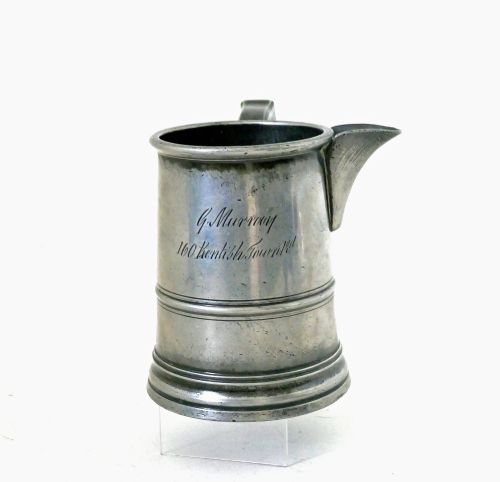
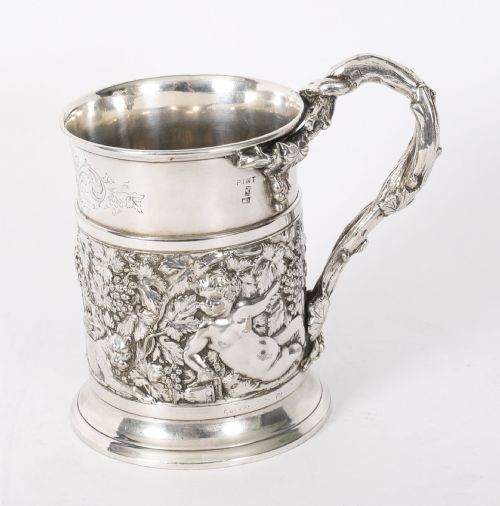
A victorian pint tankard represents a domestic and tavern drinking vessel primarily encountered in sterling silver, pewter, and copper across this selection. These pieces originate from the nineteenth century, spanning decades from the eighteen-fifties through the end of the century.
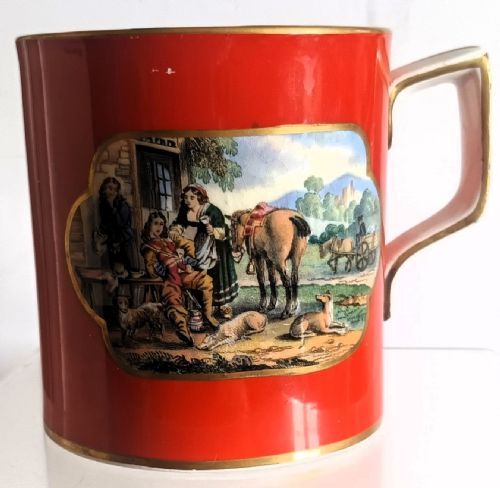
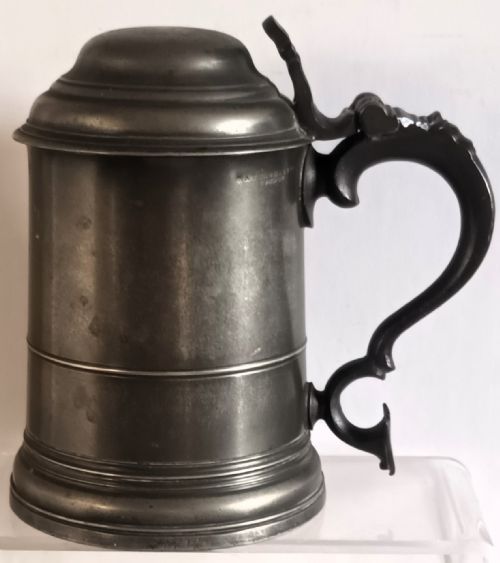
The forms vary from simple cylindrical mugs to bell-shaped measures, lidded tavern tankards, and earthenware pottery jugs. Many examples bear specific touchmarks, tavern names, or institutional inscriptions relating to schools and cricket clubs.
Sterling silver versions frequently appear alongside base metal pewter and copper measures, demonstrating the wide spectrum of social use from working taprooms to formal dining rooms.
Materials and construction
Makers utilised heavy-gauge sterling silver, durable pewter alloys, and sheet copper, shaping the metal by hand or spinning it on a lathe to create rigid cylindrical or tapered bodies. Handles were cast separately and soldered securely to the main vessel wall.
Silver vessels frequently received interior gilding, known as a gilt wash, to protect the metal from acidic ales and wines. Engraving, embossing, and reeded bands were applied by hand using sharp gravers to decorate the exterior surfaces.
Ceramic and glass variants utilised traditional pottery glazing and mould-pressed techniques, while metal measures incorporated official crown or VR verification stamps to guarantee liquid capacity.
Listings feature materials spanning sterling silver, pewter, copper, earthenware, and glass across the nineteenth century.
Distinctions in quality
The standard of a victorian pint tankard rests on the weight of the metal and the crispness of the hand-engraved or embossed decoration. Thicker gauge silver and heavy pewter display superior structural integrity and resist denting through centuries of handling.
The presence of clear hallmarks, maker marks, and original provenance such as club inscriptions or school names elevates the historical interest of the piece. Crisp lines on reeded bands and uncompromised solder joints on applied handles distinguish master silversmith work from standard commercial production.
Watts and Harton·George Unite·Stephen Smith·Mappin and Webb·Walker and Hall·Frederick Brasted·G R Collis·Frederic Sanders
The Victorian Pint Tankard Glossary
- Pewter
- A malleable alloy composed chiefly of tin mixed with copper and antimony. It was widely used for tavern measures and everyday drinking vessels before the rise of mass-produced ceramics.
- Hallmark
- An official stamp applied by an assay office to precious metals like sterling silver. It guarantees the metallic standard and records the year of testing and the maker.
- Gilt wash
- A thin layer of gold applied to the interior surface of a silver tankard. This coating prevents the corrosive action of alcoholic beverages on the underlying silver.
- Reeded band
- A series of parallel convex moulding lines encircling the body of a tankard. These decorative bands add rigidity to thin metal walls.
- VR mark
- An official royal cipher indicating Victoria Regina. It appears on tavern measures certified for liquid capacity during the reign of Queen Victoria.
Victorian Pint Tankard: Frequently Asked Questions
What is a victorian pint tankard used for?
These vessels served as functional drinking containers for ale, beer, and cider in homes, inns, and private clubs throughout the nineteenth century. Many functioned as official tavern measures certified to dispense exact imperial liquid quantities.
Today, collectors utilise them as decorative barware, display pieces, or traditional drinking vessels for special occasions.
How do I tell pewter from silver?
Pewter has a duller, dark grey metallic lustre and a softer feel, while sterling silver exhibits a bright reflective shine when polished. Examining the base for official silver hallmarks or pewter touchmarks will confirm the exact material composition.
Silver objects also carry a higher weight relative to their size compared to standard base metal alloys.
Why do some tankards have inscriptions?
Inscriptions often record presentation dates, athletic club victories, or institutional ownership such as schools and military messes. These personalisations connect the physical object to specific historical events and former owners.
Such engraved details enhance the documentary value and individual character of the piece.
How should I clean a silver tankard?
Sterling silver benefits from periodic washing in warm soapy water using a soft cloth to remove surface dust and oils. Proprietary silver polishes should be applied sparingly to avoid wearing down delicate hand engravings or softening hallmarks.
Pewter requires a gentler approach to preserve the desirable darker surface patina accumulated over generations.