

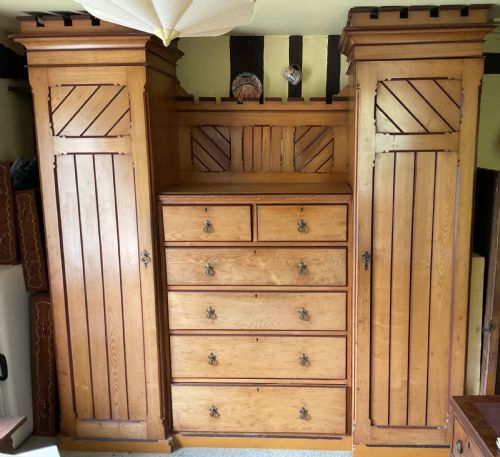
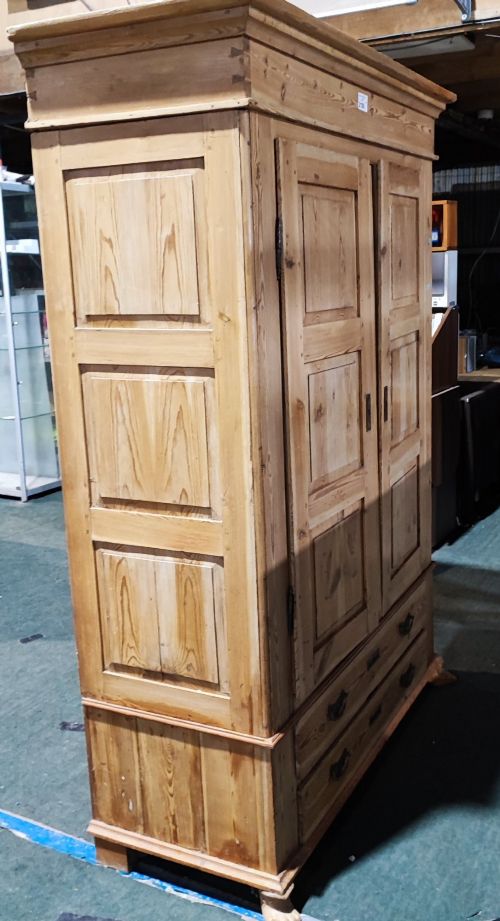
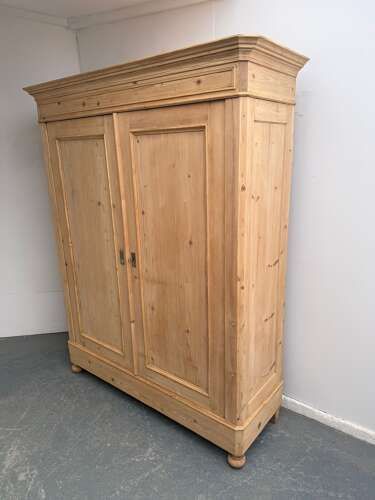
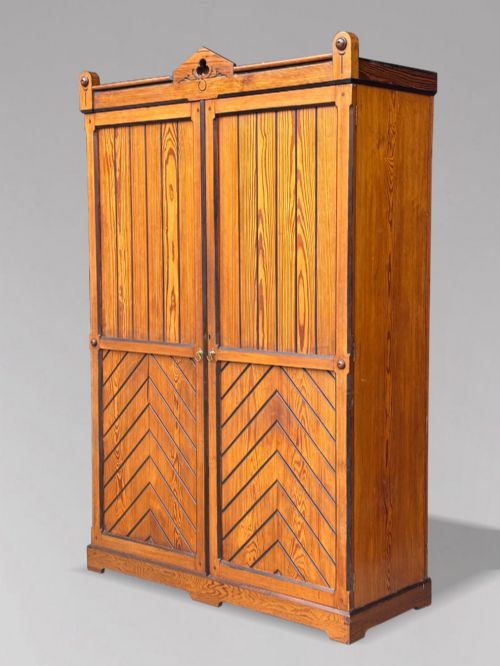

Victorian Pine Clothes Press
A victorian pine clothes press offers generous storage in robust timber, combining practical utility with the warm character of nineteenth century country craftsmanship.
Victorian Pine Clothes Press
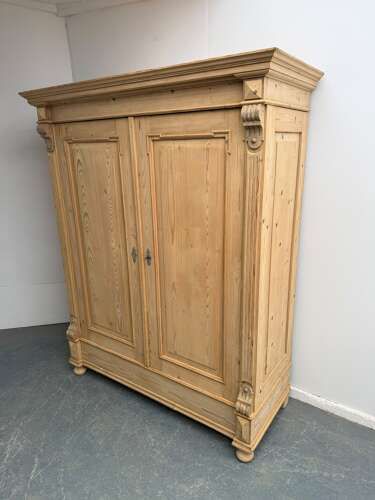
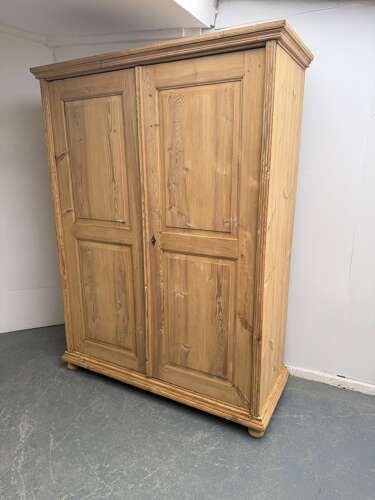
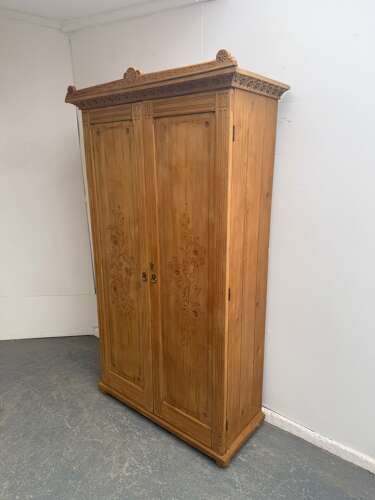
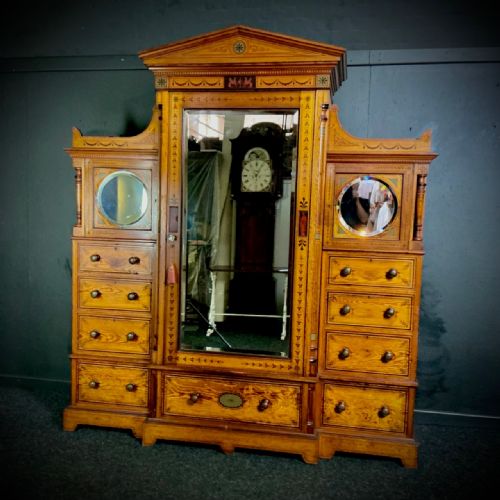
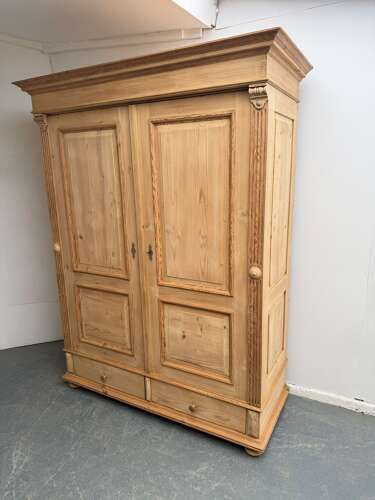
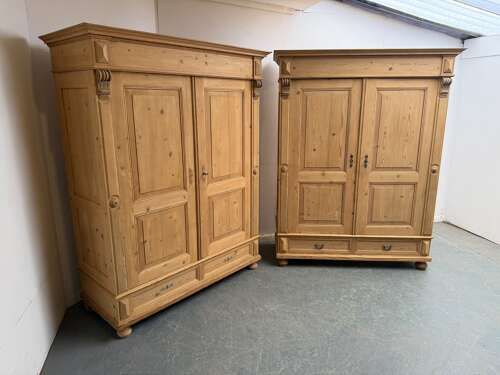
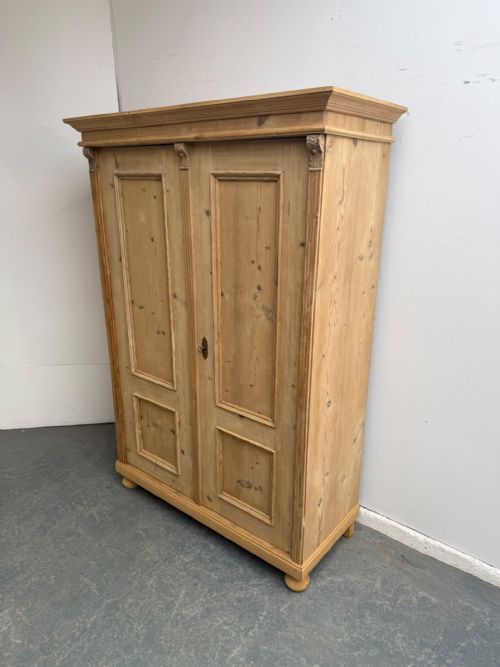
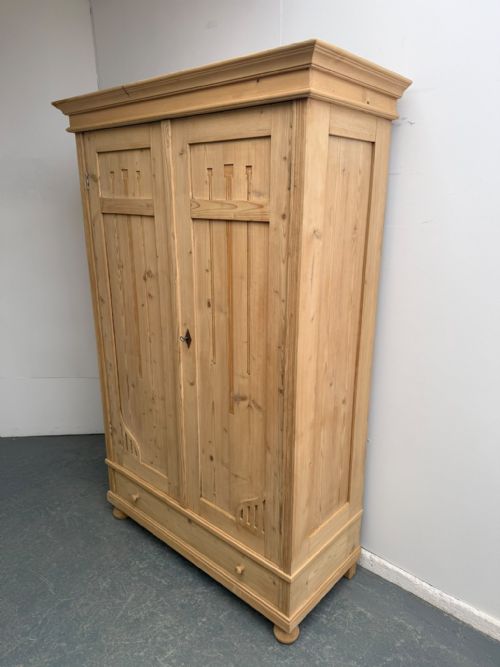
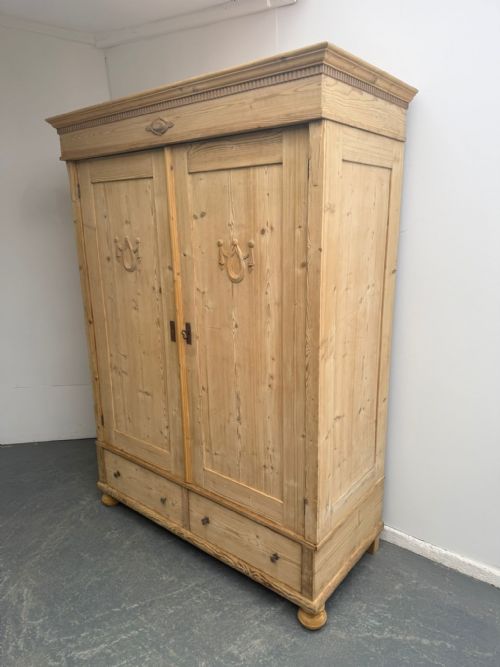
When searching for a victorian pine clothes press, buyers encounter large wardrobe and cupboard forms designed for household linen and garments. These pieces originate from the nineteenth century, spanning Victorian and Arts and Crafts periods.
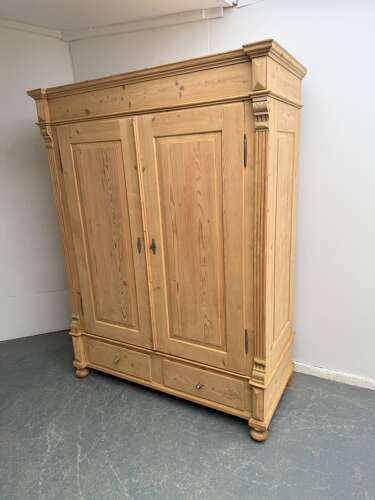
The selections on this page predominantly feature tall double doors, knockdown configurations, and fitted interior shelving or hanging space. Compactum designs and pieces incorporating bottom drawers also appear frequently among the listings.
Originating largely from British and English country workshops, along with occasional Scottish or continental examples, these items served as essential bedroom and hallway storage. They survive today in finishes ranging from waxed pine to original scumble paint.
How they were made
Constructed primarily from solid pine and pitch pine, these presses rely on sturdy timber framing designed to handle heavy domestic use. Many larger examples utilise knockdown construction, allowing the carcase to dismantle into manageable panels for transport.
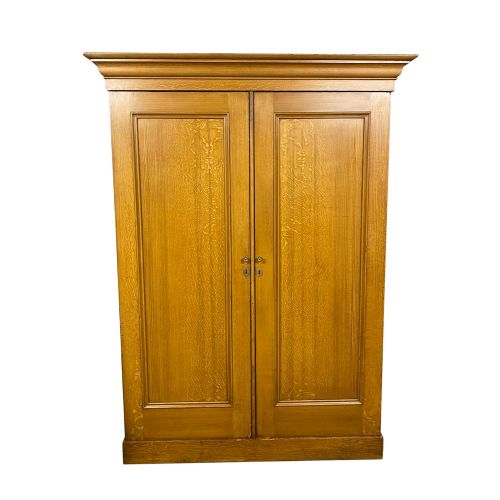
Surface treatments vary between natural wax finishes that highlight the grain and decorative applications such as scumble paint mimicking oak. Iron, brass, and glass hardware complete the construction of doors, panels, and internal drawers.
Victorian Pine Clothes Press Retail Price Guide 2026
Typical asking prices for victorian pine clothes press among the pieces listed under this phrase on Sellingantiques today, from the lower quarter to the upper quarter. They describe what is for sale here now, not the wider market.
Several tall presses arrive with a hidden history of scumble paint, proving our ancestors loved a clever faux oak disguise just as much as we do.
What varies in quality
The distinction between standard utility pieces and finer examples rests on architectural detail and proportion. Pieces featuring columned pilasters, moulded cornices, or carved ornamentation demonstrate superior cabinetmaking ambition.
Original surface treatments also define the standing of a piece, with surviving scumble paintwork or untouched waxed finishes holding particular merit over later, unsympathetic alterations.
The Victorian Pine Clothes Press Glossary
- Knockdown wardrobe
- A piece built to be easily dismantled into separate panels and sections for transportation. This clever construction method was especially common for large nineteenth century bedroom furniture.
- Compactum
- A multi-functional wardrobe combining hanging space, shelving, and internal drawers within a single carcase. It represents a highly organised approach to nineteenth century clothing storage.
- Scumble paint
- A decorative surface technique applied to imitate more expensive woods like oak. Artisans worked a translucent glaze over a lighter base coat to create simulated grain patterns.
- Pitch pine
- A dense, resinous softwood prized for its durability and distinctively pronounced grain figure. It frequently appears in higher quality Victorian furniture.
- Linen press
- A tall cupboard traditionally used for storing folded textiles and garments on internal sliding trays or shelves. These forms evolved into the modern wardrobe format.
Victorian Pine Clothes Press: Frequently Asked Questions
What is a clothes press?
A clothes press is a tall storage furniture piece designed primarily for holding folded garments and household linens. They typically feature large doors enclosing internal shelving, drawers, or hanging compartments.
Historically, these pieces occupied bedrooms and hallways as the primary storage vessels before built-in closets became standard. Their robust construction allowed them to endure generations of domestic use.
How do I assemble a knockdown wardrobe?
Knockdown wardrobes utilise interlocking panels, wooden pins, or internal metal bolts that allow the main carcase to separate into flat sections. This modular design enabled large furniture to move easily up staircases and through narrow doorways.
Reassembly requires aligning the numbered or corresponding joints carefully before tightening the internal fixings. Ensuring the base sits level on the floor prevents the doors from binding after assembly.
How do I care for waxed pine?
Waxed pine surfaces require periodic maintenance with a quality beeswax polish to nourish the timber and maintain a soft sheen. Avoid placing these pieces in direct sunlight or near heat sources to prevent the wood from drying out.
Regular dusting with a dry cloth keeps the finish clean without stripping the protective wax layer. Spills should be wiped away immediately to prevent moisture rings from forming on the wood.
How do I date a Victorian wardrobe?
Dating a Victorian wardrobe involves examining construction methods, hardware, and stylistic indicators such as Arts and Crafts influences or Gothic mouldings. Machine-sawn timbers and specific screw types help narrow down the manufacturing decade.
Later nineteenth century examples often incorporate mirrors into the door panels, whilst earlier pieces rely purely on panelled timber. Catalogues and regional joinery traditions provide further clues to exact periods.