

Victorian Period Furniture
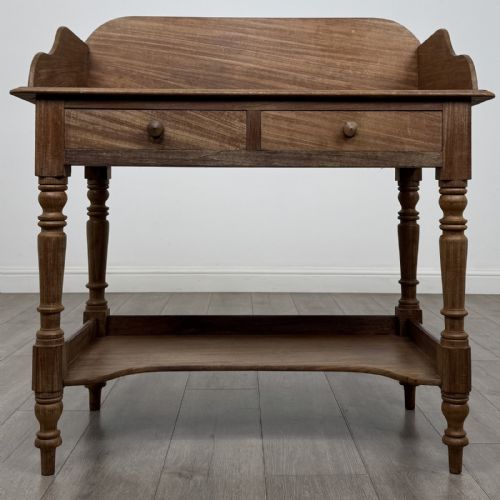
Victorian period furniture encompasses diverse functional pieces from the nineteenth century, offering rich mahogany timbers and sturdy construction for daily domestic life.
Victorian Period Furniture
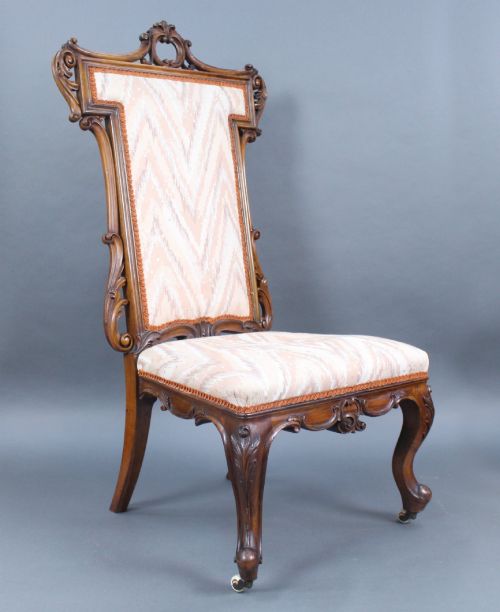
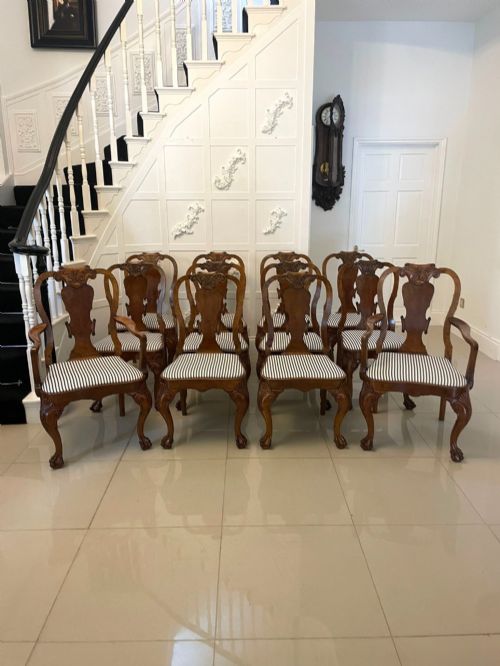
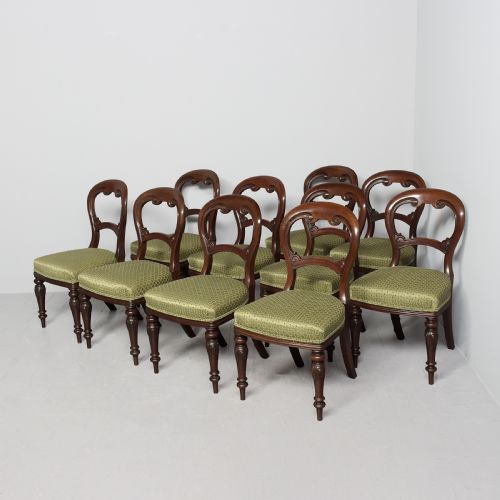
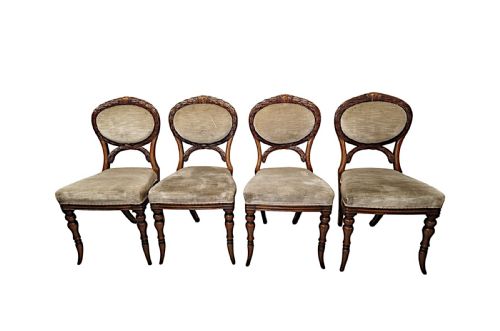
Victorian period furniture covers a broad domestic spectrum ranging from large dining chair sets and mahogany chests of drawers to garden benches and hall stands. Buyers exploring this category encounter walnut occasional chairs, Davenport desks, and heavy seating arrangements from various decades of the nineteenth century.
Materials and construction methods
Cabinet makers relied heavily on dense hardwoods like mahogany and walnut, frequently utilising burl veneers to create decorative patterned surfaces on tabletops and credenzas. Secondary timbers such as ash, elm, and pitch pine appear in utilitarian items and regional country pieces.
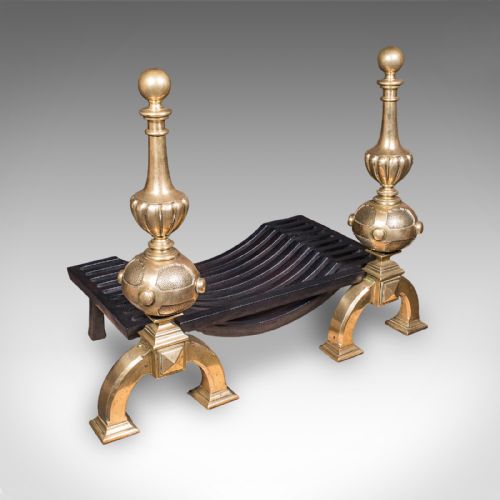
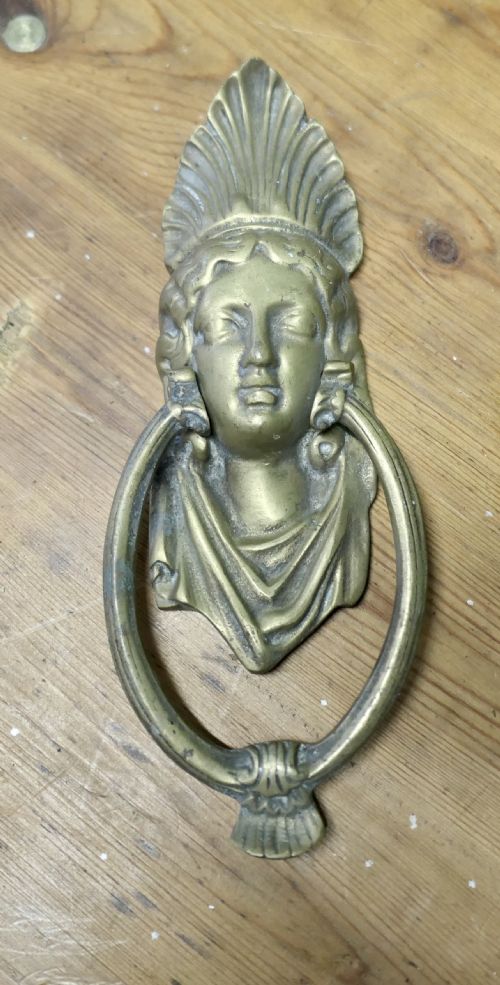
Metal components added structural support and functional detail, seen in cast iron garden benches, brass andirons, door handles, and knockers. Upholstered items integrated original tapestry seats and leather coverings supported by traditional webbing and stuffing.
Door hardware includes a cast-iron hand gripping a ball, alongside brass caryatids ready to announce visitors.
Factors influencing quality
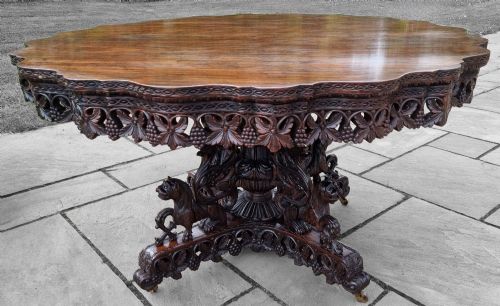
Quality rests upon the selection of timber and the precision of the carving, where disciplined hand-carved details on mahogany and walnut separate standard production from superior workshop output. The integrity of joinery and the survival of original surfaces dictate the desirability of chests, desks, and tables.
Completeness alters the standing of larger suites, especially dining chair sets where matching timber grain and uniform framing across multiple units elevate the piece. Maker attribution, such as stamped workshop signatures, further separates standard regional items from high-end metropolitan commissions.
Strahan
The Victorian Period Furniture Glossary
- Balloon back
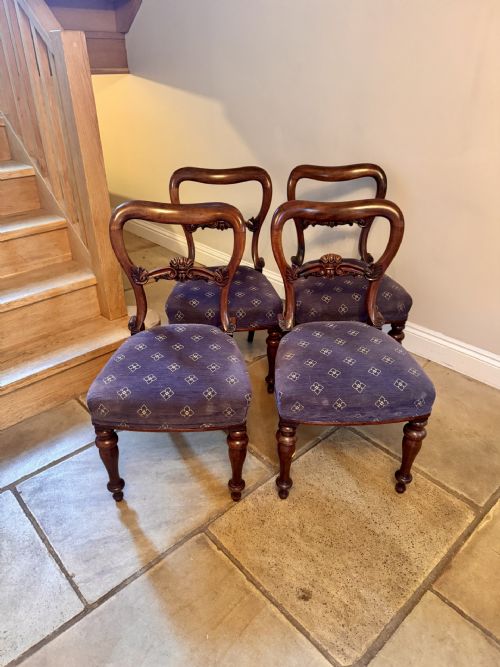
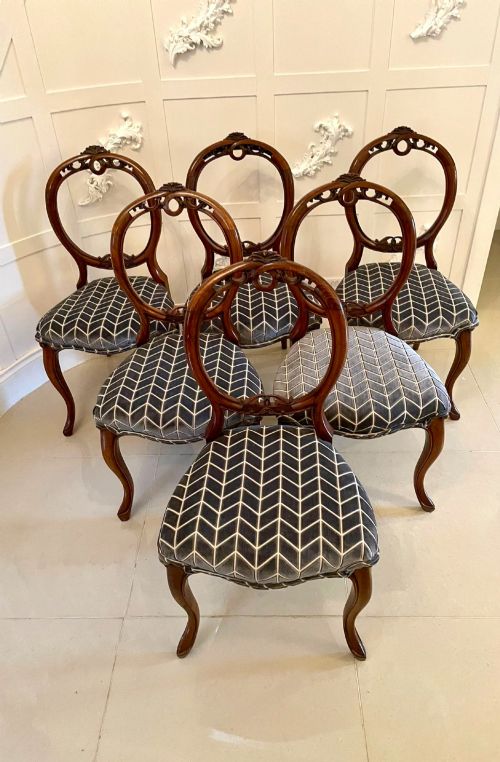
- A type of chair back shaped in a continuous curved oval resembling a balloon, popular in mid-nineteenth-century dining chairs. This form provided ergonomic support while showcasing figured walnut or mahogany timbers.
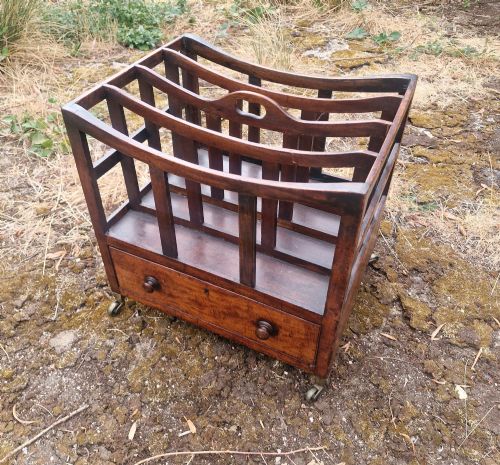
- Canterbury
- A low stand with partitions used for holding sheet music, books, or magazines, typically fitted with castors. These items emerged during the Regency period and continued through the nineteenth century in mahogany or bamboo.
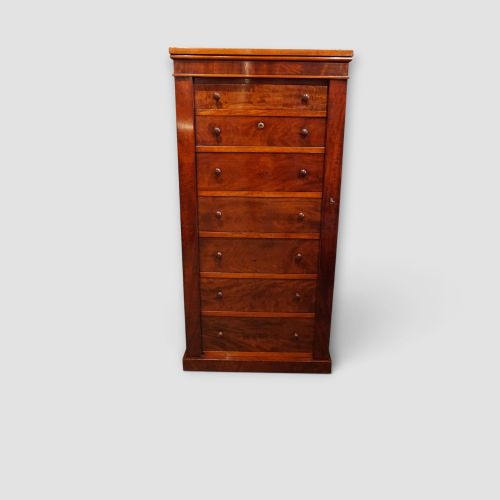
- Wellington chest
- A tall, narrow chest of drawers secured by a hinged vertical locking flap on one side that fastens with a key. This design protected the contents of the shallow drawers from unauthorized access.
- Andiron
- A horizontal metal support raised on legs, placed in pairs inside an open fireplace to hold logs. They are frequently forged from cast iron or brass.
- Aesthetic Movement
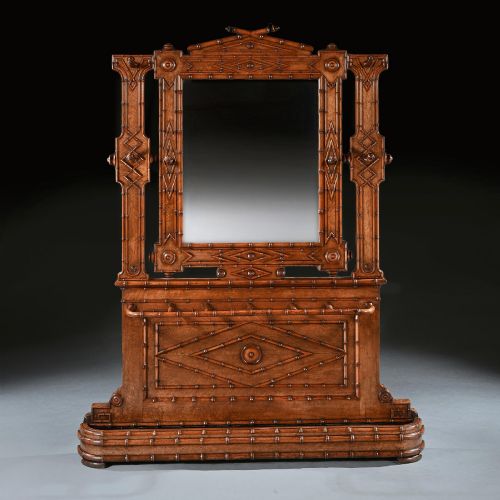
- A late-nineteenth-century design style emphasising decorative arts and Japonisme influences over strict historical revivalism. Pieces from this period often utilised bamboo, ebonised wood, and distinctive maple finishes.
Victorian Period Furniture: Frequently Asked Questions
How do I identify a Victorian piece?
Look for dense timbers like mahogany and walnut combined with distinct stylistic markers such as balloon backs or carved scroll arms. Construction techniques and secondary woods inside drawers also help determine the nineteenth-century origin.
Examine the hardware and joinery methods, as machine-cut screws and standardised fixings generally point toward the latter half of the century. Regional variations can also indicate specific workshop traditions.
Were these items used outdoors?
Certain items were specifically designed for outdoor placement, utilising durable materials capable of withstanding the elements. Cast iron garden benches and wooden garden seats served this exact purpose.
These pieces combined heavy cast iron frames with timber slats to ensure stability on lawns and patios. Over time, the metal developed patinas while the wood weathered naturally.
What is a Canterbury used for?
A Canterbury functions as a low compartmentalized rack originally designed to store sheet music and portfolios near a piano. Nineteenth-century households utilised them in sitting rooms to keep reading materials organised.
Later Victorian examples often incorporated bamboo or lighter woods to suit Aesthetic Movement interiors. Their partitioned lower sections and carrying handles made them practical movable furniture.
How should I care for mahogany surfaces?
Maintain mahogany by keeping furniture away from direct heat sources and sudden humidity changes that cause timber to split. Regular dusting with a soft, dry cloth preserves the polished finish.
Avoid silicone-based sprays, opting instead for traditional beeswax applied sparingly to nourish the grain. Gentle polishing enhances the natural depth of the dark wood over time.