






Victorian Percussion Pistol
A victorian percussion pistol brings nineteenth-century firearm engineering into your hands, offering solid steel mechanics and polished walnut stocks.
Victorian Percussion Pistol
A victorian percussion pistol is a nineteenth-century firearm utilising the percussion cap ignition system, replacing older flintlocks with reliable metal locks. These pieces span military contracts, officers' sidearms, and private pocket variants.
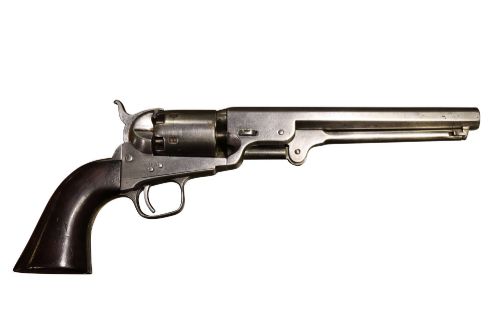
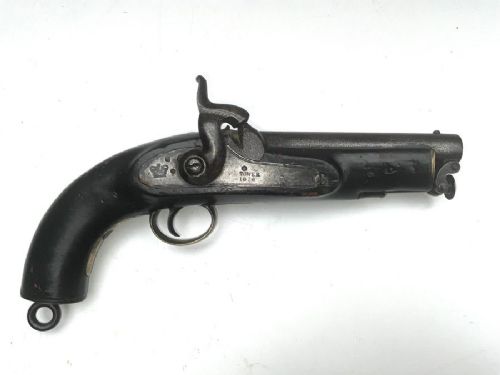
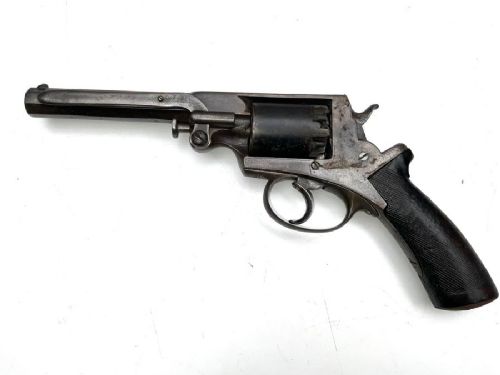
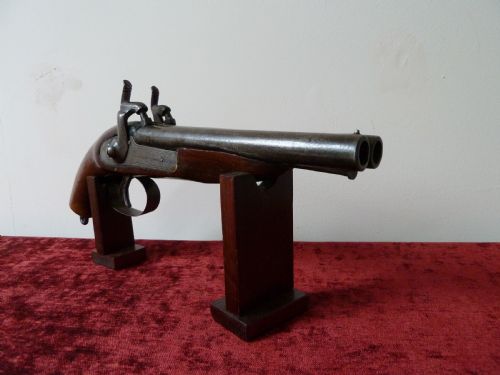
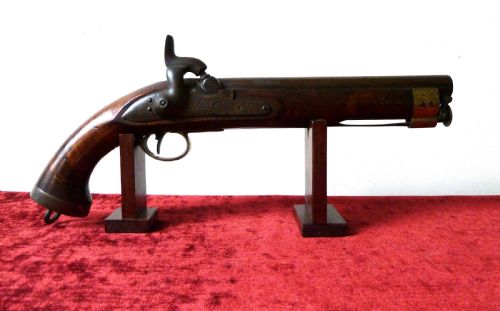
The pieces listed on this page include military belt pistols, pocket models, and revolvers bearing dates from the mid-nineteenth century. Variants range from standard British Army issue to multi-shot revolvers and boxlock designs.
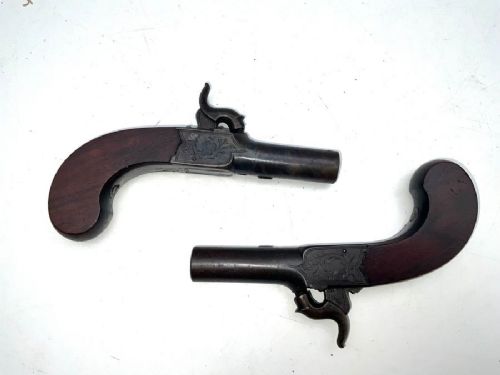
Origins represented in the evidence span English makers, Birmingham proof marks, and continental workshops such as Liège, alongside American import models. Buyers encounter single-shot pocket versions alongside paired sets complete with original cases.
Materials and construction
Makers constructed these arms using forged steel and iron for barrels and lock mechanisms, paired with stocks shaped from walnut or mahogany. Metal components received stamped proofs or engraved detailing.
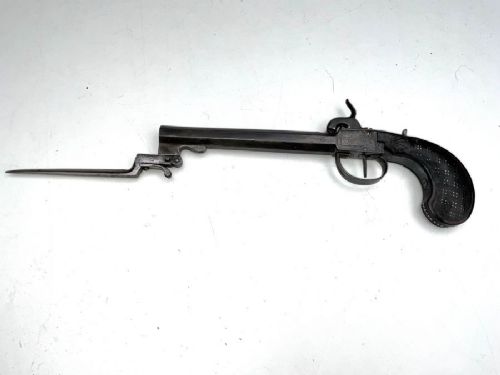
Accessories and housing involved brass for frames or mounts, while fitted presentation boxes utilised wood lined with velvet and paper labels. Mechanisms incorporated concealed triggers, sliding rear sights, and spring-released bayonets.
Distinctions in quality
The upper tier of the range comprises matching pairs, boxed sets with accessories, and signed pieces from recognised makers such as Colt, Deane, Adams & Deane, or John Manton. These examples feature precise mechanical tolerances and integrated functional extras like flick bayonets.
Simpler pocket pistols and standard military issue pieces represent functional utility rather than deluxe presentation, showing basic stamped markings and plainer wood stocks without cased accessories.
Colt·J.R. Cooper·Deane, Adams & Deane·Auguste Francotte·John Manton·George Sherwood
The Victorian Percussion Pistol Glossary
- Percussion cap
- A small metal cup containing priming compound placed on the nipple of a firearm to ignite the powder charge when struck by the hammer. This system succeeded the flintlock.
- Boxlock
- A firearm design where the hammer acts centrally and the lock mechanism is enclosed within the frame rather than mounted on a sideplate. This configuration provides a compact form for pocket weapons.
- Pepperbox
- A multi-barrel firearm where the entire cylinder block rotates around a central axis to fire successive shots without a separate barrel. These appeared frequently in the nineteenth century.
- Proof mark
- An official stamp indicating that a firearm barrel has undergone pressure testing with a gunpowder charge. Birmingham and London marks appear on English arms.
- Smoothbore
- A firearm barrel lacking internal rifling grooves, designed to fire lead balls without spin. Many military and officer pistols utilised this bore type.
Victorian Percussion Pistol: Frequently Asked Questions
What is a victorian percussion pistol?
A victorian percussion pistol is a nineteenth-century firearm that utilises a percussion cap and nipple ignition system. These weapons include single-shot pocket pistols, military belt models, and early revolvers.
Such firearms superseded flintlocks during the nineteenth century, offering improved reliability in wet weather. They were carried by military officers, naval personnel, and civilians for personal defence.
How do I date a percussion pistol?
Dating relies on proof marks, maker signatures, patent dates, and stylistic indicators. Many pieces carry stamps relating to military contracts, government departments like the East India Company or the Tower of London, or private maker addresses.
Mid-nineteenth-century examples often feature transitional designs or early revolver patents. Reference books and British proof house records help narrow down the decade of manufacture.
What are boxlock percussion pistols?
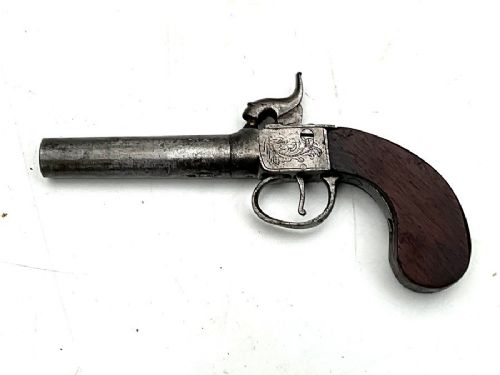
Boxlock percussion pistols integrate the lock mechanism directly into the frame rather than using a separate sideplate. This layout creates a clean, compact pistol well suited for the pocket.
Many boxlock designs incorporated folding triggers or spring-loaded bayonets underneath the barrel. They were popular personal protection items for travellers and gentlemen during the Victorian era.
Were these pistols used in the military?
Military percussion pistols were issued to cavalry troopers, infantry officers, and naval sea service personnel. Contracts for the British Army and the East India Company produced robust, standardised single-shot arms.
Officers often purchased higher-grade private weapons or multi-shot revolvers like the Beaumont-Adams or Colt models. These served across colonial campaigns and the American Civil War period.
How should I store a cased pistol set?
Cased pistol sets with original wooden boxes, velvet linings, and accessories should be kept in a stable environment away from direct sunlight and damp conditions. The wood and velvet require stable humidity to prevent deterioration.
Displaying or storing the pieces in their fitted boxes preserves the association between the firearm, powder flask, and loading tools. Regular light cleaning of metal surfaces maintains the steel and brass components.