




Engraved Percussion Pistol
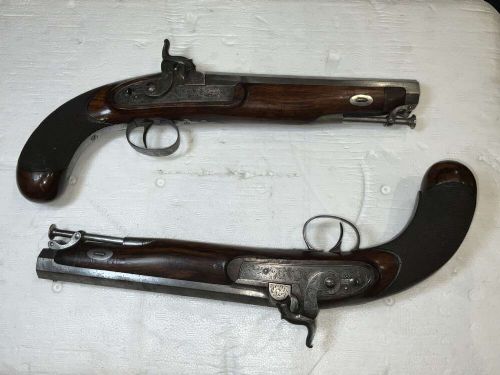
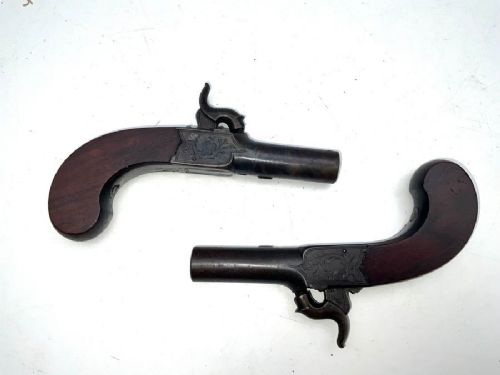
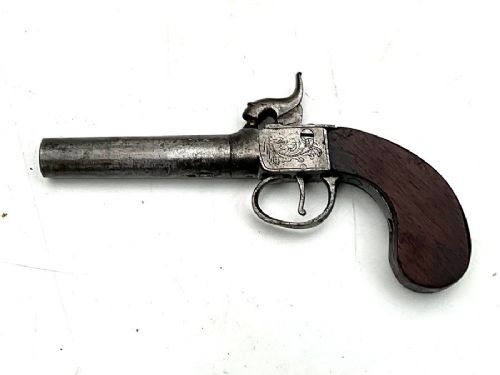
These engraved percussion pistol examples bring nineteenth-century mechanics into your collection, offering pocket models and heavy officers' arms.
Engraved Percussion Pistol
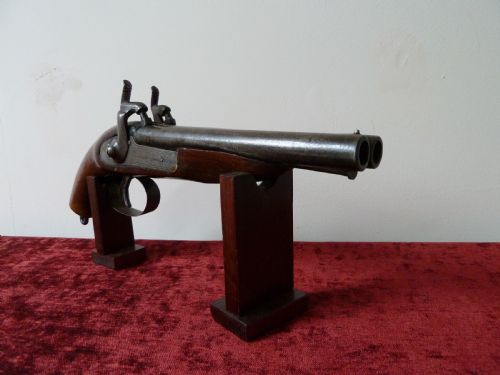
When you search for an engraved percussion pistol, you encounter nineteenth-century pocket models, heavy officers' arms, and pepper pot variants from British, European, and Ottoman makers. These antique firearms encompass single and double-barrel designs, revolving mechanisms, and pairs with flick bayonets.
The versions you meet most frequently on this page date from the nineteenth century, including the eighteen-fifties and the Regency period. They span compact pocket sizes and service arms, reflecting domestic self-defence and military carry.
How they were made
Makers built these pieces using steel, iron, and brass for barrels and lockplates, paired with stocks formed from walnut and other woods. Some examples incorporate mother-of-pearl mounts and silver elements.
Engraving adorned the metal surfaces with scrollwork and maker signatures, while mechanical advancements yielded revolving barrels, pepper pot clusters, and spring-loaded bayonets.
Engraved Percussion Pistol Retail Price Guide 2026
Typical asking prices for engraved percussion pistol among the pieces listed under this phrase on Sellingantiques today, from the lower quarter to the upper quarter. They describe what is for sale here now, not the wider market.
What varies in quality
Quality rests upon the crispness of the metal engraving, the tightness of the lock mechanism, and the finish of the wooden or mother-of-pearl stock. Finer pieces demonstrate precise assembly and named maker provenance.
Plain utility arms contrast with exhibition-grade or high-status officers' weapons, where decorative metalwork and specialised multi-shot mechanisms elevate the piece.
Auguste Francotte·John Manton·George Sherwood·A.W Spires
The Engraved Percussion Pistol Glossary
- Percussion lock
- A ignition system using a hammer striking a percussion cap containing fulminate of mercury. This innovation replaced flintlocks in the nineteenth century.
- Boxlock pistol
- A firearm design where the frame and breech are forged as a single unit with the hammer positioned centrally or internally. It offers a compact profile.
- Pepper pot pistol
- A multi-barrel firearm with multiple chambers drilled into a rotating cylinder block that serves as the barrel assembly. Each chamber aligns with the hammer sequentially.
- Flick bayonet
- A spring-loaded blade housed beneath the barrel that releases forward for close-quarters defence. It appeared on pocket and belt pistols during the nineteenth century.
Engraved Percussion Pistol: Frequently Asked Questions
What is a percussion pistol?
A percussion pistol is a firearm that uses a percussion cap struck by a hammer to ignite the gunpowder charge.
This technology superseded flintlock mechanisms during the nineteenth century, offering greater reliability in wet weather.
How were pocket pistols carried?
Pocket pistols were designed for concealed personal defence in coat pockets or waistbands.
Their compact size and often concealed triggers allowed owners to travel with discretion.
How do I identify a Regency period pistol?
Regency period pistols date from the early nineteenth century and typically display distinct ergonomic grips and engraved steel lockplates.
They often combine military utility with refined decorative touches suited to civilian owners of the era.