
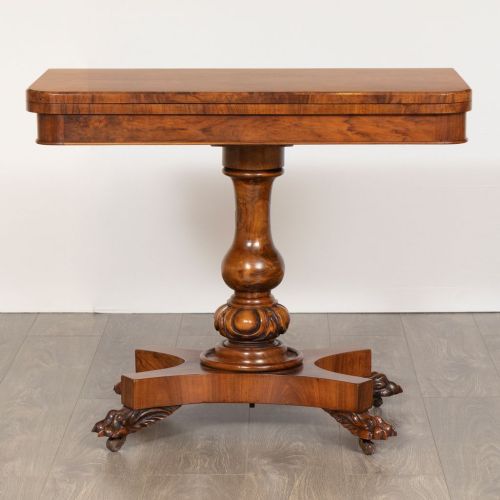
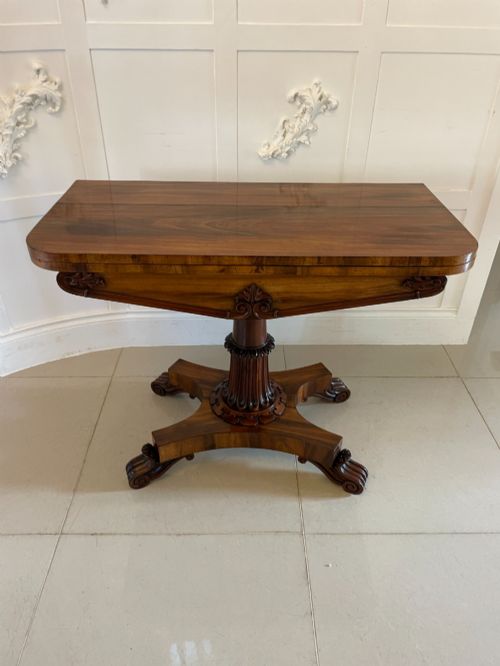
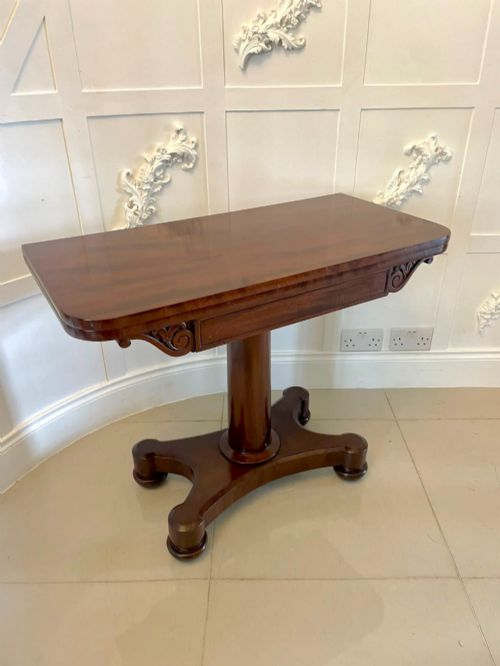
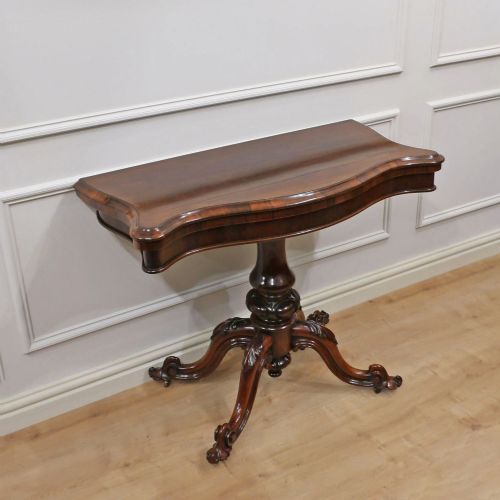


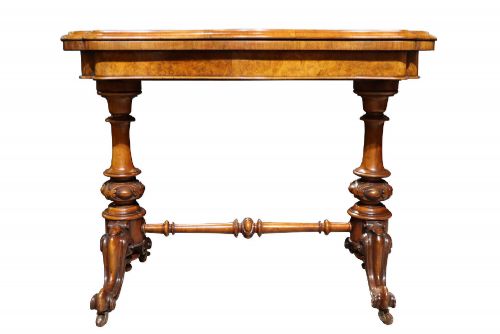
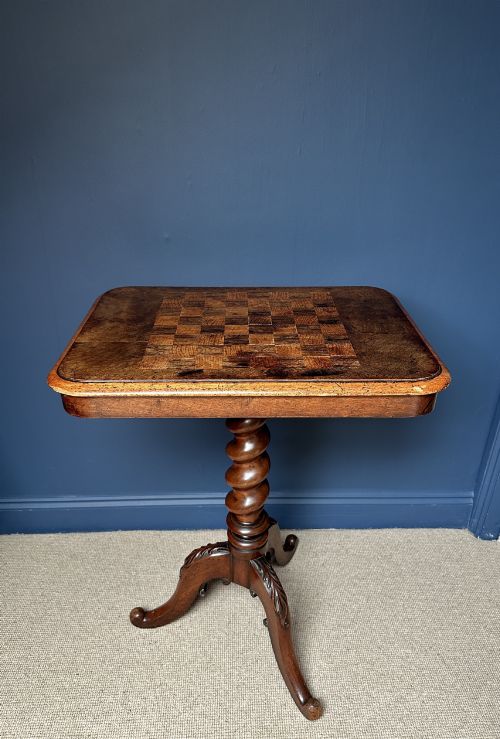
Victorian Pedestal Games Table
A victorian pedestal games table brings ingenious folding mechanism and rich cabinet timbers together for parlour entertainment.
Victorian Pedestal Games Table
When you search for a victorian pedestal games table, you encounter versatile multi-purpose furniture designed for nineteenth-century entertaining and parlour pastimes. These pieces span card tables, chess boards, and sewing combinations, united by a central column support and a timber platform base.
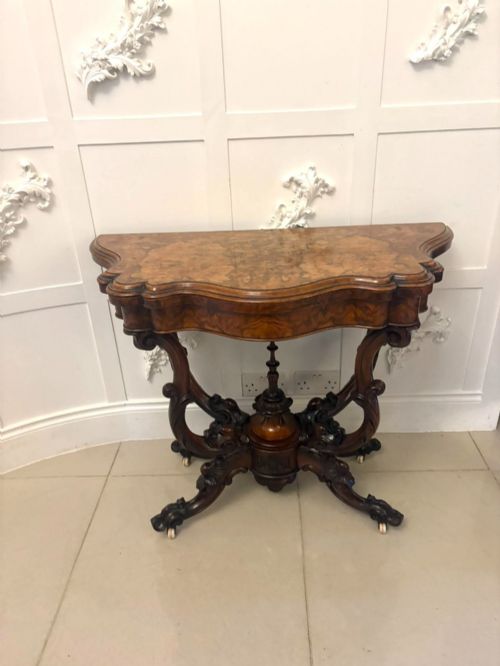
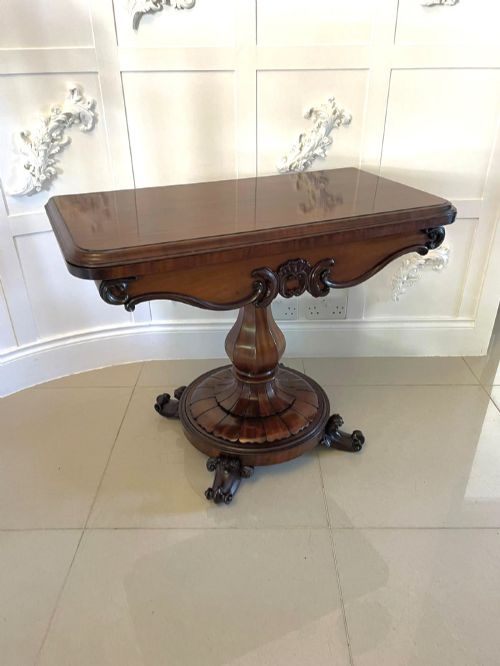
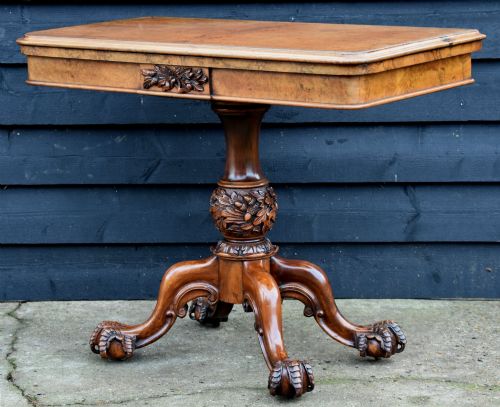
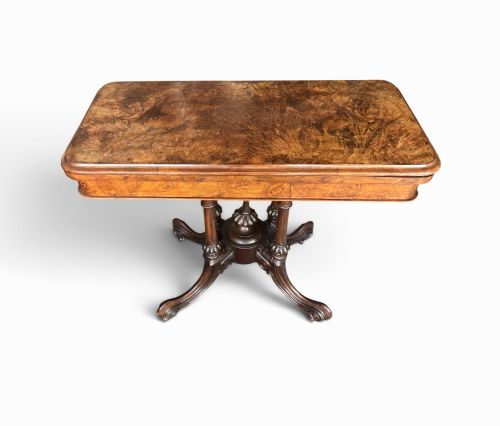
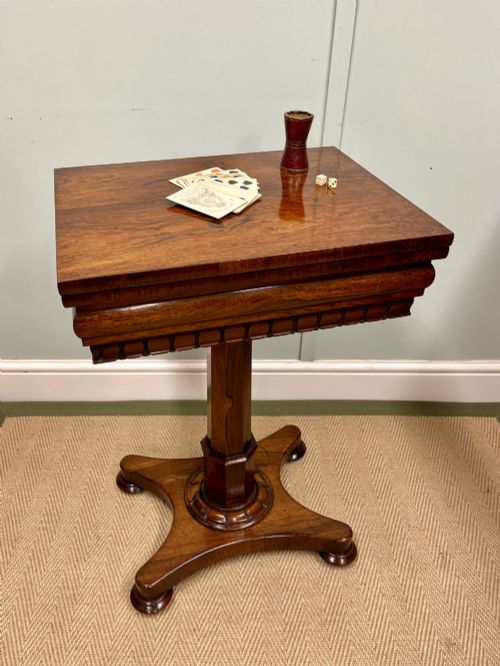
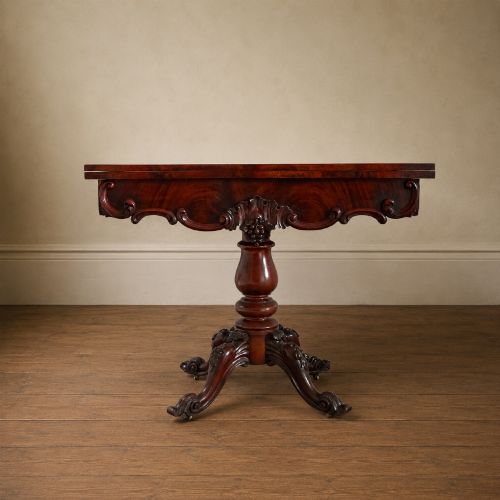
The version you are most likely to meet on this page is constructed from burr walnut or rosewood, frequently featuring a fold-over top or swivel mechanism that reveals a baize-lined playing surface. Examples range from early Victorian mahogany forms to later Aesthetic Movement interpretations and ornate Rococo Revival designs.
Makers of the period utilised the pedestal format to maximise legroom while supporting heavy folding tops. Whether configured as a card table, a tea table, or an integrated work table with gaming wells, each piece reflects the domestic priorities of the nineteenth century.
What Varies in Quality
The distinction between tiers rests upon the choice of timber and the depth of carved detail on the pedestal and supports. Burr walnut with rich figuring and precise marquetry inlay represents the upper end of the range, alongside finely figured rosewood and mahogany.
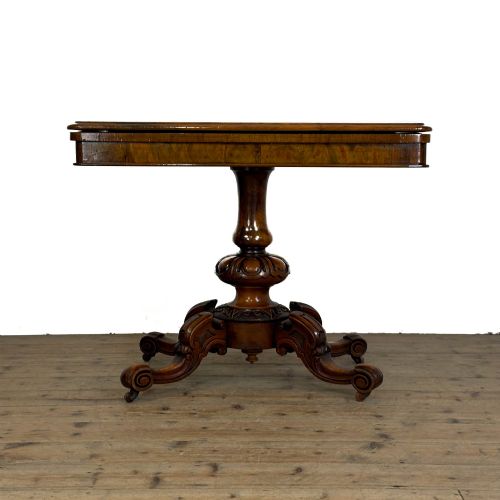
Structural integrity of the pivoting and folding mechanisms dictates daily utility, while crispness in the carved basket bases and pillar collars separates standard production from exceptional cabinet work.
Listings feature walnut, rosewood, and mahogany timbers, alongside specialised variations incorporating leather, fabric, and intricate wood inlay.
The Victorian Pedestal Games Table Glossary
- Burr walnut
- A highly figured timber veneer prized for its swirling knot patterns and rich brown tones. It appears frequently on the best nineteenth-century parlour furniture.
- Fold-over top
- A hinged surface design that doubles the usable area when opened. This mechanism often conceals a storage well or a baize-lined interior for card games.
- Marquetry
- The art of applying decorative pieces of wood veneer to a structure to form intricate patterns. It adorns many of the walnut gaming surfaces on this page.
- Pedestal base
- A central column supporting the tabletop above a sturdy foot arrangement. This design replaced traditional four-leg configurations to improve seating comfort.
- Aesthetic Movement
- A late nineteenth-century design style emphasising simplicity and artistic craftsmanship over heavy historicism. Pieces from this period often display lighter proportions.
Victorian Pedestal Games Table: Frequently Asked Questions
How do these folding tables work?
The top surfaces typically swivel on a central pivot before folding out to reveal a wider playing area. This clever double-leaf design protects the baize interior when closed against the room.
Beneath the folding leaves, many examples conceal a shallow well used for storing cards, counters, or sewing implements. The pivot mechanism requires smooth alignment to ensure the unfolded top rests level on the frieze support.
Where were these tables used?
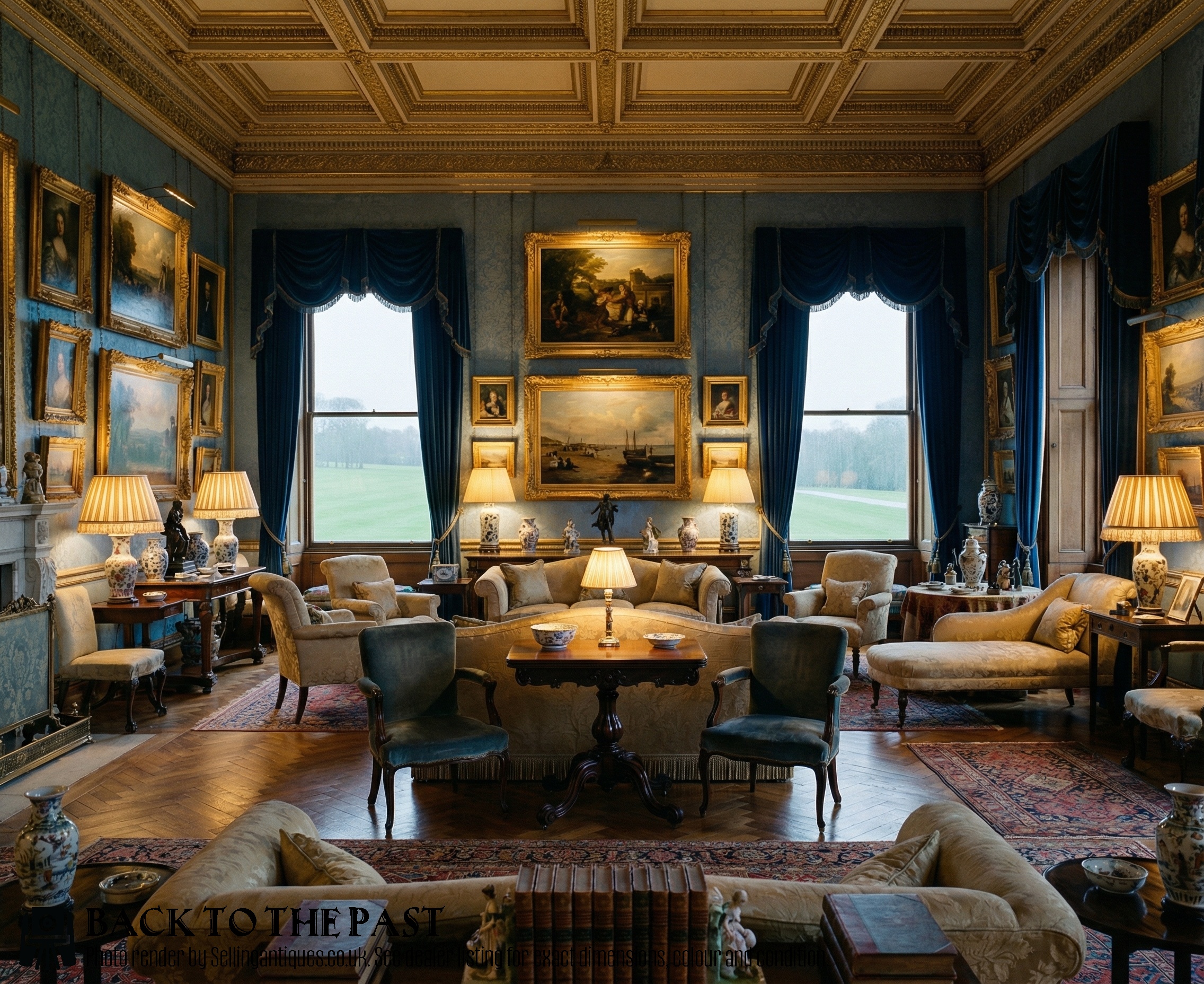
Victorian households placed them in drawing rooms and parlours to accommodate after-dinner entertainment and social card games. They functioned as decorative side tables or console tables when closed.
During daytime hours, families utilised the smaller footprint for display or needlework tasks. The versatility of the pedestal form allowed easy movement around domestic reception rooms.
What woods are most common?
Walnut and burr walnut dominate the surviving selection, accompanied by rich rosewood and figured mahogany. Cabinet makers selected these dense hardwoods for their ability to take a high polish and support intricate veneers.
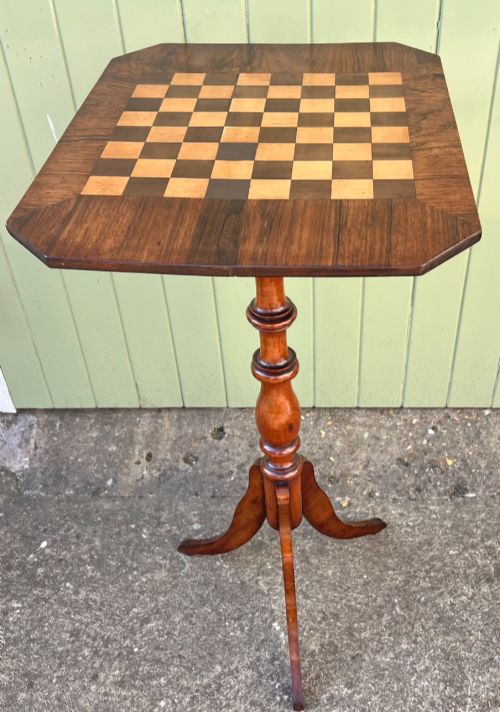
Inlay work often incorporates lighter fruitwoods to create contrasting chess boards and floral motifs. The grain patterns on walnut tops remain a defining visual characteristic of the period.
How do I spot an early piece?
Early Victorian and William IV examples often feature heavier rosewood or mahogany construction with generous scroll feet and robust central pillars. Proportions tend to be deeper and heavier than later nineteenth-century iterations.
Mid-century pieces increasingly turned to burr walnut and introduced refined carving on the pedestal base. Later Aesthetic Movement variants display simpler lines and lighter structural framing.