


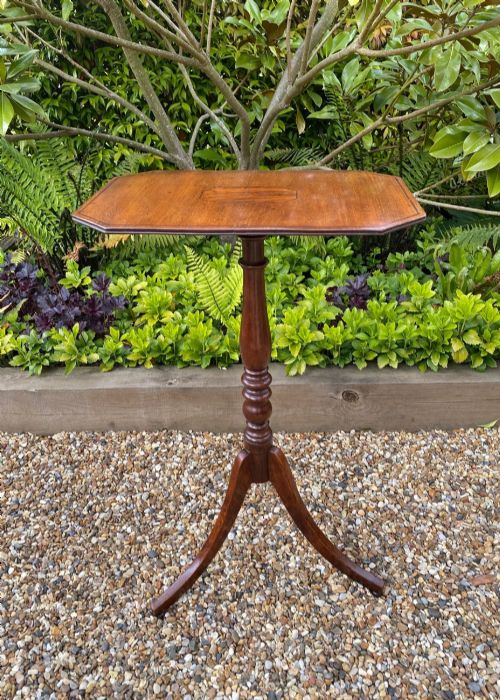
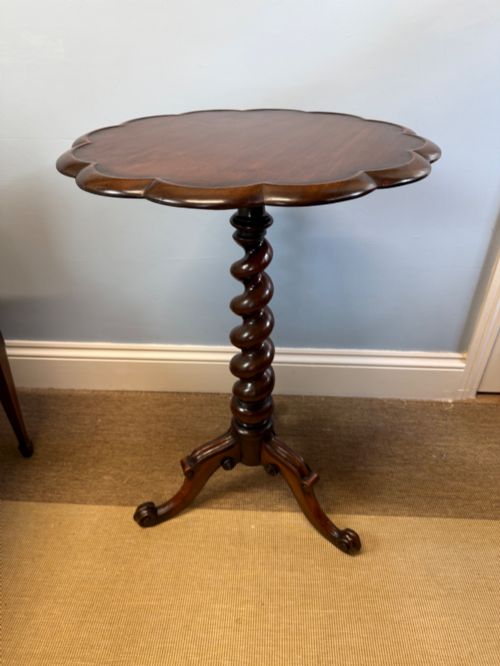
Victorian Pedestal Accent Table
These Victorian pedestal accent table designs offer compact surface utility, bringing timber grain and carved tripod bases into sitting rooms.
Victorian Pedestal Accent Table
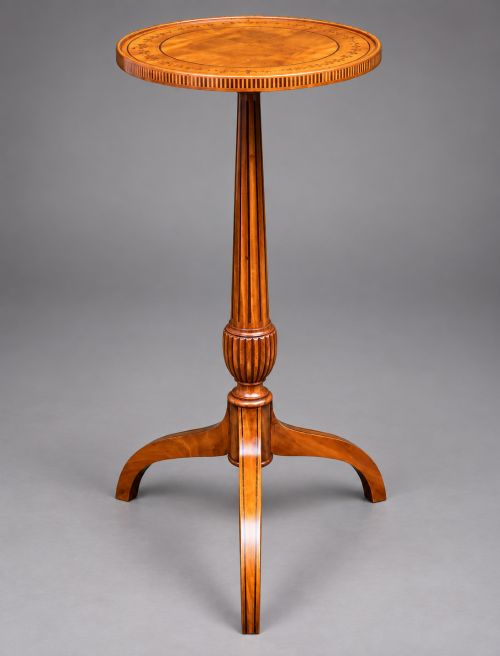
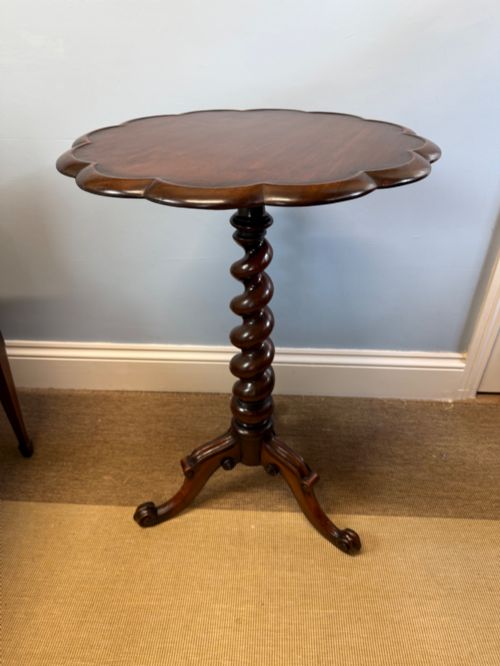
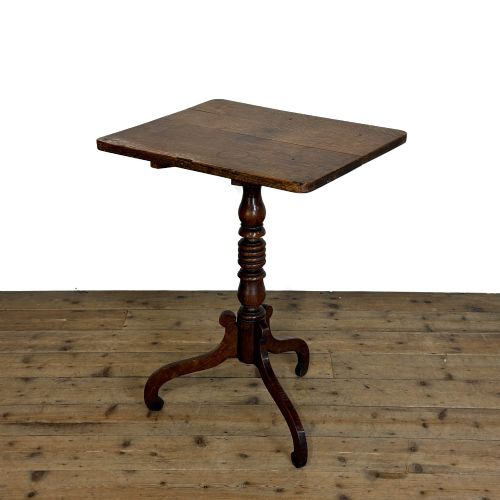
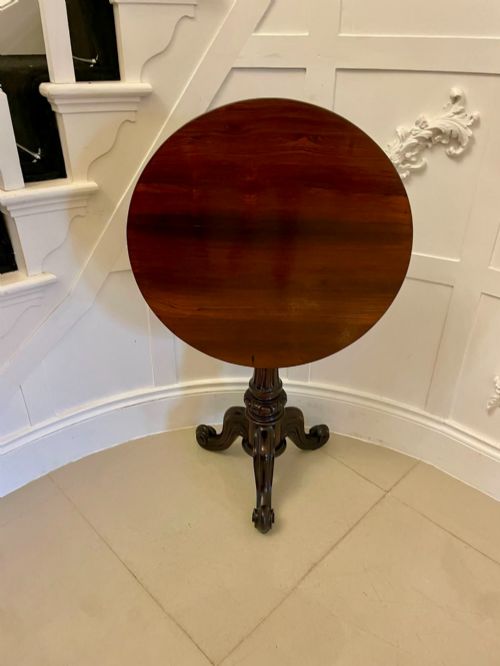
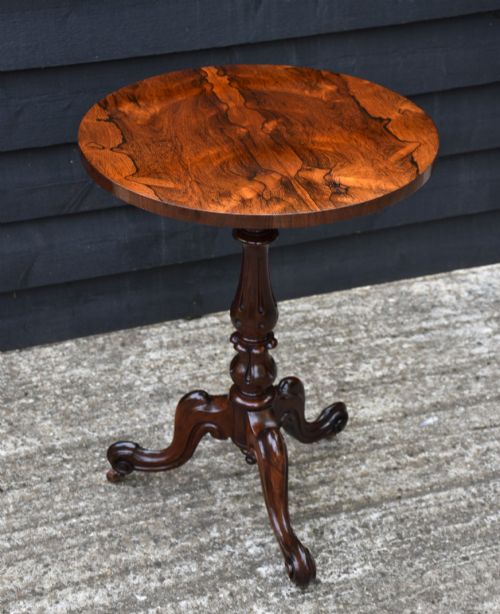
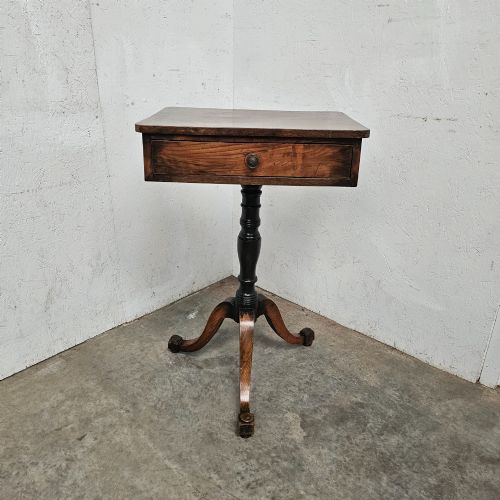
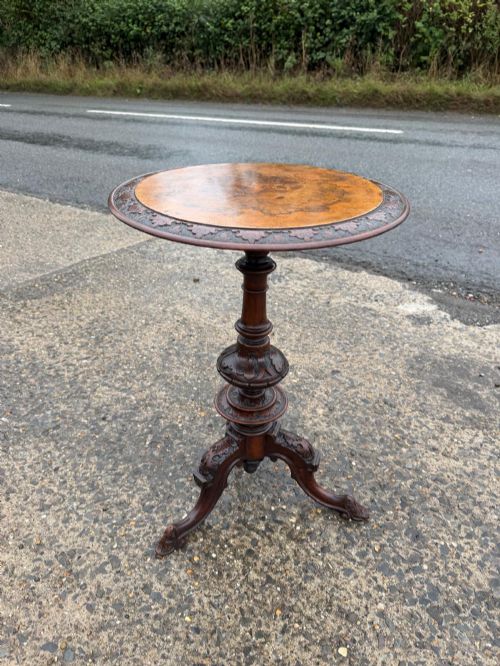
A Victorian pedestal accent table serves primarily as a lamp table, wine table, or occasional surface, anchored by a central pillar rather than four corner legs. Buyers seeking this form will encounter circular or oval tops supported by tripod or barley twist bases.
The materials span mahogany, walnut, burr walnut, and rosewood, alongside oak and elm, often constructed during the nineteenth century. Occasional variants display painted surfaces, satinwood inlay, or marble tops mounted on brass and timber frames.
Materials and construction methods
Cabinet makers utilised dense hardwoods such as mahogany and rosewood for structural stability, frequently applying burr walnut veneers to table tops for distinctive grain patterns. Tilt-top mechanisms incorporated brass catches and wooden pivots to allow the surface to fold vertical when not in use.
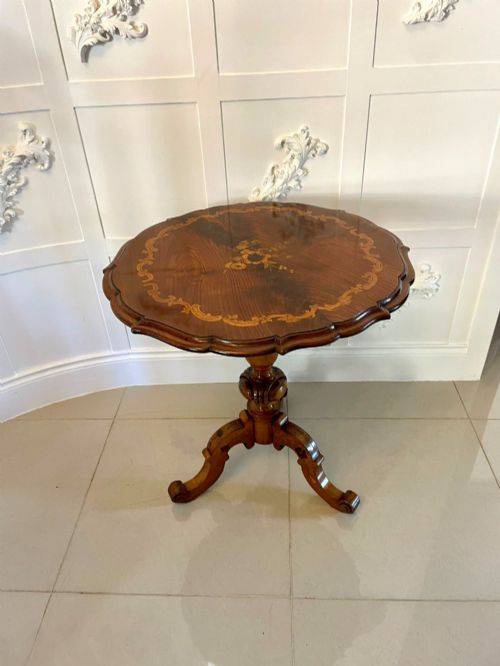
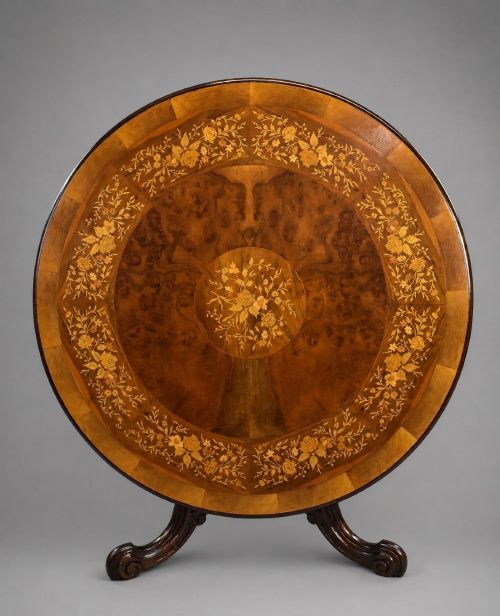
Carving and marquetry decoration required specialist hand work, seen in floral inlay, barley twist stems, and pierced tripod legs. Black Forest examples exhibit deep sculptural carving in linden wood, while others employ gilded brass mounts alongside marble inserts.
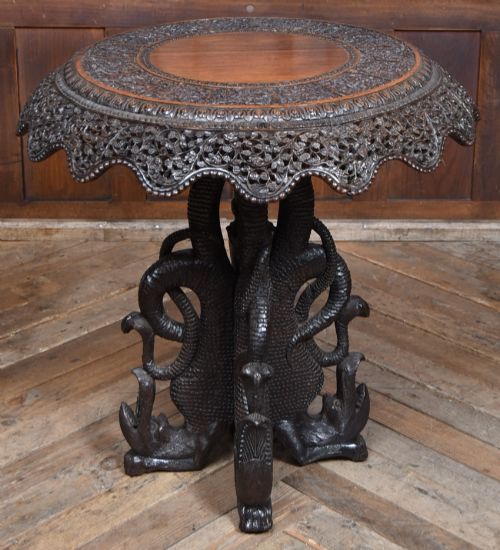
One exceptional piece takes the form of a carved grape vine sculptural table, bringing botanical theatre straight into the Victorian parlour.
Judging quality in pedestal tables
Superior examples distinguish themselves through the choice of timber figure, such as highly figured burr walnut or rich rosewood, matched carefully across the table top. Finely executed marquetry inlay and deep, crisp hand-carving on the pillar and tripod base separate standard production from workshop pieces of note.
Stability relies on the original joinery connecting the central pillar to the legs and the table top, where tight fits prevent wobble. The crispness of turning on barley twist stems and the precision of inlaid brass or satinwood indicate the skill of the maker.
Gillows·Druce and Co London
The Victorian Pedestal Accent Table Glossary
- Tilt top
- A table top hinged to tip vertically when not in use. This mechanism saved space in nineteenth-century parlours.
- Tripod base
- A support structure featuring three legs radiating from a central pillar. It provides steady footing on uneven floors.
- Marquetry
- Decorative veneer patterns formed from different woods fitted together. Craftsmen used this technique to create floral or geometric table tops.
- Burr walnut
- Timber taken from the wart or burl of a walnut tree, yielding swirling grain patterns. It was prized for high-status table tops.
- Barley twist
- A spiral turning resembling a twisted rope, carved into furniture legs and central pedestals. This style gained popularity during the Victorian period.
Victorian Pedestal Accent Table: Frequently Asked Questions
What rooms suit a pedestal table?
These compact tables fit beside armchairs as lamp stands or serve as wine tables in sitting rooms.
Their central pillar design takes up minimal floor space while providing a useful surface for books or small lamps.
How do tilt top tables work?
A brass catch releases the top, allowing the surface to pivot flat against the central column.
This historical feature enabled servants to store multiple tables against the wall of a drawing room when entertaining.
How do I identify burr walnut?
Burr walnut displays swirling, knotty grain patterns created by abnormal tree growth.
Cabinet makers sliced this figured timber into thin veneers to ornament the most prominent surfaces of nineteenth-century tables.
Are tripod bases stable?
Three-legged bases maintain firm contact with the floor even if the surface is slightly uneven.
This structural form distributes weight outward from the central pillar to prevent tipping.