


Victorian Pebble Pin
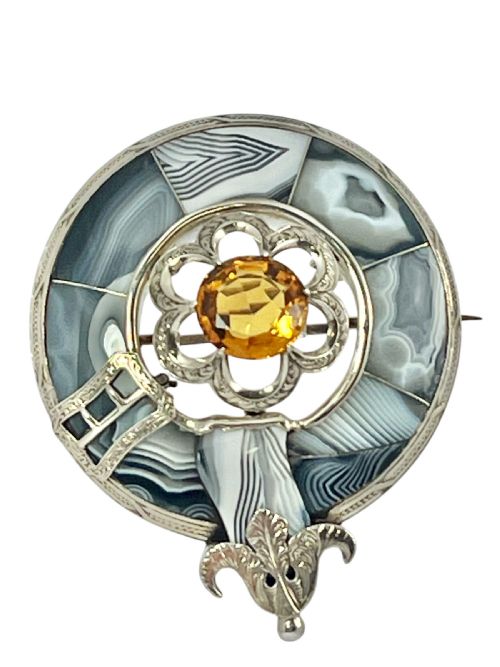
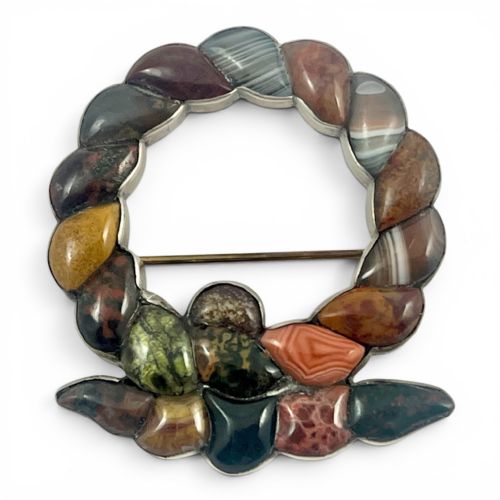
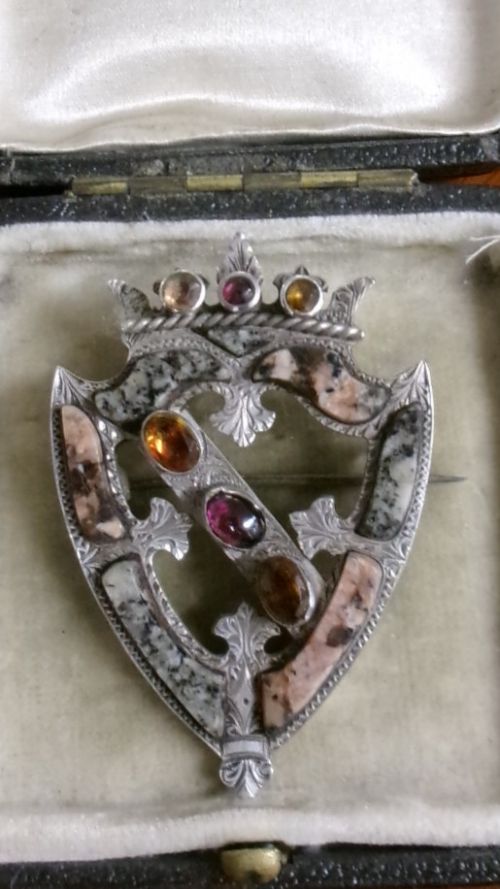
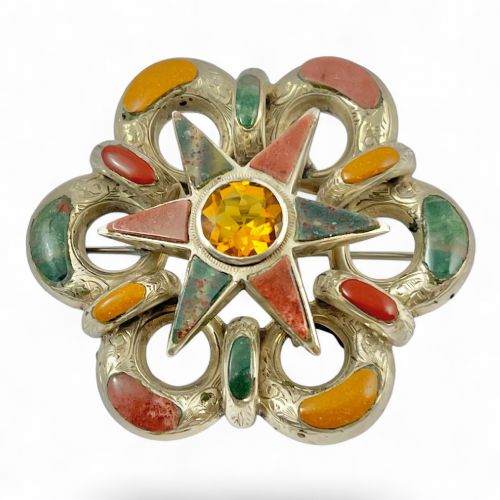
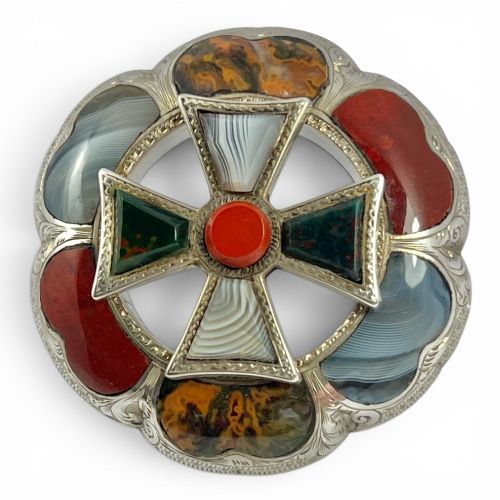
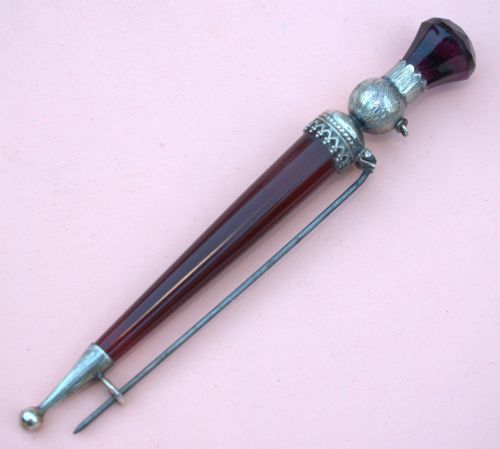
These Victorian pebble pin examples are distinctive regional brooches shaped as dirks, broadswords, shields, and bows, prized for their display of hardstones.
Victorian Pebble Pin
A victorian pebble pin typically takes the form of a brooch, kilt pin, or plaid brooch rooted in the nineteenth-century Scottish Revival style. These pieces frequently appear in shield, bow, dirk, broadsword, and knot shapes that reflect traditional highland motifs.
The materials centre on natural hardstones, notably agate, Montrose agate, jasper, bloodstone, and citrine, mounted in sterling silver or occasionally pinchbeck. Makers arranged these coloured stones into geometric patterns, specimen displays, or tartan mosaic designs.
Examples date from the early Victorian period through to nineteen hundred, spanning decades of regional metalwork and lapidary skill. Buyers encounter provincial pieces originating from centres such as Inverness alongside standard Victorian outputs.
How they were made
Silversmiths shaped sterling silver, gold, or pinchbeck into elaborate mounts designed to hold multiple cut and polished hardstones. These metal frames often incorporate textured engraving, braided ribbon motifs, or basket-hilt details.
Lapidaries sliced and polished natural minerals like agate, jasper, and citrine into precise geometric segments that fit tightly within the metal settings. Artisans selected stones for their natural colour variations and banding before securing them flush or in raised bezels.
Periods represented across these listings stretch from the early Victorian era through to the height of the Scottish Revival in the late nineteenth century.
What varies in quality
The sophistication of the stone cutting and the complexity of the silver mount distinguish finer examples from standard production. Elaborate forms like dirks, broadswords, and tartan mosaic plaques demand greater technical mastery than simple shield or knot brooches.
The choice and variety of hardstones also influence the character of each piece, with unusual minerals like Montrose agate, bloodstone, or malachite adding distinct visual depth. The precision of the stone-setting and the weight of the silver reflect the overall ambition of the maker.
The Victorian Pebble Pin Glossary
- Agate
- A form of chalcedony displaying natural bands of colour, widely utilised in nineteenth-century Scottish jewellery. Lapidaries polished these stones to highlight their internal patterns.
- Pebble pin
- A term applied to nineteenth-century brooches and kilt pins set with polished hardstone pebbles. These pieces formed a core part of the Victorian Scottish Revival aesthetic.
- Dirk brooch
- A brooch fashioned in the likeness of a Scottish dagger or dirk. Makers detailed the hilts with silverwork and set the blades with hardstones.
- Citrine
- A yellow variety of quartz frequently mounted alongside agates in Victorian Scottish jewellery. It provided a bright foil to the darker tones of jasper and bloodstone.
- Hardstone
- An umbrella term for semi-precious stones harder than glass, such as agate, jasper, and malachite. These materials resisted scratching and took a high polish.
Victorian Pebble Pin: Frequently Asked Questions
How do I wear a victorian pebble pin?
These pieces function traditionally as heavy brooches or kilt pins to secure tartans, plaids, and thick woolen garments. Their substantial weight requires sturdy fabrics to support the pin without sagging.
Today, collectors frequently wear them on lapels, scarves, or heavy coats where the silverwork and hardstones remain visible. The pin stems are generally thick, matching the period requirement for fastening heavy cloth.
What is the difference between a kilt pin and a brooch?
Kilt pins and plaid brooches were historically designed to fasten Highland dress, often taking specific forms like broadswords, dirks, or large shields. Standard brooches generally relied on simpler geometric outlines like bows, knots, or circles.
Despite the name differences, many nineteenth-century mounts served interchangeable functions for securing heavy woolen plaids and shawls. Both types shared the same reliance on silver settings and polished hardstones.
Which stones appear most often in these pins?
Agate dominates the surviving pieces, appearing in various banded colours as well as specific regional varieties like Montrose agate. Jasper and bloodstone provide contrasting opaque greens and reds within the settings.
Citrine and smoky crystal frequently act as focal points, often cut with faceted surfaces to catch the light. Malachite and tartan mosaic glass occasionally supplement the hardstones in elaborate designs.
How do I date a victorian pebble pin?
Dating relies on the stylistic markers of the Victorian period and the Scottish Revival movement, which gained momentum from the mid-nineteenth century onwards. Pieces range from early examples marked by provincial maker marks to later turn-of-the-century broadsword designs.
Mount construction, metal purity marks, and pin hinge types offer further chronological clues. Most documented examples cluster between eighteen forty and nineteen hundred.