
Victorian Pastoral Scene Art
Victorian pastoral scene art captures the calm of rural life through oils, watercolours and etchings of fields, rivers and livestock.
Victorian Pastoral Scene Art
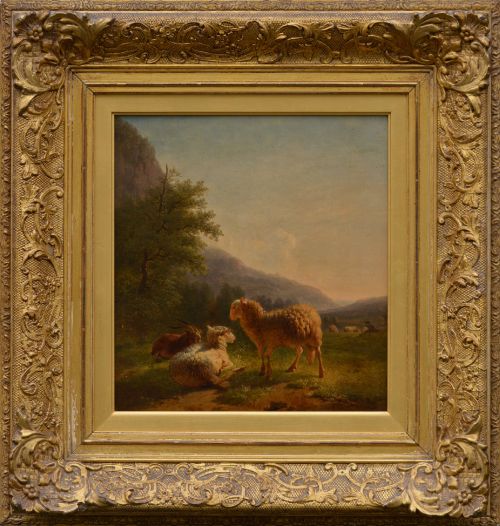
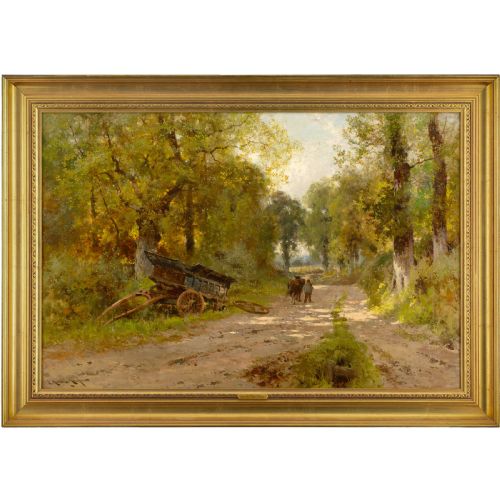
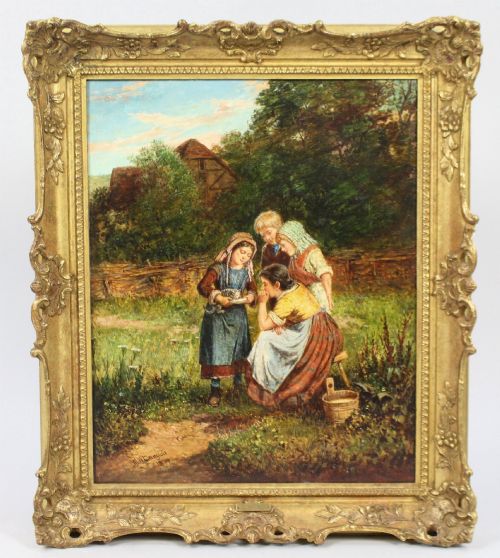
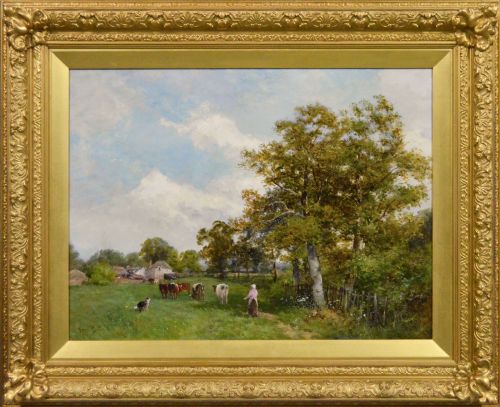
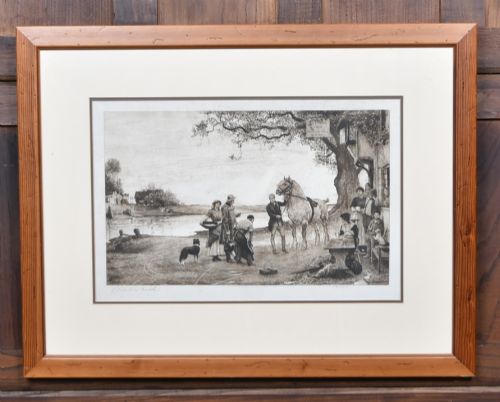
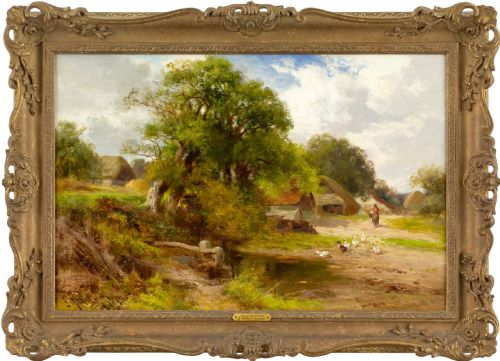
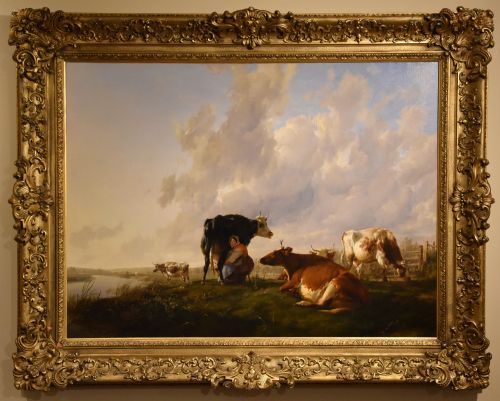
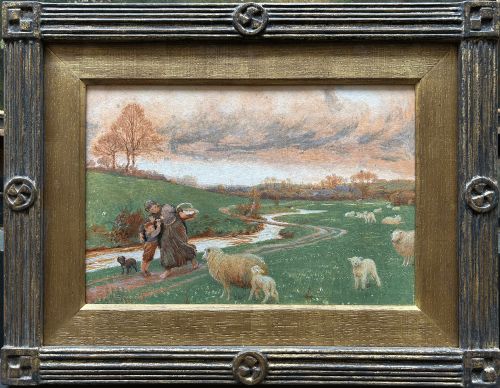
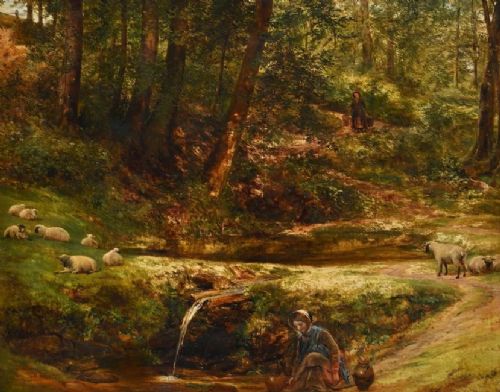
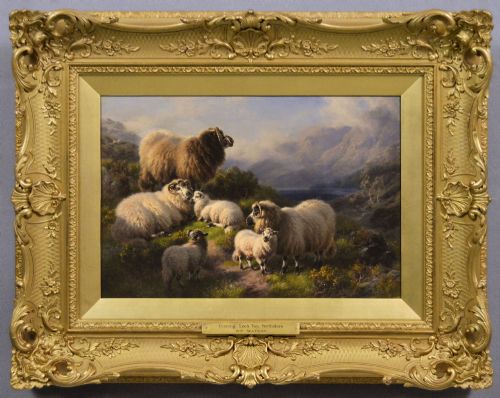
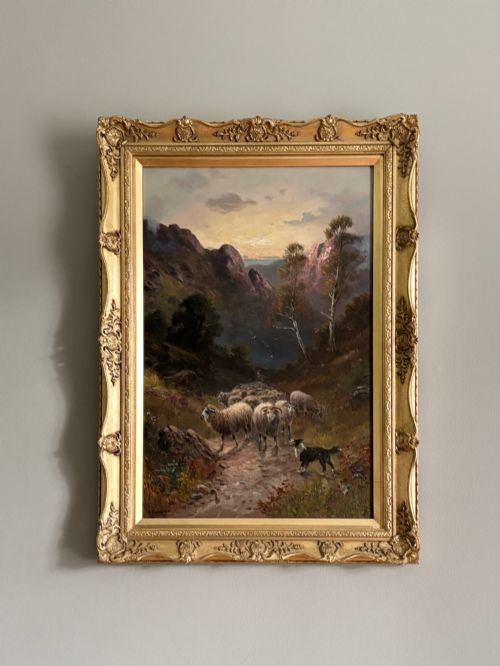
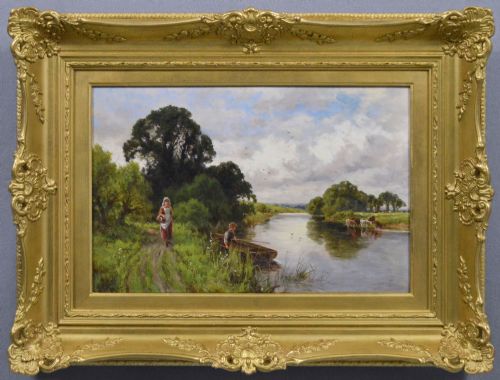
Victorian pastoral scene art portrays the nineteenth-century countryside, centring on agricultural landscapes, river banks and farm animals. These works capture quiet rural moments, from shepherds with flocks to milkmaids and harvesters at work.
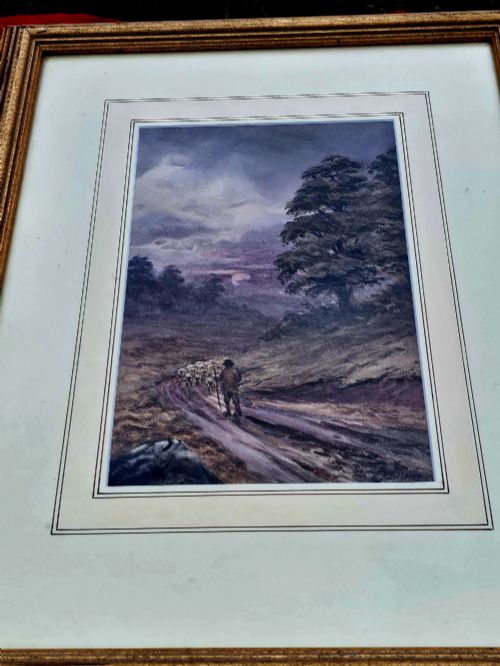
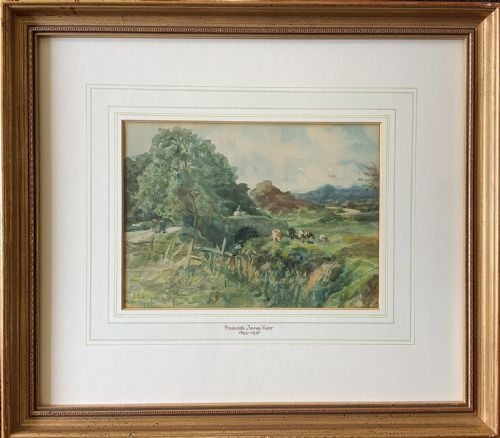
Buyers encounter oils on canvas and board alongside watercolours on paper. The pieces range from intimate framed watercolours to large landscape oil paintings originating from British and European schools.
Materials and technique
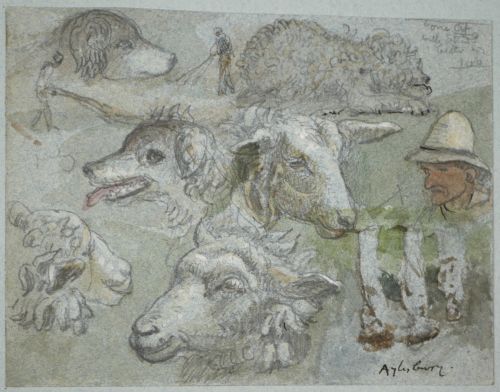
Painters applied oil paint to stretched canvas or wooden panels, building rich surfaces with varied brushwork. Watercolours on paper utilise fluid washes and fine ink or pencil detailing to render light and atmosphere.
Framing often involves period wood mouldings finished with gesso and gilt, supporting and protecting the delicate paint and paper layers.
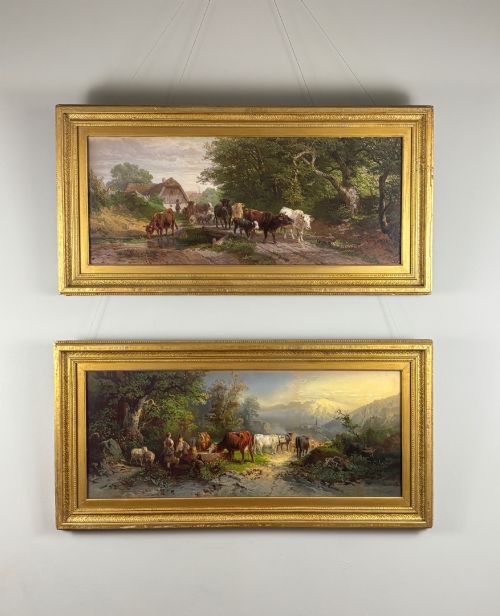
Cows, sheep and geese dominate the fields, occasionally interrupted by a rogue foal stealing fruit from a basket.
Factors that distinguish the work
Quality rests upon the artist's command of light, composition and anatomical accuracy in rendering figures and animals. Finer works display subtle tonal gradations and convincing depth across the landscape.
The strength of the provenance, the clarity of the signature and the preservation of the original paint surface separate standard decorative watercolours from accomplished gallery pieces.
Eugène Verboeckhoven·Thomas Sidney Cooper·Henry John Kinnaird·James William Booth
The Victorian Pastoral Scene Art Glossary
- Pastoral
- An artwork genre depicting the idealized rural life of shepherds, farmers and agricultural landscapes. It draws upon classical traditions of rustic tranquility.
- Gesso
- A plaster mixture applied to wood picture frames as a base for gilding. It provides a smooth surface for ornamental moulding.
- Giltwood
- Wood carved and coated with gold leaf or gilt paint. It frames many nineteenth-century paintings.
- Provenance
- The documented history of ownership for an artwork. It establishes authenticity and tracks the piece from the artist's studio onward.
Victorian Pastoral Scene Art: Frequently Asked Questions
What subjects appear in pastoral art?
These works feature rural scenes populated by farm animals, shepherds, cows and river workers. Landscapes often incorporate agricultural labour and quiet countryside vistas.
Common motifs include sheep grazing near hills, figures harvesting crops by rivers, and cattle gathered near farm gates.
How do I care for antique watercolours?
Watercolours on paper require protection from direct sunlight to prevent fading of the pigments. Framing with acid-free mounts preserves the integrity of the paper.
Keeping the artworks in rooms with stable humidity prevents mould growth and paper degradation over time.
Are these paintings signed by artists?
Many pieces feature artist signatures or monograms inscribed directly into the lower corners of the canvas or paper. Signatures often correspond to recorded nineteenth-century painters.
Unsigned works frequently attribute to specific schools or followers based on brushwork style and subject matter.
What framing is typical for these pieces?
Period frames generally consist of wood decorated with moulded gesso and finished in gold leaf or gilt paint. These ornate surrounds complement the traditional subject matter.
Original frames enhance the historic character of the artwork and match the era of creation.