

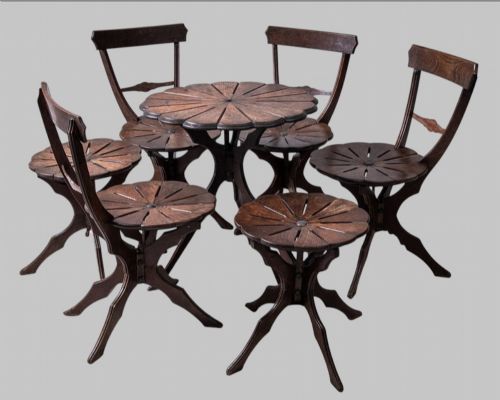


Victorian Parlour Dining Chairs
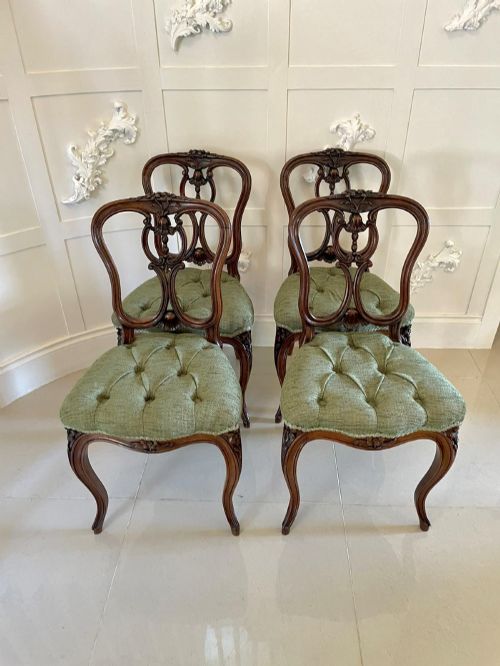
These Victorian parlour dining chairs bring solid nineteenth-century presence to a room, offering sturdy mahogany and rosewood frames designed for formal seating.
Victorian Parlour Dining Chairs
Victorian parlour dining chairs encompass formal seating pieces designed during the nineteenth century, including side chairs, salon chairs, and matching sets. The forms on this page range from early Victorian examples to later pieces from the 1870s, 1880s, and 1890s.
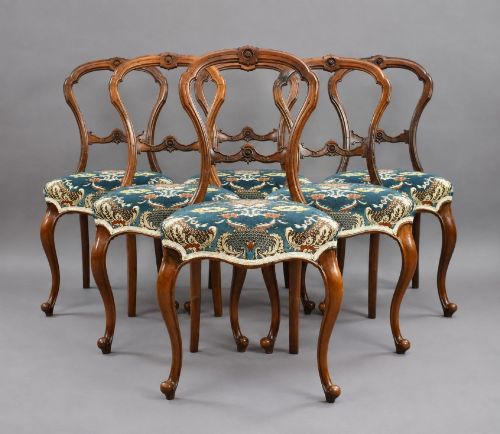
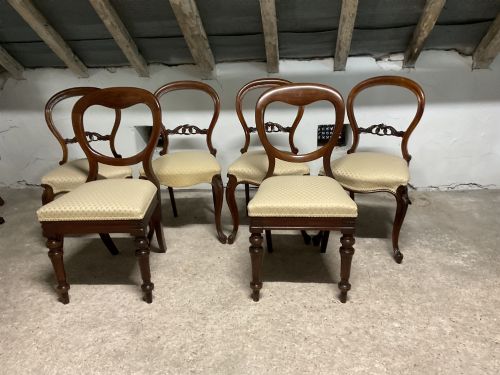
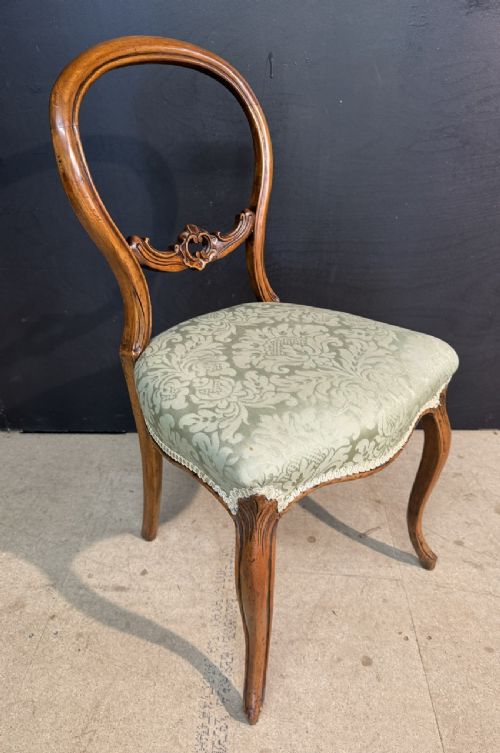
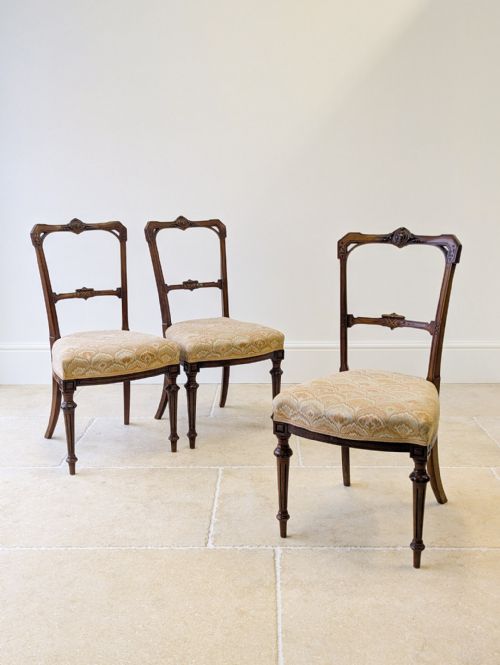
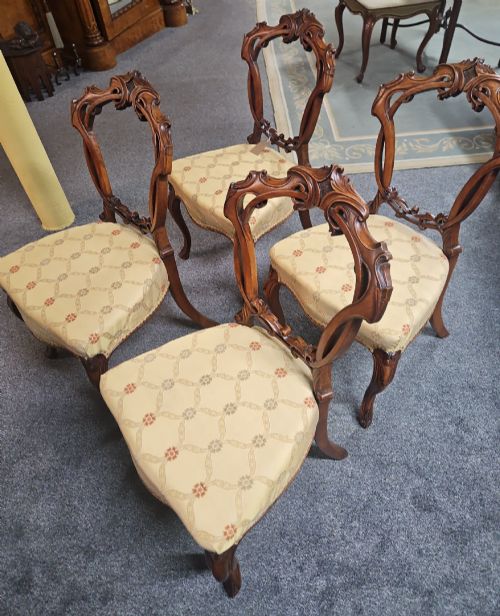
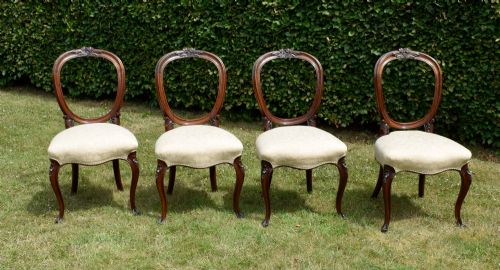
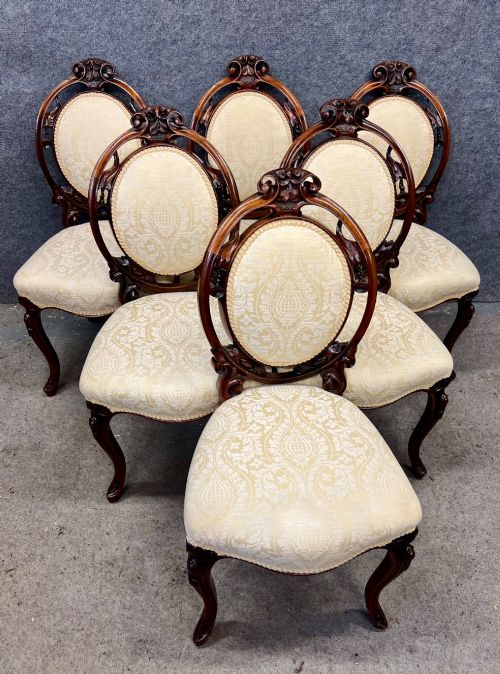
Buyers frequently encounter balloon back forms alongside carved walnut and rosewood frames. Sets vary from pairs up to groups of twelve, often featuring cabriole legs or pierced splats characteristic of the era.
How they were made
Cabinetmakers constructed these frames primarily using dense hardwoods such as mahogany, walnut, and rosewood, occasionally employing oak for regional pieces. Selected timbers were shaped using traditional carving techniques to form curved balloon backs and cabriole legs.
Seats were upholstered over webbing and springs using textiles like velvet, fabric, or needlepoint, sometimes accented with marquetry inlay on the wooden components.
Duck egg blue needlepoint seats occasionally survive to brighten nineteenth-century rosewood.
What varies in quality
The degree of crispness in the wood carving separates standard output from finer workshop productions. Crisp leaf motifs and deep relief work indicate skilled hand-carving rather than mass-produced uniformity.
Matching consistency across larger sets dictates desirability. Uniform grain patterns in the rosewood or mahogany and intact original upholstery foundations elevate the standing of a suite.
Charles Roodhouse
The Victorian Parlour Dining Chairs Glossary
- Balloon back
- A rounded, oval-shaped chair back resembling an inflated balloon that became popular during the nineteenth century.
- Cabriole leg
- A furniture leg that curves outward at the knee and tapers inward toward the foot, often ending in a scroll or plain pad.
- Pierced splat
- The central vertical upright of a chair back that has been cut through to create an openwork decorative design.
- Marquetry
- Decorative veneer work arranged in geometric or pictorial patterns across wooden surfaces using contrasting timbers.
- Needlepoint
- A form of counted thread embroidery traditionally worked on canvas to cover chair seats with durable pictorial designs.
Victorian Parlour Dining Chairs: Frequently Asked Questions
What distinguishes parlour dining chairs from standard chairs?
Parlour dining chairs combine the refined decorative elements of a reception room seat with the sturdy construction required for dining use. They often feature more elaborate carved backs and upholstered seats suited for both formal gatherings and table settings.
These pieces emerged during the Victorian period when domestic interiors demanded versatile seating that looked appropriate in a parlour or around a dining table.
Are larger sets difficult to find?
Larger groups of six, eight, or twelve matching chairs survive in smaller quantities because sets were frequently split up or reduced over generations. Finding a matched set in rosewood or mahogany remains a notable characteristic of higher-tier listings.
Buyers often encounter smaller sets of four or individual pairs alongside the larger dining suites.
What woods were used for these chairs?
Nineteenth-century makers relied heavily on dense tropical hardwoods, primarily mahogany and rosewood during the earlier decades, followed by walnut towards the later Victorian period. These timbers provided the structural strength needed for slender carved frames.
Occasional regional pieces utilised oak, reflecting local cabinet-making traditions outside the major metropolitan workshops.