


Victorian Parlour Chairs Set
These walnut, mahogany, and rosewood groupings offer structured seating designed for formal reception rooms.
Victorian Parlour Chairs Set
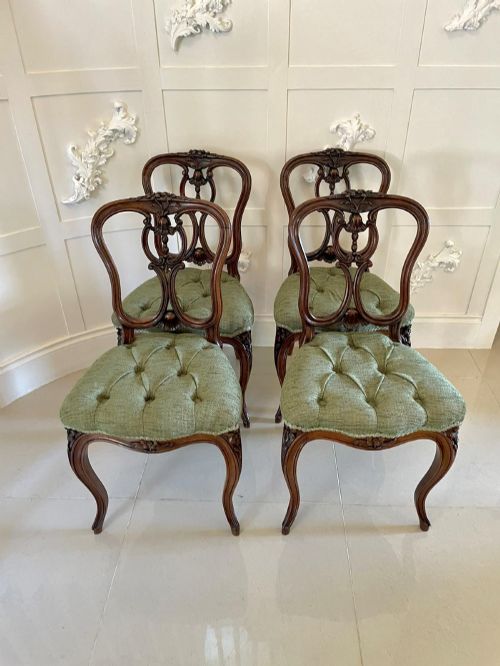
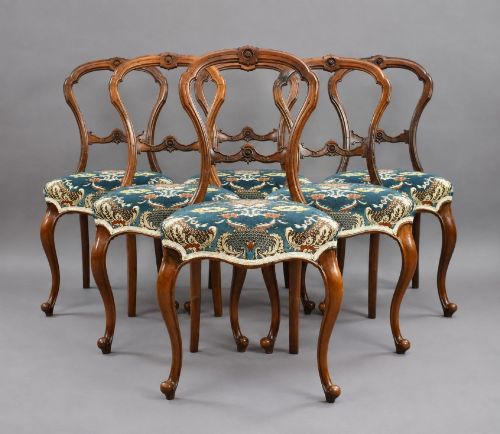
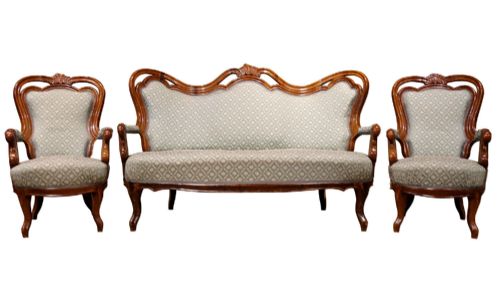
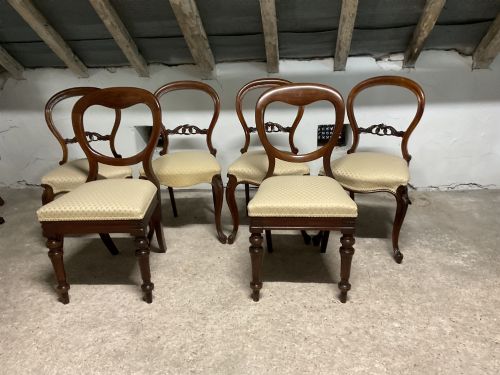
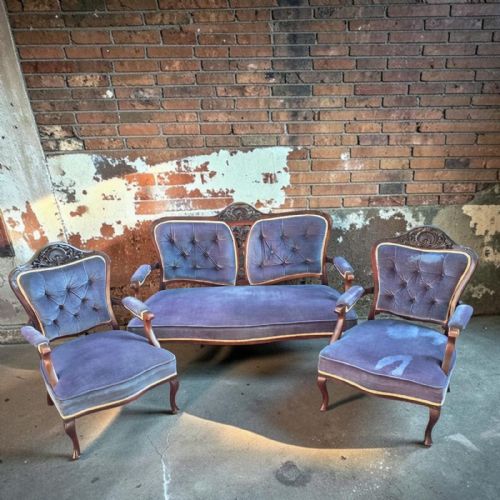
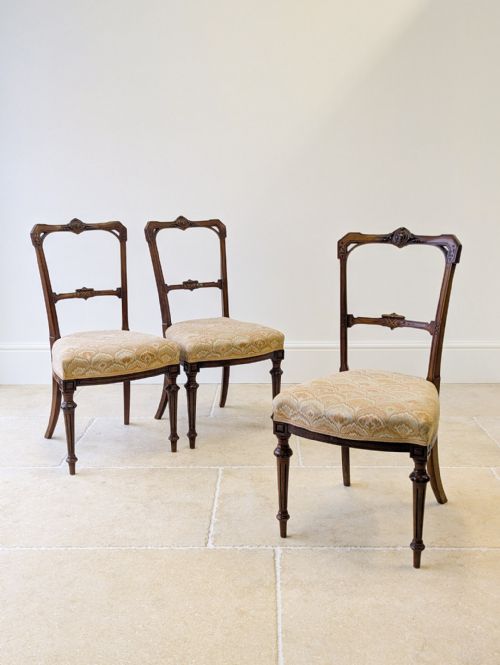
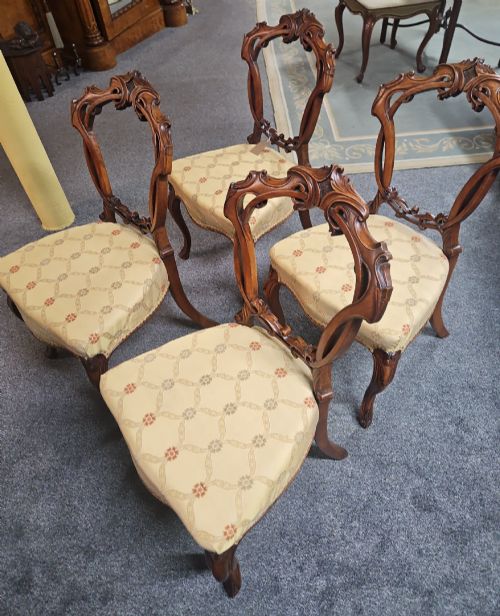
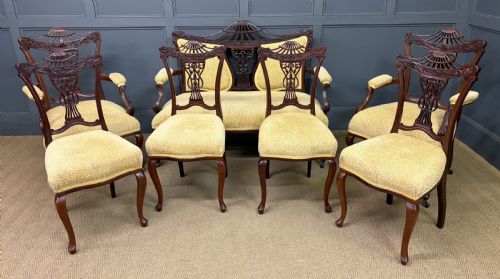
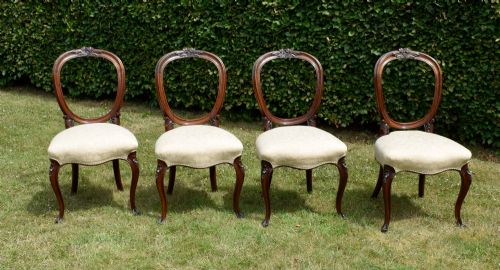
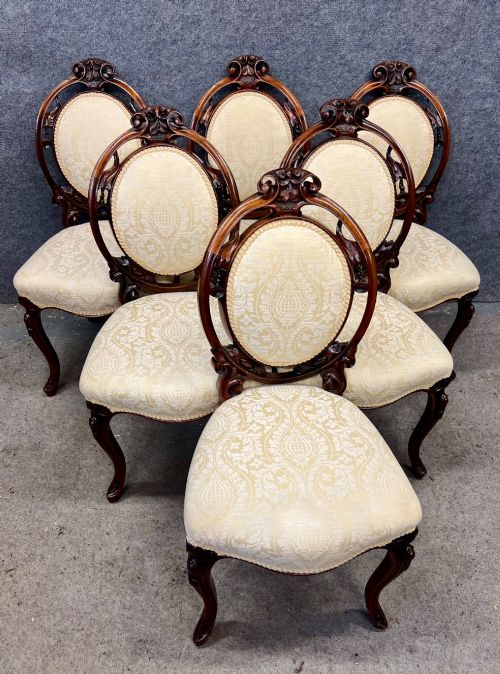
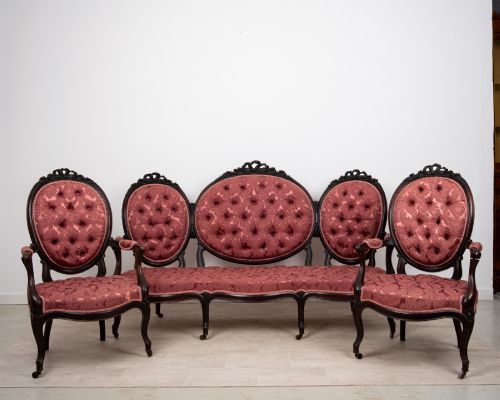
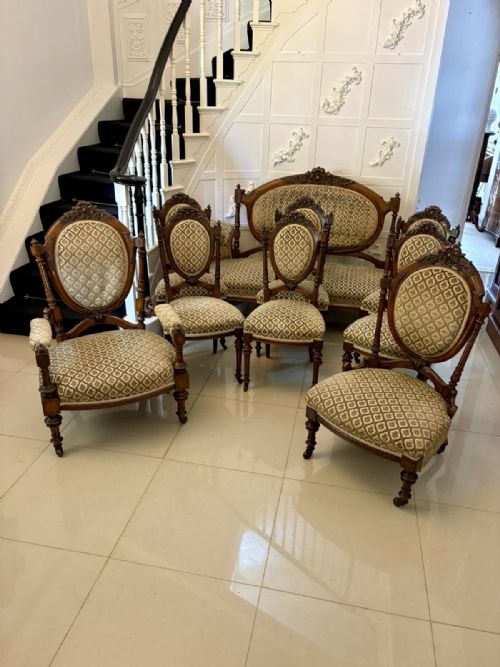
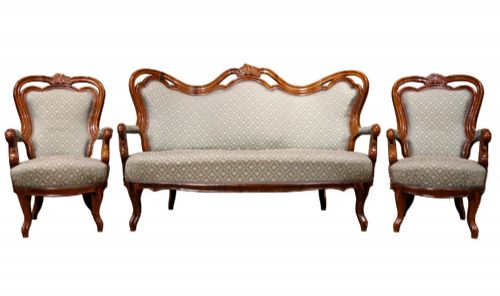
A victorian parlour chairs set brings together matching or harmonising seats shaped for the formal reception rooms of the nineteenth century. Buyers searching this phrase most frequently encounter sets of four or six balloon back dining chairs, alongside smaller three-piece or multi-piece salon suites comprising settees and armchairs.
The evidence shows these groupings spanning the Victorian period and stretching into the Edwardian era, incorporating styles from early Victorian designs to Rococo Revival and Neoclassical interpretations. Materials range from traditional mahogany and walnut to rosewood, oak, and fabric upholstery.
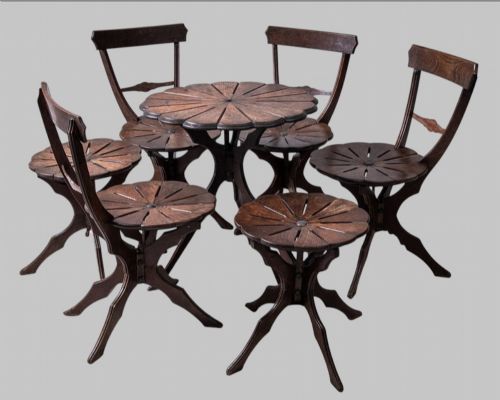
Sets appear in various configurations, from pairs of side chairs up to large multi-piece salon suites with footstools and sofas. Regional variations, such as Alpine folk carvings, sit alongside standard British interpretations of French revival forms.
Materials and construction methods
Cabinetmakers constructed the frames primarily from dense hardwoods like mahogany, walnut, and rosewood, which allowed for deep carving and structural integrity in curved shapes such as balloon backs. These timbers were often steam-bent or hand-carved with floral motifs and scrollwork.
Upholstery techniques involved deep buttoning, fabric coverings, velvet, and needlepoint inserts held by brass tacks or webbing. Marquetry inlay also appears on select frames, adding decorative geometric or floral wood veneers to the structural woodwork.
Judging execution and material depth
Quality rests in the crispness of the carved details on the wooden frames and the selection of figured timber veneers like rosewood and walnut. Superior examples display fluent, hand-carved scrollwork rather than mechanical repetition.
The integrity of the underlying joinery and the selection of upholstery materials, such as silk velvet or wool needlepoint, separate standard functional seating from exhibition-grade salon pieces.
The Victorian Parlour Chairs Set Glossary
- Balloon back
- A chair back shaped in a continuous oval curve resembling an inflated balloon. This form dominated mid-nineteenth-century seating design.
- Salon suite
- A coordinated group of seating furniture, typically including a settee and matching armchairs or side chairs, intended for formal reception rooms.
- Rococo Revival
- A nineteenth-century design style emulating the curved, asymmetrical ornamentation of the French eighteenth century. It employs scrolling foliage and shell motifs.
- Marquetry
- The art of applying decorative pieces of veneer to a structural structure to form geometric or pictorial designs. It appears on select Victorian chair rails.
- Deep buttoning
- An upholstery technique where stitches pull the fabric tight into the padding in a diamond pattern, secured with deep recesses.
Victorian Parlour Chairs Set: Frequently Asked Questions
How many chairs typically come in a set?
Sets appear in varying quantities, most commonly in groups of four, six, or eight for dining and side chairs. Larger matching groups form multi-piece salon suites.
Smaller configurations include pairs, three-piece groupings with a settee and two chairs, or extensive drawing-room suites numbering up to eleven pieces.
Were these chairs used for dining or entertaining?
Many of these pieces served dual purposes in nineteenth-century homes, functioning as both dining seats and parlour or salon seating. Lighter side chairs moved easily between rooms for guests.
Larger suites with settees remained fixed in reception rooms for formal entertaining and conversation.
How do I identify a Rococo Revival style?
Rococo Revival pieces display asymmetrical curves, C-scrolls, and naturalistic carved flowers rather than strict geometric symmetry. The woodwork flows continuously from the crest rail down to the cabriole legs.
This style draws inspiration from French design of the eighteenth century but utilises Victorian walnut or rosewood construction.