
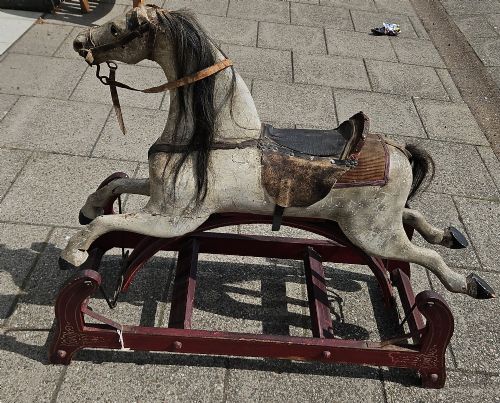


Victorian Painted Toy Horse
These Victorian painted toy horse examples combine the sturdy charm of nineteenth century folk art with the tactile appeal of carved wooden toys.
Victorian Painted Toy Horse
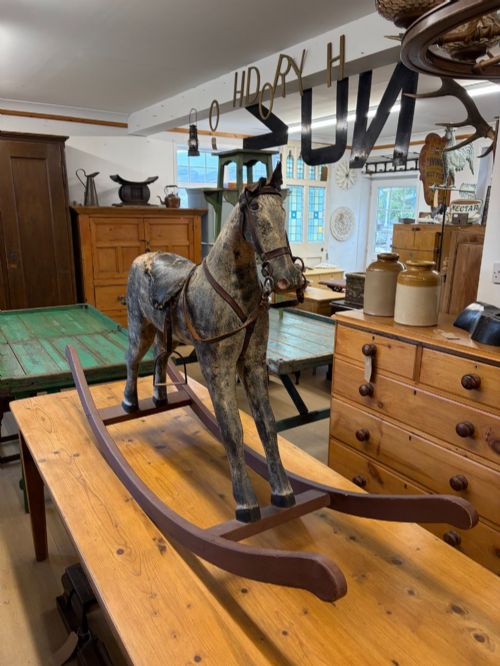
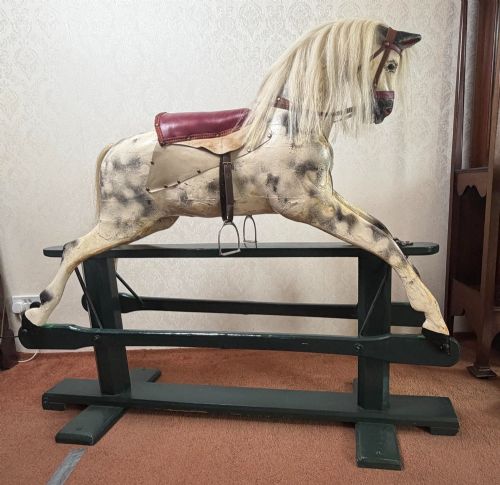
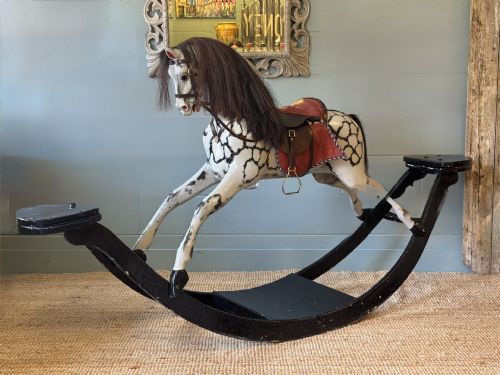
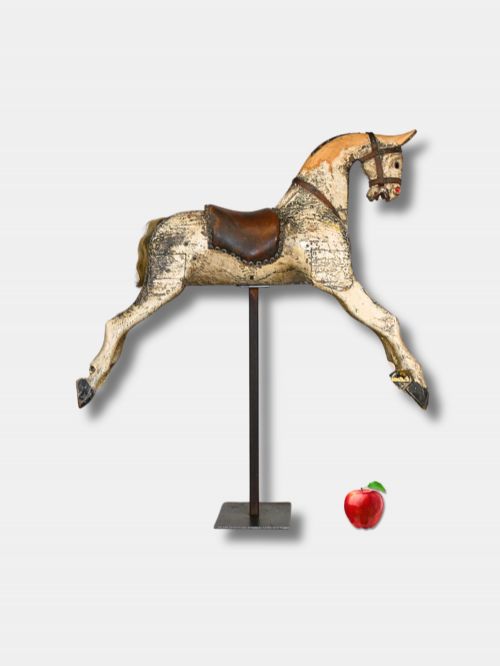
A victorian painted toy horse brings together tactile carved timber and early surface coatings, taking the form of primitive rocking horses mounted on original wooden rockers or freestanding decorative sculptures.
The objects span periods from the nineteenth century into the early decades of the twentieth century, reflecting both English workshop traditions and broader folk art styles.
Most pieces you encounter combine pine and carved wood with painted finishes, showing the hands of makers who supplied children's playrooms and nurseries.
Materials and construction
Carvers shaped bodies primarily from pine and solid wood, attaching them securely to curved wooden rockers or static wooden stands.
Surfaces received layers of paint, sometimes depicting dappled markings, while details incorporated leather, horsehair, metal, and glass elements.
Listings feature periods spanning from the nineteenth century through the nineteen-forties, constructed in wood, pine, iron, leather, and horsehair.
Judging quality and character
The character of a victorian painted toy horse rests upon the integrity of its original paint surface and the boldness of the wood carving.
Proportion and stance distinguish the more accomplished folk art sculptures from simpler provincial pieces, alongside the survival of integrated components like glass eyes and leather tack.
G & J Lines of London·F.H. Ayres
The Victorian Painted Toy Horse Glossary
- Folk art
- Objects created by self-taught or provincial makers outside academic traditions. These items emphasise utility and direct visual expression over formal academic rules.
- Original paint
- The initial surface coating applied during manufacture, retaining its historic character and patina. Unsurfaced or stripped items lack this crucial historical layer.
- Pine
- A softwood commonly utilised by nineteenth-century carvers for large toys and furniture. It offers a workable grain that accepts painted finishes readily.
- Rocking horse
- A toy mounted on curved wooden bows or a safety stand designed for motion. They served as both nursery toys and substantial pieces of playroom furniture.
Victorian Painted Toy Horse: Frequently Asked Questions
How do I date a painted toy horse?
Dating relies upon construction methods, timber choice, and the composition of the paint layers. Earlier examples often display more primitive iron fixings and hand-hewn pine bodies.
Changes in toy manufacturing standards around the turn of the twentieth century also introduced sleeker forms and alternative hardware.
Were these horses meant for play?
Many examples saw active service in Victorian nurseries, constructed robustly to withstand the rigours of children playing. Their substantial pine frames and iron bracing accommodated the weight of young riders.
Other pieces were produced primarily as decorative sculptures or display objects for affluent households.
How should I care for original paint?
Preserving the surface requires stable indoor humidity away from direct sunlight and heat sources. Dusting should be done gently with a dry, soft cloth without liquid cleaners.
Moisture and modern solvents can easily lift historic paint layers that lack modern chemical binders.
What is the difference between English and Spanish styles?
English workshops often favoured substantial dapple-grey rocking horses on floor stands with leather tack and real horsehair. Spanish or naive continental pieces frequently lean further into folk art aesthetics with simpler carved forms and brighter, less formal painted decorations.